
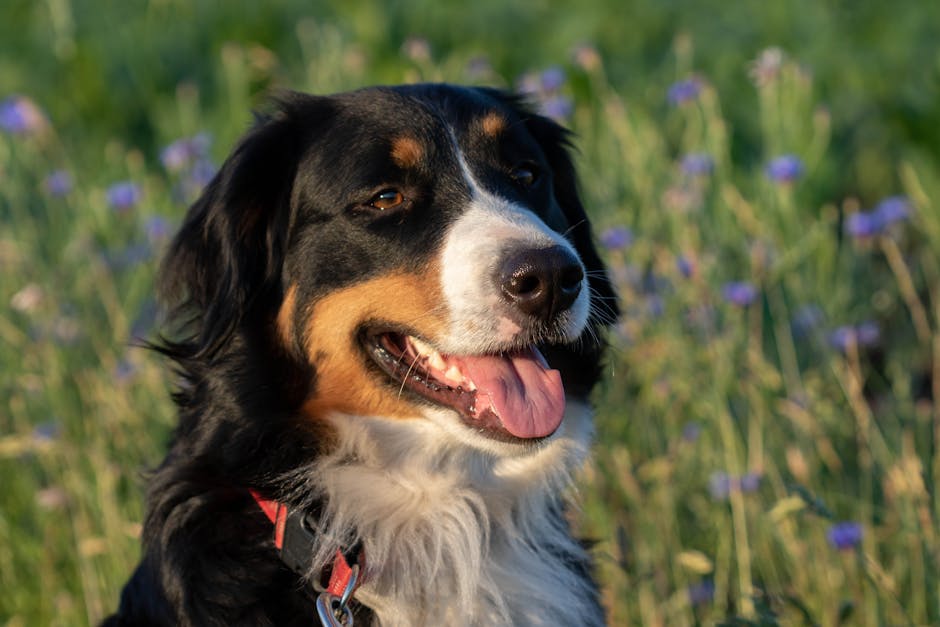

If you’ve ever fallen in love with a Bernese Mountain Dog — that gentle giant with the tri-color coat and soulful eyes — then you already know the gut punch that comes next. Someone will tell you they only live six to eight years. And they’re not wrong.
I’ve watched two friends go through the heartbreak of losing their Berners far too young. One was barely six. The other made it to seven and a half, which his owner actually called “a good run.” Let that sink in. Seven years felt like a blessing. That’s the reality of loving this breed, and it’s worth understanding exactly why do Bernese Mountain Dogs live so short — and what, if anything, you can do about it.
The thing is, knowing the statistics doesn’t make it easier. But it can make you smarter about prevention, screening, and giving your Berner the best possible shot at a longer life.
The Heartbreaking Truth About Berner Lifespans
Average Lifespan Statistics (6-8 Years)
The numbers are blunt. The average Bernese Mountain Dog lifespan sits between 6 and 8 years, with some studies putting the median closer to 7. A UK Kennel Club survey found the median age of death at just 8 years, while North American data from the Berner-Garde Foundation trends a bit lower — around 7 to 7.5.
For context, that means a Berner puppy you bring home today will likely be a senior by age five. Five. Most dogs are still acting like goofballs at five.
There are outliers, of course. Some Berners make it to 10, 11, even 12. The Berner-Garde Foundation actually tracks dogs who reach their 10th birthday, because it’s notable enough to document. When reaching double digits is a statistical achievement worth recording, you know there’s a problem.
How This Compares to Other Large Breeds
People often say “big dogs don’t live as long” — and that’s true as a general rule. But Berners are short-lived even by giant breed standards.
| Breed | Average Lifespan | Size Category |
|---|---|---|
| Bernese Mountain Dog | 6–8 years | Large/Giant |
| Great Dane | 7–10 years | Giant |
| Irish Wolfhound | 6–8 years | Giant |
| Rottweiler | 8–10 years | Large |
| Golden Retriever | 10–12 years | Large |
| Labrador Retriever | 10–13 years | Large |
| Newfoundland | 8–10 years | Giant |
| Saint Bernard | 8–10 years | Giant |
See the pattern? Berners sit at the very bottom of the pack, alongside Irish Wolfhounds. But Wolfhounds are significantly larger — many topping 140 pounds. Berners average 80 to 115 pounds. They shouldn’t be dying this young based on size alone.
Something else is going on. And that something is cancer.
The Cancer Problem
This is the section nobody wants to read but everybody needs to. The Bernese Mountain Dog cancer rate is staggering — roughly 50% of all Berners die from some form of cancer. Half. That’s not a risk factor. That’s a coin flip.
Histiocytic Sarcoma — The Breed’s Biggest Killer
If there’s one disease that defines the Bernese Mountain Dog health crisis, it’s histiocytic sarcoma. This aggressive cancer of the immune system affects an estimated 25% of all Berners — making it the single most common cause of death in the breed.
Histiocytic sarcoma is brutal. It originates in histiocytes, a type of white blood cell, and can develop in the spleen, liver, lungs, lymph nodes, bone marrow, or skin. It spreads fast. By the time symptoms show up — lethargy, weight loss, loss of appetite, difficulty breathing — it’s often already advanced.
The median survival time after diagnosis, even with chemotherapy, is typically 3 to 5 months. Some protocols buy a bit more time, but we’re talking months, not years.
What makes this especially cruel is how it sneaks up. A friend’s Berner, a seven-year-old named Hugo, went from perfectly healthy to terminal in about three weeks. One day he was hiking with the family. Three weeks later, they were saying goodbye. There was no warning. No gradual decline.
Other Common Cancers in Berners
Histiocytic sarcoma gets the headlines, but it’s not the only cancer threat:
- Lymphoma — the second most common cancer in Berners, affecting the lymph nodes and immune system
- Mast cell tumors — skin cancers that range from low-grade and manageable to high-grade and aggressive
- Osteosarcoma (bone cancer) — common in large breeds generally, painful and fast-moving
- Hemangiosarcoma — a cancer of the blood vessel walls, often found in the spleen or heart, that can cause sudden internal bleeding
Any one of these would be concerning in a breed. Having all of them at elevated rates? That’s a genetic crisis.
Why Cancer Rates Are So High in This Breed
The short answer: genetics and a limited gene pool.
Bernese Mountain Dogs went through a severe population bottleneck in the early 20th century. The breed was nearly extinct by the 1900s, and the dogs we have today descend from a very small number of founding animals. That means less genetic diversity — and when harmful mutations exist in a small founder population, they get amplified across generations.
There’s strong evidence that susceptibility to histiocytic sarcoma is heritable in Berners. Researchers have identified specific genetic markers associated with the disease. It’s not a simple single-gene problem — it’s polygenic, meaning multiple genes contribute to risk — which makes it incredibly difficult to breed out.
The popularity boom hasn’t helped either. High demand for Berner puppies means some breeders prioritize producing litters over health testing. Every puppy from an untested pairing is a roll of the dice with whatever genetic time bombs the parents carry.
European lines — particularly Swiss and Scandinavian — tend to show slightly better longevity than American lines, possibly because breeding programs there have been more aggressive about health screening and maintaining genetic diversity. But “slightly better” still means a life that’s too short.
Other Health Challenges
Cancer dominates the conversation, but Berners face other serious health issues that can shorten their lives or reduce quality of life significantly.
Hip and Elbow Dysplasia
Large breeds and joint problems go hand in hand, and Berners are no exception. The Orthopedic Foundation for Animals (OFA) reports that roughly 20% of Berners evaluated show evidence of hip dysplasia, and elbow dysplasia rates are even higher.
Dysplasia means the joint doesn’t form properly, leading to arthritis, pain, and mobility problems. In a breed that already has a short lifespan, losing mobility at age four or five is devastating. A Berner who can’t walk comfortably isn’t going to enjoy whatever time they have.
The good news: responsible breeders screen for this. OFA and PennHIP evaluations can identify dogs with good joint structure, and breeding only from cleared parents significantly reduces risk.
Bloat (GDV) Risk
Gastric dilatation-volvulus — bloat — is a life-threatening emergency where the stomach fills with gas and twists on itself, cutting off blood supply. It can kill a dog within hours if not treated surgically.
Deep-chested breeds are at highest risk, and Berners have that classic deep chest. Bloat is one of the top non-cancer causes of death in the breed.
Prevention strategies include:
– Feeding smaller, more frequent meals instead of one large daily meal
– Using slow-feeder bowls
– Avoiding vigorous exercise right before and after eating
– Discussing prophylactic gastropexy (a surgical tack of the stomach) with your vet — this can be done during spay/neuter surgery
Degenerative Myelopathy
DM is a progressive spinal cord disease that causes gradual hind-end weakness and paralysis. Think of it as the canine equivalent of ALS. There’s no cure, and it’s always fatal — though the progression is slow enough that most dogs are euthanized due to quality-of-life concerns before it reaches its final stages.
A DNA test exists for the SOD1 mutation associated with DM. Responsible breeders test for it and avoid producing puppies who carry two copies of the mutation.
What Research Is Being Done
Here’s where I get a little more hopeful. The Bernese Mountain Dog community hasn’t just accepted this situation. There’s real, active research happening.
Berner-Garde Foundation Database
The Berner-Garde Foundation maintains one of the most impressive breed-specific health databases in the dog world. They collect health, pedigree, and longevity data on thousands of Berners, creating a resource that researchers can use to identify patterns, track genetic trends, and evaluate the effectiveness of health screening programs.
If you own a Berner, contributing your dog’s health data to Berner-Garde is one of the most valuable things you can do for the breed’s future. Every data point helps.
Ongoing Cancer Studies and Clinical Trials
Several research fronts are worth watching:
The Morris Animal Foundation’s Golden Retriever Lifetime Study — while focused on Goldens, this landmark study of 3,000 dogs is generating insights into cancer risk factors, environmental triggers, and genetic markers that have implications for all cancer-prone breeds, including Berners. It’s the largest and longest observational study ever conducted in veterinary medicine.
Histiocytic sarcoma genomics research at several universities is working to identify the specific genetic variants that drive this cancer in Berners. The goal is to develop a genetic test that breeders could use to make smarter pairing decisions — not eliminating carriers entirely (which would further shrink the gene pool) but avoiding high-risk combinations.
Immunotherapy trials are exploring whether the canine immune system can be trained to fight histiocytic sarcoma. Early results have been mixed but promising. Some dogs in trials have survived significantly longer than expected.
The Berner Health Foundation funds targeted research grants specifically for conditions affecting the breed. They’ve invested in studies on cancer biomarkers, which could eventually enable blood tests that detect cancer before symptoms appear.
How to Maximize Your Berner’s Years
You can’t change your dog’s genetics after they’re born. But you can stack the deck in their favor. Here’s how to extend berner lifespan as much as possible.
Choosing a Health-Tested Breeder
This is step one, and it’s non-negotiable. If you haven’t gotten your Berner yet, the single most impactful thing you can do is choose a breeder who health-tests extensively.
At minimum, look for:
– OFA hip and elbow evaluations on both parents
– Cardiac exam clearance
– Von Willebrand’s disease testing
– DM (degenerative myelopathy) DNA test
– Ophthalmologist evaluation
– Longevity data — how long did the parents’ relatives live? A pedigree full of dogs who died at five is a red flag you can’t ignore
Ask breeders directly about cancer in their lines. If they get defensive or claim it’s not a problem, walk away. Honest breeders know it’s a problem and will talk about what they’re doing to address it.
Expect to pay more for a well-bred Berner. Expect to wait for a litter. It’s worth it.
Nutrition and Weight Management
Keeping your Berner lean is one of the simplest ways to add months or even years to their life. Excess weight stresses joints, promotes inflammation, and may contribute to cancer risk.
A landmark Purina study on Labrador Retrievers found that dogs kept at a lean body condition lived a median of 1.8 years longer than their overfed siblings. Nearly two extra years, just from portion control. There’s no reason to think Berners wouldn’t benefit similarly.
Feed a high-quality diet appropriate for large breeds. Avoid overfeeding puppies — rapid growth in large breeds increases the risk of skeletal problems. And resist those sad eyes at the dinner table. I know. It’s hard. A lean Berner is a healthier Berner.
Cancer Screening and Early Detection
Since cancer is the primary threat, proactive screening matters enormously.
Talk to your vet about:
– Twice-yearly wellness exams after age four (not just annual)
– Abdominal ultrasound — can detect splenic tumors before they rupture
– Blood work panels every six months, watching for changes that might indicate early disease
– Chest X-rays annually after age five to screen for lung metastases
– Physical exam awareness — learn to check your Berner’s lymph nodes regularly at home
Early detection won’t cure histiocytic sarcoma in most cases. But it can catch other cancers at more treatable stages, and it gives you more time to make decisions rather than facing a crisis.
The Spay/Neuter Timing Debate for Berners
This one gets heated, and I think the nuance matters.
Traditional veterinary advice was to spay or neuter at six months. But emerging research — including data from the Golden Retriever Lifetime Study and large-breed-specific studies at UC Davis — suggests that early spay/neuter may increase cancer risk in large breeds.
The theory: sex hormones play a protective role during development, and removing them too early may alter immune function and increase susceptibility to certain cancers.
For Berners specifically, many breed-savvy vets now recommend:
– Males: Delay neutering until at least 18-24 months, or consider leaving intact if management allows
– Females: Delay spaying until after the first or second heat cycle (typically 12-24 months), weighing the slight increase in mammary cancer risk from delayed spaying against the potential reduction in other cancer types
This isn’t settled science. There are valid arguments on multiple sides. But given that cancer kills half of all Berners, any potential reduction in cancer risk deserves serious consideration. Have an honest conversation with your vet — ideally one experienced with the breed.
Is the Short Lifespan Reason Enough Not to Get One?
I go back and forth on this. Honestly.
There are days when I think recommending a breed with a 7-year average lifespan feels irresponsible. That’s barely enough time to finish paying off the couch they destroyed as a puppy. You get them trained, settled, perfectly in sync with your family — and then they’re old. Then they’re gone.
But then I talk to Berner owners. And almost every single one says the same thing: they’d do it again. Even knowing. Even having gone through the grief. The breed is that special.
Berners are absurdly gentle. They’re goofballs who think they’re lap dogs despite weighing 100 pounds. They’re patient with kids, loyal to their core, and have this calm steadiness that makes a house feel like a home. My friend who lost Hugo at seven? She got another Berner two years later. Couldn’t imagine life without one.
So no, I don’t think the short lifespan is reason enough not to get one — but only if you go in with open eyes. Know what you’re signing up for. Budget for health screening. Choose your breeder like your dog’s life depends on it, because it does. And treasure every single day, because there aren’t enough of them.
The breed needs advocates who understand why do Bernese Mountain Dogs live so short and who support the research and responsible breeding that might eventually change it.
Frequently Asked Questions
What is the longest a Bernese Mountain Dog has lived?
There are verified reports of Berners reaching 15 years, though anything past 12 is extremely rare. The Berner-Garde Foundation celebrates dogs who reach their 10th birthday, and most owners consider a Berner who makes it to 11 or 12 to be truly exceptional.
Can you test a Bernese Mountain Dog puppy for cancer risk?
Not directly — there’s no single genetic test that predicts cancer in Berners the way there is for, say, DM. However, knowing the health history and longevity of the parents, grandparents, and siblings gives you meaningful insight into risk level. This is why pedigree research and choosing a transparent breeder matters so much.
Are European Bernese Mountain Dogs healthier than American ones?
Swiss and Scandinavian lines do tend to show slightly longer lifespans on average, likely due to stricter breeding regulations and a greater emphasis on health testing and genetic diversity. But “slightly longer” might mean 8-9 years versus 6-8. They’re still a cancer-prone breed regardless of origin.
Does pet insurance cover cancer treatment for Berners?
Most comprehensive pet insurance plans cover cancer treatment, including chemotherapy and surgery. However, premiums for Berners tend to be higher because insurers know the breed’s health profile. Enroll your Berner as a puppy — waiting until problems develop means pre-existing condition exclusions will apply. Budget for premiums in the range of $80-150+ per month depending on coverage level.
How often should I take my Bernese Mountain Dog to the vet?
Annual wellness exams are the minimum, but given the breed’s health risks, twice-yearly exams are strongly recommended starting at age four. Between visits, monitor your dog for symptoms like unexplained lethargy, appetite changes, lumps or swelling, difficulty breathing, or sudden lameness. Early detection can make a real difference in treatment outcomes for many conditions.
Featured Image Source: Pexels