

If you’ve ever come home to a bent crate door, bloody gums, or a dog soaked in its own drool — you know this isn’t a training problem you can ignore. Separation anxiety in dogs is real, it’s heartbreaking, and shoving a panicking dog into a flimsy wire crate makes everything worse.
I learned this the hard way with my friend’s rescue, a Boxer mix named Duke. He destroyed two crates in a week. Bent the wire bars with his teeth, cut his muzzle, and screamed until the neighbors called. The crate wasn’t helping. It was making his anxiety ten times worse. That experience sent me down a rabbit hole of research, vet consultations, and a lot of trial and error to find what actually works.
Here’s what I’ve figured out after years of dealing with anxious dogs: the best dog crate for separation anxiety isn’t just stronger — it’s designed differently. The right crate reduces panic triggers. The wrong one becomes a torture chamber. Let me walk you through what to look for, which crates actually deliver, and the training approach that ties it all together.
Understanding Crate-Related Separation Anxiety
Signs Your Dog Has Crate Anxiety
Some of this is obvious. Some isn’t. The dramatic stuff — howling, destroying the crate, escape attempts — that’s hard to miss. But there are subtler signs too.
Watch for:
- Excessive drooling that leaves a puddle under the crate
- Panting and pacing before you even close the door
- Refusing treats inside the crate (a dog that won’t eat is a stressed dog)
- Escape attempts — pawing at the door, biting wire bars, digging at the tray
- Self-harm: broken nails, scraped nose, bloody gums from chewing metal
- Urinating or defecating in the crate despite being house-trained
That last one is a big tell. A house-trained dog that soils its crate isn’t being defiant. It’s panicking. Their body literally loses control.
And here’s what a lot of people miss: some dogs freeze. They go completely still and silent. That’s not calm. That’s learned helplessness. If your dog enters the crate and just… shuts down, ears flat, body tense — that’s anxiety too.
Why Some Dogs Panic in Crates
It’s not one thing. It’s usually a combination.
Past trauma is the big one with rescues. A dog that spent months in a shelter kennel or was confined in a previous home may associate crates with abandonment. Duke had spent his first year in a crate for 18 hours a day. Of course he panicked.
Lack of proper introduction causes problems even in dogs with no trauma history. Tossing a puppy into a crate, shutting the door, and leaving for work — that’s not crate training. That’s just confinement. The dog never learned that the crate is safe.
Some breeds are more prone to separation anxiety generally. Velcro breeds like German Shepherds, Labrador Retrievers, Vizslas, and Border Collies bond intensely with their people. My Border Collie, Meg, would follow me from room to room. Training her to be alone took real effort.
There’s also a neurochemical component. Some dogs have genuinely elevated cortisol responses to isolation. This isn’t a behavior problem — it’s a medical condition. And no amount of “tough love” crate training fixes brain chemistry.
Is Crating an Anxious Dog Safe?
Honest answer? It depends entirely on the severity and the crate.
Mild anxiety — some whining, a little pacing, settles within 15-20 minutes — that’s manageable. A proper desensitization protocol with the right crate can absolutely help these dogs. The crate becomes a secure den, and many dogs genuinely start choosing it on their own.
Severe anxiety is different. A dog in full panic mode can seriously injure itself in a standard crate. Broken teeth from biting wire bars. Lacerations from sharp edges. I’ve heard of dogs that ripped out toenails trying to dig through plastic trays. If your dog is at this level, do not crate them in a standard wire or plastic crate until you’ve addressed the underlying anxiety.
For severe cases, you need either a crate specifically engineered for high-anxiety dogs (we’ll get to those) or an alternative containment strategy — a dog-proofed room, a pet camera, maybe daycare — while you work with a vet behaviorist on the anxiety itself.
Features That Help Anxious Dogs Feel Secure
Not all crates are equal. And the features that matter for an anxious dog are completely different from what you’d want for a laid-back Lab who just needs a sleeping spot.
Solid Walls vs Wire Visibility
This is the single biggest factor, and most people get it backwards.
Wire crates give dogs a 360-degree view of everything. For a confident dog, that’s fine. For an anxiety-prone dog, all that visibility means all that stimulation. Every shadow, every movement, every squirrel outside the window becomes a trigger.
Solid-sided crates — airline-style kennels, rotomolded options — create an actual den. Three enclosed walls with limited visibility. This mimics the enclosed spaces dogs naturally seek when stressed. Think about it: when there’s a thunderstorm, where does your dog go? Under the bed. In the closet. Behind the couch. Not standing in the middle of the living room.
That said, some dogs with confinement-specific anxiety do worse in enclosed spaces. They feel trapped. So this isn’t universal advice. You need to know your dog. If they panic more in a covered crate than an open one, solid walls aren’t the answer.
Ventilation Without Overstimulation
An enclosed crate still needs airflow. Dogs regulate temperature through panting, and a poorly ventilated crate gets hot fast — which adds physical stress on top of emotional stress.
The best anxiety-focused crates solve this with small ventilation holes or slots rather than large mesh panels. Enough air circulation to keep the dog comfortable, not enough visibility to keep them wired.
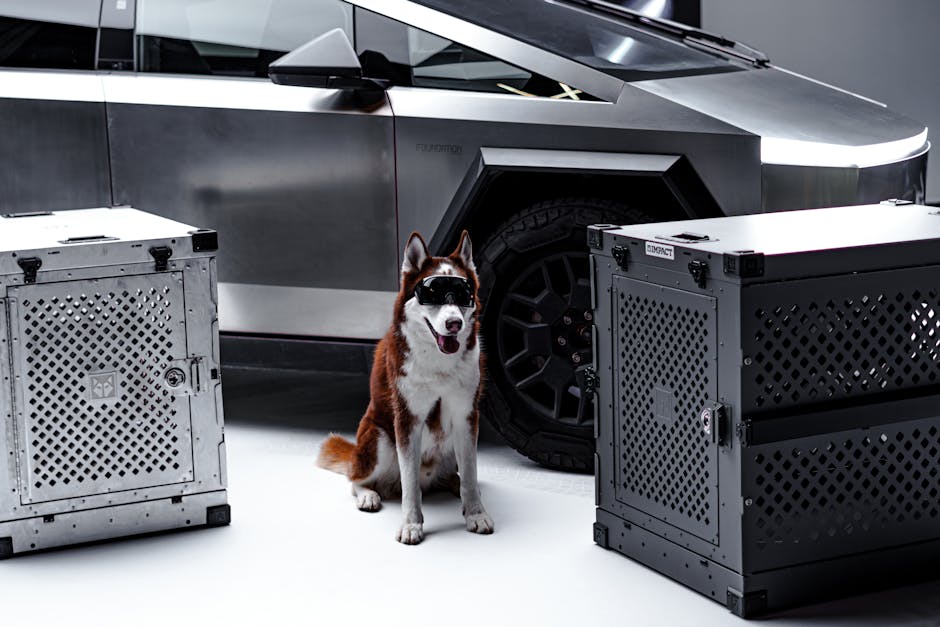
The Impact High Anxiety Crate does this well with its pattern of ventilation holes. Dakota’s rotomolded kennels use a similar approach. You want air moving through without turning the crate into a window.
Size — Room to Stand but Not Pace
Bigger isn’t better here. And I know that feels counterintuitive.
A crate that’s too large gives an anxious dog room to pace, which feeds the anxiety cycle. Pacing is a self-reinforcing stress behavior — the movement itself keeps cortisol elevated. The ideal size lets your dog stand up, turn around, and lie down comfortably. That’s it.
For reference:
| Dog Size | Recommended Crate Length |
|---|---|
| Small (under 25 lbs) | 24-30 inches |
| Medium (25-50 lbs) | 30-36 inches |
| Large (50-80 lbs) | 36-42 inches |
| Extra Large (80+ lbs) | 42-48 inches |
Measure your dog from nose to tail base, add 2-4 inches, and that’s your target length. Don’t size up because you feel guilty about the space. A snug crate feels like a den. A cavernous one feels like a room they’re trapped in.
Top 5 Crates for Dogs With Separation Anxiety
I’ve spent a lot of time researching, testing, and talking to other owners about these. Here’s what actually works — and what doesn’t live up to the hype.
Impact High Anxiety Crate — Best Heavy-Duty
Price: ~$400-$700+ depending on size
Material: Aircraft-grade aluminum
Best for: Dogs with severe anxiety and escape history
This is the gold standard for an anxiety proof dog crate, and the price reflects it. The Impact High Anxiety Crate is built from aluminum with rounded interior corners — no sharp edges where a panicking dog can cut itself. The door uses a slam-latch system that a dog physically cannot manipulate, and the ventilation holes are small enough to prevent teeth or paws from getting caught.
I recommended this to a friend whose German Shepherd had destroyed three wire crates and a plastic airline kennel. Six months later, zero escape attempts. The dog actually started going in voluntarily.
The downsides? It’s expensive. Really expensive. The large size runs close to $700. It’s also heavy — around 35 lbs for the medium — so it’s not something you’re moving between rooms easily. And it’s not pretty. This is a utilitarian piece of equipment, not furniture.
But if your dog has severe separation anxiety and has hurt itself in other crates, this is worth every penny. The rounded corners alone could prevent a vet bill that costs more than the crate.
Revol Collapsible Dog Crate by Diggs — Best Design
Price: ~$250-$575 depending on size
Material: Steel wire with diamond mesh pattern
Best for: Moderate anxiety; owners who want something that looks good
Diggs did something smart with the Revol. Instead of the typical grid pattern on wire crates, they used a diamond-shaped mesh that’s significantly stronger at the same wire gauge. It’s harder for dogs to get their teeth around the wires, and the pattern distributes force from pushing or leaning more evenly.
The Revol also has a built-in divider, a puppy-proof secondary latch, and — this is a nice touch — rounded corners on the frame. It collapses flat for storage, which none of the heavy-duty options can match.
It looks good too. Clean lines, modern design. My Border Collie Meg used a Revol, and honestly, it blended into the living room better than any crate I’ve owned.
The honest take: This is not an escape-proof crate. A determined 80-lb dog with severe panic could still damage it. But for dogs with mild to moderate anxiety — the ones who stress-chew but don’t go full Houdini — it’s an excellent balance of security, design, and price. Think of it as a calming dog crate for dogs that need reassurance, not maximum containment.
MidWest iCrate Double Door — Best Budget Wire
Price: ~$35-$80 depending on size
Material: Standard wire
Best for: Mild anxiety, crate training beginners, budget-conscious owners
I almost didn’t include a basic wire crate on this list. But here’s the thing — not every anxious dog needs a $500 aluminum fortress. Some dogs just need a properly introduced crate, a good cover, and time.
The MidWest iCrate is the industry workhorse for a reason. Two doors give you flexible placement options. The fold-and-carry design is genuinely easy. The included divider panel lets you adjust the space as a puppy grows. And the price makes it the obvious starting point.
What makes it work for mild anxiety: Pair it with a crate cover (solid fabric, not mesh) to create that den feeling. Add a Snuggle Puppy or Kong stuffed with frozen peanut butter. For a lot of dogs, this $50 setup works as well as anything three times the price.
When it doesn’t work: If your dog bends bars, collapses the crate, or injures themselves on the wire. Then you need to step up to something built for that level of stress. Don’t keep using a wire crate with a dog that’s destroying it. That’s not training. That’s just letting them hurt themselves.
Petmate Sky Kennel — Best Airline-Style Enclosure
Price: ~$60-$160 depending on size
Material: Heavy-duty plastic shell with wire ventilation door
Best for: Dogs who calm down in enclosed spaces, travel-ready option
Airline-style kennels don’t get enough credit for anxiety management. The three solid walls and limited visibility create a genuine den environment. My Golden Retriever, Charlie, always preferred his Petmate kennel to the wire crate — he’d walk past the open wire crate and wedge himself into the plastic one.
The Sky Kennel specifically has a sturdy wire door (not the cheap plastic-clip doors on bargain brands), tie-down bolt holes for security, and decent ventilation through side slots. It meets IATA airline requirements if you ever need to fly with your dog.
The reality check: This is still plastic. A dog in severe panic can crack a plastic kennel. The ventilation slots can also become targets for obsessive chewing. And the two-piece shell design means a strong enough dog can potentially pop the top half off the bottom.
For moderate anxiety, though? The enclosed feeling genuinely helps. I’d say about 70% of the anxious dogs I’ve worked with prefer an enclosed crate to an open wire one. If your dog goes under tables and into closets when stressed, an airline-style crate for anxious dogs is probably the right direction.
Dakota 283 G3 Kennel — Best Rotomolded
Price: ~$250-$450 depending on size
Material: Rotomolded polyethylene
Best for: Durable enclosed option, car travel, dogs who destroy plastic kennels
Dakota’s rotomolded kennels sit between a standard plastic kennel and the Impact aluminum crate. Rotomolding creates a single seamless piece of plastic — no seams to crack, no two-piece shell to pop apart. These things are tough. Originally designed for hunting dogs riding in truck beds, they handle impact and abuse that would shatter a Petmate.
The G3 version has paddle latches instead of the squeeze latches on cheaper kennels. Much harder for a clever dog to figure out. Ventilation comes through machined holes — small enough to prevent teeth from getting in, large enough for airflow.
What I like: The durability-to-price ratio. For about half the cost of an Impact, you get a crate that most anxious dogs can’t destroy. It’s also lighter than aluminum, which matters if you’re moving it in and out of a vehicle.
What I don’t: The interior isn’t as refined as the Impact. No rounded corners — the edges aren’t sharp, but they’re square, which is more of a concern for dogs that slam against walls during panic episodes. And the ventilation isn’t quite as good. On hot days, you’ll want to make sure the room is climate controlled.
Crate Training Protocol for Anxious Dogs
Buying the right crate is maybe 30% of the solution. The other 70% is how you introduce it. I cannot stress this enough — the training matters more than the hardware.
Desensitization Steps
This takes 2-4 weeks minimum. Rushing it is the number one mistake I see.
Week 1: The crate exists, nothing happens. Put the crate in a common area with the door removed or tied open. Toss treats inside. Let the dog investigate on their own timeline. Don’t push, don’t lure, don’t close the door. If they walk in and grab a treat, great. If they sniff it and walk away, also great. Feed meals near the crate, then inside the crate.
Week 2: Door movement without closing. With the dog inside eating a Kong or chewing a bully stick, gently move the door. Don’t close it. Just touch it. Let them hear the sound while they’re doing something enjoyable. Gradually work up to closing the door for 2-3 seconds, then opening it before they finish their treat.
Week 3: Short closures with you present. Close the door for 30 seconds while you sit right next to the crate. Build to 1 minute, then 5. Then 10. If the dog shows stress signs at any point — whining, pawing, panting — you’ve gone too fast. Drop back to the last duration that was comfortable.
Week 4: Short absences. Close the door, walk to another room for 30 seconds, come back. No fanfare. Don’t make departures or returns a big event. Gradually extend the absence. 1 minute. 3 minutes. 5. 10. 20.
The pattern is always the same: small increases with no stress. The moment you see anxiety, you’ve pushed too far. Go back one step. This is boring, repetitive work. But it’s what actually rewires the dog’s emotional response to the crate.
Crate Covers and Calming Aids
A solid crate cover transforms a wire crate. Reduced visual stimulation helps most anxious dogs settle faster. Use a thick fabric — not a bedsheet that’ll get pulled through the bars.
Other things that genuinely help:
- Adaptil pheromone diffusers — these release dog-appeasing pheromone that mimics what nursing mothers produce. There’s actual clinical evidence behind these, not just marketing. Plug one in near the crate.
- White noise or classical music — masks the sounds that trigger alert behavior. Through a Dog’s Ear is a specific classical music series tested with shelter dogs.
- Frozen Kongs — stuffed with peanut butter and frozen overnight. Gives the dog 20-30 minutes of focused licking, which is a self-soothing behavior.
- Worn clothing — an old t-shirt you’ve slept in. Your scent is genuinely calming.
Skip the CBD treats unless your vet specifically recommends a product. The market is unregulated and dosing is inconsistent.
When Not to Use a Crate
I need to say this clearly: some dogs should not be crated.
If your dog has injured itself in a crate — broken teeth, lacerations, bloody paws — and the anxiety isn’t improving with systematic training, the crate is doing more harm than good. Period.
Alternatives that work for these dogs:
- A dog-proofed room (laundry room, bathroom) with a baby gate instead of a closed door
- A pet camera so you can monitor and return if panic escalates
- Doggy daycare on workdays
- A dog walker who breaks up the alone time
- Medication combined with behavioral modification (talk to your vet)
Forcing a dog with severe confinement anxiety into a crate — even a strong one — is not a kindness. It’s just a containment strategy that ignores the suffering happening inside.
Complementary Anxiety Solutions
The best outcomes I’ve seen combine the right crate with broader anxiety management. The crate alone isn’t a treatment plan.
Calming Supplements and Pheromone Sprays
Adaptil leads this category with the most research behind it. Available as a plug-in diffuser, a spray (apply directly to crate bedding), or a collar. The diffuser near the crate is my go-to recommendation. Give it 2-3 weeks to see the full effect.
L-theanine and casein-based supplements (like Zylkene) have some evidence for mild anxiety. They’re not going to fix a dog in full panic, but they can take the edge off for dogs with low-grade stress.
Prescription medication — and I’m not a vet, so talk to yours — is underused in my opinion. Fluoxetine (Reconcile) and clomipramine (Clomicalm) are FDA-approved for separation anxiety in dogs. There’s no shame in medication. If your dog had diabetes, you’d give it insulin. Anxiety is the same kind of thing.
Working With a Veterinary Behaviorist
A regular vet can prescribe anxiety medication. A veterinary behaviorist can create a comprehensive behavior modification plan tailored to your specific dog. They’re board-certified specialists — think psychiatrist vs. general practitioner.
When to see one: If your dog’s anxiety hasn’t improved after 4-6 weeks of consistent training, if your dog is injuring itself, or if the anxiety is severe enough to affect quality of life.
It’s not cheap — initial consultations run $200-$400 — but it’s cheaper than replacing destroyed crates, repairing damaged doors, and treating injuries. And the results are usually dramatically better than DIY approaches for severe cases.
The ACVB (American College of Veterinary Behaviorists) has a directory on their website to find one near you.
Frequently Asked Questions
Can separation anxiety be cured completely?
In many cases, yes — or at least managed to the point where it’s not a significant issue. Mild to moderate separation anxiety responds well to systematic desensitization over 4-8 weeks. Severe cases may always need some management (medication, specific routines), but most dogs improve substantially with proper treatment. The key word is proper. Random YouTube advice and a wire crate aren’t a treatment plan.
How long should I leave an anxious dog in a crate?
Start with whatever duration your dog can handle without stress — even if that’s 30 seconds. Build up gradually. For a trained, comfortable dog, 4-6 hours is a reasonable maximum. No dog should be crated for 8+ hours regularly, anxious or not. If your work schedule requires long crating, consider a dog walker, daycare, or a dog-proofed room instead.
Is it cruel to crate a dog with separation anxiety?
It depends entirely on how you do it. Crating done right — proper introduction, the right crate, gradual desensitization — gives many anxious dogs a safe space that actually reduces their stress. Crating done wrong — shoving a panicking dog into a wire cage and leaving — is genuinely harmful. The tool isn’t the problem. How it’s used can be.
Do crate covers help with anxiety?
For most dogs, yes. Reducing visual stimulation removes triggers that keep anxious dogs in a heightened state. I’d estimate 7 out of 10 anxious dogs do better with a covered crate. Use a thick, opaque cover — not a thin sheet. And make sure airflow isn’t compromised. If your dog pulls the cover through the bars and destroys it, a solid-walled crate might be a better solution than fighting the cover battle.
What’s the difference between separation anxiety and crate anxiety?
Separation anxiety means the dog panics when left alone — whether crated or not. Crate anxiety means the dog panics specifically about confinement but may be fine alone in a room. Some dogs have both. The distinction matters because a dog with only crate anxiety might do perfectly well in a dog-proofed room, while a dog with separation anxiety will be anxious regardless of containment method. A vet behaviorist can help you figure out which you’re dealing with.
Finding the best dog crate for separation anxiety isn’t about buying the toughest cage. It’s about matching the crate to your dog’s specific anxiety level, introducing it at a pace your dog can handle, and being honest about when a crate isn’t the right answer. Some dogs thrive in crates. Some dogs do better with alternatives. Both are okay. What’s not okay is letting a dog suffer because we’re committed to making the crate work when it clearly isn’t working. Pay attention to what your dog is telling you. They’re usually pretty clear about it.
Featured Image Source: Pexels