

Understanding Your Beagle’s Unique Nutritional Needs
If you’ve ever watched your Beagle inhale a bowl of food in thirty seconds flat, then spend the next hour convincing you they’ve never been fed in their life, you know exactly what I’m talking about. My Beagle, Copper, once figured out how to open the pantry door just to get to his kibble bag. These dogs are food-motivated in a way that borders on genius — and it’s both their greatest charm and their biggest health challenge.
Beagles were bred to hunt in packs for hours on end, which means they carry the metabolism and appetite of a working dog. But most pet Beagles today spend far more time on the couch than chasing rabbits through fields. That mismatch between appetite and activity level is why obesity is the single biggest health concern in the breed. Studies suggest that over 50% of Beagles are overweight, and excess weight puts strain on their joints, heart, and lifespan.
Beyond their legendary appetites, Beagles have a few other nutritional quirks worth understanding:
- Sensitive stomachs: Many Beagles are prone to digestive upset, gas, and loose stools, especially when fed low-quality fillers or sudden diet changes.
- High energy needs (when active): A Beagle who gets proper daily exercise needs quality fuel — not empty calories from corn syrup and by-product meals.
- Prone to food allergies: Chicken, wheat, and soy sensitivities are relatively common in the breed, so watch for itchy skin, ear infections, and digestive trouble.
- Strong scent drive: Their 220 million scent receptors mean they’ll find and eat things you didn’t even know existed in your kitchen. Choosing satisfying food that keeps them feeling full is essential.
The right food won’t just keep your Beagle healthy — it’ll make your life easier by keeping them satisfied, energized for walks, and less obsessed with counter-surfing for scraps.
The Ideal Macronutrient Profile for Beagles
Not all dog foods are created equal, and Beagles have specific macronutrient needs that differ from, say, a low-energy Bulldog or a lean Greyhound. Here’s what to look for on the label:
Protein: The Foundation
Beagles thrive on diets with 25–30% protein from named animal sources. Look for real chicken, turkey, salmon, or beef as the first ingredient — not vague terms like “meat meal” or “animal protein.” Quality protein supports their lean muscle mass, keeps them feeling full longer, and provides the amino acids their active bodies need. For Beagles with chicken sensitivities, fish-based or lamb-based formulas are excellent alternatives.
Fat: Essential but Controlled
Fat is a concentrated energy source and makes food taste irresistible to your Beagle (as if they needed more encouragement). Aim for 12–16% fat content for adult Beagles at a healthy weight. This range provides enough energy and supports coat health without packing on extra pounds. Look for named fat sources like chicken fat or salmon oil rather than generic “animal fat.” Omega-3 and omega-6 fatty acids from fish oil are particularly beneficial for skin, coat, and joint health.
Fiber: The Secret Weapon Against Beagle Hunger
Here’s the ingredient most Beagle owners overlook: fiber. A food with 4–6% crude fiber helps your Beagle feel full and satisfied after meals, which is half the battle with this breed. Fiber also supports healthy digestion and firm stools. Good fiber sources include sweet potato, brown rice, oatmeal, pumpkin, and beet pulp. Avoid foods that rely on cellulose powder or excessive filler grains for their fiber content.
Carbohydrates: Choose Wisely
Complex carbohydrates like sweet potatoes, brown rice, and oats provide sustained energy without blood sugar spikes. Avoid foods loaded with corn, wheat, and soy — these are common allergens for Beagles and offer less nutritional value. That said, grain-free isn’t automatically better. Unless your Beagle has a diagnosed grain allergy, moderate amounts of whole grains are perfectly healthy and may actually be preferable to high-legume grain-free formulas.
Top 7 Best Dog Foods for Beagles in 2026
After years of feeding Beagles and consulting with veterinary nutritionists, these are the seven foods I recommend most often. Each one addresses the breed’s specific needs — quality protein, controlled calories, and ingredients that support digestion.
1. Royal Canin Beagle Adult
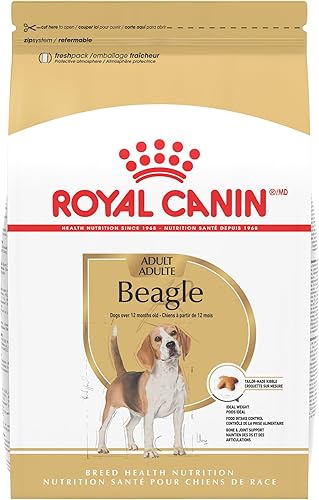
Royal Canin is one of the few brands that makes a breed-specific formula for Beagles, and it shows. The kibble is designed in a unique shape and size that encourages chewing rather than gulping — a real benefit for a breed that treats mealtime like a speed-eating competition. The formula contains L-carnitine to support fat metabolism and maintain a healthy weight, along with a carefully calibrated calorie content that accounts for the Beagle’s tendency to overeat.
The protein content sits at 25%, with highly digestible proteins and specific fibers to support the breed’s sensitive stomach. It also includes EPA and DHA for skin and coat health. The main drawback is the price point and the inclusion of some by-products, which bothers some owners. But from a nutritional science perspective, this food is purpose-built for Beagles and it delivers results.
Best for: Owners who want a scientifically formulated, breed-specific option with built-in weight management.

2. Purina Pro Plan Adult Complete Essentials
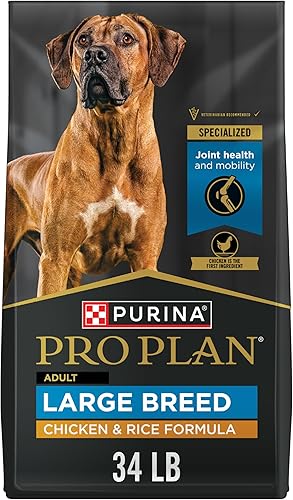
Purina Pro Plan has long been a veterinarian favorite, and the Shredded Blend formula with real chicken is an excellent match for Beagles. The combination of crunchy kibble and tender shredded pieces provides textural variety that slows down eating — something every Beagle owner appreciates. With 26% protein and 16% fat, it offers a solid macronutrient profile for active Beagles.
What sets Pro Plan apart is the inclusion of live probiotics for digestive health, which is particularly valuable for Beagles prone to stomach sensitivity. The formula also includes natural prebiotic fiber from wheat bran and rice. It’s widely available, reasonably priced, and backed by extensive feeding trials rather than just meeting AAFCO minimums on paper.
Best for: Beagles with sensitive stomachs who need digestive support at a reasonable price.
3. Wellness Complete Health Small Breed
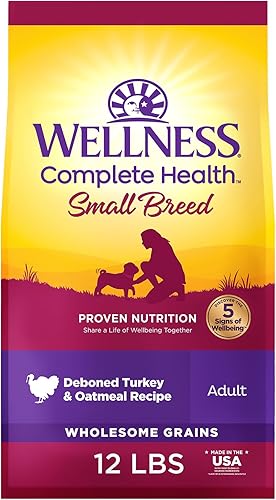
While Beagles are technically a medium breed, many fall on the smaller end at 20–25 pounds, and the Wellness Complete Health Small Breed formula works beautifully for these dogs. The smaller kibble size is easier for Beagles to chew, and the formula delivers 28% protein from deboned turkey and chicken meal with a controlled 15% fat content.
This food shines in its ingredient quality — no wheat, corn, soy, meat by-products, or artificial preservatives. It includes oatmeal, ground barley, and flaxseed for digestive health and sustained energy. Glucosamine and chondroitin are added for joint support, which is important for a breed prone to intervertebral disc disease. The calorie density is well-controlled, making portion management straightforward.
Best for: Smaller Beagles (under 25 lbs) and owners who prioritize clean, natural ingredients.
4. Blue Buffalo Life Protection Formula
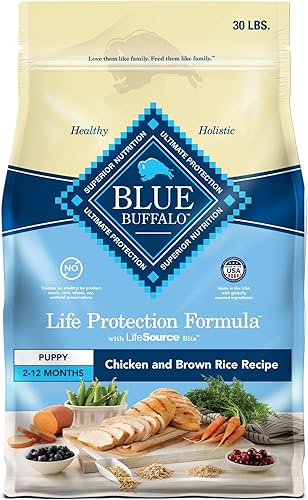
Blue Buffalo’s Life Protection Formula with real chicken hits a sweet spot between ingredient quality and affordability. The standout feature is their “LifeSource Bits” — a blend of antioxidants, vitamins, and minerals processed at lower temperatures to preserve potency. With 24% protein and 14% fat, the macros are well-suited for Beagles who need weight management without sacrificing nutrition.
The formula includes whole grains like brown rice, oatmeal, and barley for healthy fiber content, plus glucosamine for joint health. It avoids chicken by-product meals, corn, wheat, and soy. Some Beagles do exceptionally well on this food, though owners should note the protein percentage is slightly lower than some competitors. For less active or senior Beagles, this can actually be an advantage.
Best for: Moderately active Beagles and owners seeking quality ingredients at a mid-range price.
5. Merrick Classic Real Chicken + Brown Rice
Merrick delivers a premium formula with deboned chicken as the very first ingredient and an impressive 30% protein content. For active Beagles who get plenty of exercise, this higher protein level supports lean muscle maintenance and provides lasting satiety. The recipe includes a thoughtful blend of sweet potatoes, peas, apples, and blueberries for vitamins, antioxidants, and natural fiber.
What I particularly like about Merrick for Beagles is the inclusion of glucosamine and chondroitin from natural sources, along with omega fatty acids from salmon meal and flaxseed. The food is cooked in the USA and the brand has a strong track record for quality control. The higher protein content means you’ll feed slightly smaller portions, which helps offset the premium price.
Best for: Active, athletic Beagles who maintain a healthy weight with regular exercise.
6. Nutro Wholesome Essentials Adult
Nutro takes a “clean feeding” approach that resonates well with health-conscious pet owners. Their Wholesome Essentials formula features farm-raised chicken as the first ingredient, followed by whole brown rice and sweet potato. The brand commits to non-GMO ingredients and avoids chicken by-product meal, corn, wheat, soy, and artificial flavors or preservatives.
At 24% protein and 14% fat, the macronutrient profile is moderate and well-suited for the average pet Beagle. The natural fiber sources help with satiety, and the balanced omega-3 to omega-6 ratio supports skin health — helpful for Beagles prone to allergies and dry skin. Nutro is also one of the more digestible formulas on this list, producing smaller, firmer stools that Beagle owners appreciate.
Best for: Beagles with food sensitivities and owners who prefer non-GMO, clean-label nutrition.
7. Hill’s Science Diet Adult Perfect Weight
Let’s be honest — a significant number of Beagles need a weight management food, and Hill’s Science Diet Perfect Weight is the best one available. This formula has helped 70% of dogs achieve a healthier weight within 10 weeks in clinical trials. It uses a proprietary blend of ingredients with prebiotic fiber to promote a feeling of fullness, making it far easier to reduce portions without your Beagle staging a hunger strike.
The protein comes from real chicken and is set at 28%, while fat is controlled at just 9% — significantly lower than standard adult formulas. Despite the lower fat, dogs find this food palatable thanks to Hill’s flavor research. It also includes L-carnitine to help convert fat to energy and coconut oil for metabolic support. If your Beagle is already overweight, this is the food I recommend starting with.
Best for: Overweight Beagles and those at high risk for obesity. An excellent choice under veterinary guidance.
Beagle Feeding Guide by Age and Weight
One of the most common questions I get is “how much should I feed my Beagle?” The answer depends on age, weight, activity level, and the specific food you’re using. Always check your food’s packaging for precise guidelines, but this table provides a solid general framework:
| Life Stage | Weight Range | Daily Amount | Meals Per Day | Notes |
|---|---|---|---|---|
| Puppy (2–4 months) | 5–10 lbs | ¾ – 1½ cups | 3–4 | Use puppy-specific formula |
| Puppy (4–6 months) | 10–15 lbs | 1 – 1¾ cups | 3 | Begin reducing meal frequency |
| Puppy (6–12 months) | 15–20 lbs | 1¼ – 2 cups | 2 | Transition to adult food at 12 months |
| Adult (1–7 years) | 20–25 lbs | 1 – 1½ cups | 2 | Adjust based on activity level |
| Adult (1–7 years) | 25–30 lbs | 1¼ – 1¾ cups | 2 | Monitor weight monthly |
| Active/Working Adult | 20–30 lbs | 1½ – 2¼ cups | 2 | Increase for high-activity dogs |
| Senior (7+ years) | 20–30 lbs | ¾ – 1¼ cups | 2 | Switch to senior formula; reduce 10–15% |
| Overweight Adult | 30+ lbs | ¾ – 1 cup | 2 | Use weight management food; consult vet |
Important: These amounts are based on standard adult kibble with approximately 350 calories per cup. Always use a proper measuring cup — not a coffee mug or scoop — and factor in treats as part of the daily calorie total. Treats should make up no more than 10% of your Beagle’s daily intake.
How to Prevent Obesity in Beagles
Weight management isn’t just a cosmetic concern for Beagles — it’s a medical one. Overweight Beagles face higher risks of joint disease, diabetes, heart problems, and a shortened lifespan. Research shows that lean dogs live an average of two years longer than their overweight counterparts. Here’s how to keep your Beagle trim without making mealtime miserable.
Master Portion Control
Measure every meal. I cannot stress this enough. Free-feeding (leaving food out all day) is an absolute disaster for Beagles — they will eat until the bowl is empty, then check again in twenty minutes just in case. Serve two measured meals per day at consistent times. If your Beagle isn’t finishing meals within 15 minutes, pick the bowl up. This creates structure and prevents grazing behavior.
Invest in a Slow Feeder Bowl
Slow feeder bowls with ridges, mazes, or raised patterns force your Beagle to work for their food rather than vacuuming it up in seconds. This slows eating by 5–10 times, which allows the brain’s satiety signals to catch up with the stomach. It also provides mental stimulation, which a smart breed like the Beagle genuinely needs. Puzzle feeders and snuffle mats work wonderfully too — they turn mealtime into an enrichment activity.
Set Strict Treat Limits
Beagles are phenomenally trainable because they’re so food-motivated, but training treats add up fast. Break treats into tiny pieces — your Beagle doesn’t care about the size, just the act of receiving something. Use low-calorie options like small pieces of carrot, green beans, apple slices, or air-dried training treats. Keep a mental (or actual) tally and subtract treat calories from their daily food allowance.
Consistent Daily Exercise
A healthy adult Beagle needs at least 60 minutes of exercise daily — ideally split between walks, off-leash play, and scent games. Beagles who don’t get enough physical and mental exercise tend to fixate even more on food out of boredom. A tired Beagle is a content Beagle, and a content Beagle isn’t raiding your trash can at 2 AM.
Regular Weigh-Ins
Weigh your Beagle monthly. Weight gain in this breed happens gradually — a quarter pound here, a half pound there — until suddenly your vet is having “the talk” with you. You should be able to feel (but not prominently see) your Beagle’s ribs with light pressure. From above, they should have a visible waist. From the side, their belly should tuck up behind the ribcage. If you’re unsure, ask your vet to show you body condition scoring at your next visit.
Foods Dangerous for Dogs
Beagles are notorious for eating first and asking questions never. Because of their scavenging tendencies and powerful noses, it’s critical that every Beagle owner knows which common foods are genuinely dangerous. Keep these well out of reach:
- Chocolate: Contains theobromine, which dogs cannot metabolize. Dark chocolate and baking chocolate are the most dangerous. Even small amounts can cause vomiting, diarrhea, rapid heart rate, and in severe cases, seizures or death.
- Grapes and raisins: Can cause acute kidney failure in dogs, and the toxic dose varies unpredictably — some dogs are severely affected by just a few grapes. There is no safe amount.
- Xylitol (birch sugar): Found in sugar-free gum, candy, peanut butter, and baked goods. Causes a rapid, life-threatening drop in blood sugar and can lead to liver failure. Always check peanut butter labels before sharing with your Beagle.
- Onions and garlic: All members of the allium family damage red blood cells and can cause anemia. This includes onion powder and garlic powder commonly found in seasoned foods and baby food.
- Cooked bones: Cooked bones splinter into sharp fragments that can puncture the esophagus, stomach, or intestines. Raw bones are generally safer but should always be supervised.
- Macadamia nuts: Cause weakness, vomiting, tremors, and hyperthermia in dogs. Often found in cookies and trail mixes that a counter-surfing Beagle might discover.
- Alcohol: Even small amounts can cause dangerous drops in blood sugar, blood pressure, and body temperature. Beer, wine, and liquor are obvious, but also watch for alcohol in unbaked bread dough and certain desserts.
- Avocado: The pit, skin, and leaves contain persin, which can cause vomiting and diarrhea. The flesh is less toxic but the large pit poses a serious choking and obstruction hazard.
- Caffeine: Found in coffee, tea, energy drinks, and some medications. Causes restlessness, rapid breathing, heart palpitations, and muscle tremors.
If your Beagle ingests any of these foods, contact your veterinarian or the ASPCA Animal Poison Control Center (888-426-4435) immediately. With a breed this determined to eat everything, prevention is your best strategy — use childproof locks on lower cabinets and never leave plates unattended on coffee tables.
Frequently Asked Questions
How many times a day should I feed my Beagle?
Adult Beagles do best with two measured meals per day, spaced approximately 12 hours apart. This schedule keeps blood sugar stable, prevents excessive hunger between meals, and makes portion control much simpler than free-feeding. Puppies under six months should eat three times daily, gradually transitioning to twice daily by their first birthday. Avoid feeding just once a day — a single large meal can increase the risk of bloat and leaves your Beagle painfully hungry for most of the day, which amplifies begging and scavenging behavior.
Should I feed my Beagle grain-free food?
For most Beagles, grain-free food is unnecessary and may carry risks. The FDA has been investigating a potential link between grain-free diets high in legumes (peas, lentils, chickpeas) and dilated cardiomyopathy (DCM) in dogs. Unless your veterinarian has diagnosed a specific grain allergy through an elimination diet, wholesome grains like brown rice, oatmeal, and barley are safe, nutritious, and provide valuable fiber that helps Beagles feel satisfied. If you suspect a food allergy, work with your vet to identify the actual allergen rather than eliminating an entire food group.
My Beagle is always hungry — is something wrong?
Probably not. Beagles are genetically predisposed to feel hungry, and research has identified a specific gene mutation (POMC) that’s more common in Beagles and Labradors, affecting hunger regulation. In most cases, constant begging is normal breed behavior, not a medical issue. However, if your Beagle’s appetite has suddenly increased, they’re losing weight despite eating well, or they’re drinking excessively, see your vet to rule out conditions like diabetes, Cushing’s disease, or intestinal parasites. For otherwise healthy Beagles, the strategies in this guide — high-fiber food, measured portions, slow feeders, and enrichment — are your best tools for managing their bottomless appetite.
When should I switch my Beagle to senior dog food?
Most veterinarians recommend transitioning to a senior formula around age 7, though the timing depends on your individual dog’s health and activity level. Senior Beagle food typically has fewer calories to account for decreased metabolism, higher fiber for digestive regularity, added joint-support ingredients like glucosamine, and enhanced levels of antioxidants for cognitive health. Make the switch gradually over 7–10 days, mixing increasing amounts of the new food with the old to prevent digestive upset. If your senior Beagle is still active and maintaining a healthy weight on adult food, discuss the timing with your vet — some dogs do fine on adult formulas well into their senior years.
Can I mix wet food with my Beagle’s kibble?
Yes, and it can actually be a smart strategy for Beagles. Adding a small amount of wet food (1–2 tablespoons) to kibble increases moisture content, enhances palatability, and adds variety to meals. The added moisture helps with hydration and can make the food more satisfying. Just be sure to account for the extra calories from the wet food by slightly reducing the kibble portion. Choose wet foods with quality ingredients that complement your kibble — the same brand often works well. Avoid adding table scraps, gravy, or broth with onion or garlic as a topper, no matter how much your Beagle insists it’s absolutely necessary for their survival.
Featured Image Source: Pexels