


Why Golden Retrievers Need Special Attention at Mealtime
I’ve been feeding Golden Retrievers for over twelve years now, and if there’s one thing I’ve learned from my two goofballs, Maple and Biscuit, it’s that these dogs are not just big Labradors with longer hair. Goldens have a unique set of nutritional needs that, frankly, a lot of generic “large breed” formulas don’t fully address.
Let me break down what makes feeding a Golden different from feeding most other breeds.
Those Beautiful Joints Need Serious Support
Golden Retrievers are unfortunately prone to hip and elbow dysplasia. It’s one of the breed’s biggest health challenges, and nutrition plays a massive role in how those joints hold up over time. You want a food that includes glucosamine, chondroitin, and omega-3 fatty acids — not as afterthoughts, but as featured ingredients. Maple started showing some stiffness at age seven, and switching to a food with higher EPA and DHA levels made a visible difference within about six weeks.
That Coat Doesn’t Maintain Itself
A Golden’s double coat is their crown jewel, but it’s also a nutritional barometer. When the diet is off, you’ll see it in the fur first — dullness, excessive shedding, dry flakes. Omega-3 and omega-6 fatty acids are non-negotiable. Fish-based proteins or foods supplemented with fish oil tend to produce the best coat results in my experience. If your Golden’s coat looks like straw, look at the food before you look at the shampoo.
The Vacuum Cleaner Problem
Goldens inhale food. I’m not exaggerating. Biscuit can demolish two cups of kibble in under forty-five seconds if I let him. This matters for two reasons: it increases the risk of bloat (gastric dilatation-volvulus), which is life-threatening, and it means they’re not really chewing their food. Look for larger kibble sizes designed for large breeds, and seriously consider a slow-feeder bowl. I also split meals into two servings per day minimum — never one giant meal.
Weight Management Is a Constant Battle
Goldens love food more than they love you. I’m sorry, but it’s true. They will convince you they’re starving with those soulful brown eyes, and before you know it, your vet is giving you the “your dog needs to lose fifteen pounds” talk. A good Golden Retriever food should be calorie-conscious without being low in protein. You want lean muscle maintenance, not a dog who’s shaped like a golden barrel.
My Top 7 Dog Foods for Golden Retrievers in 2026
I’ve tried a lot of foods over the years — some on my own dogs, others recommended by the breeder community and veterinarians I trust. Here are my honest picks, in order of overall recommendation.
1. Purina Pro Plan Large Breed Adult — Chicken & Rice
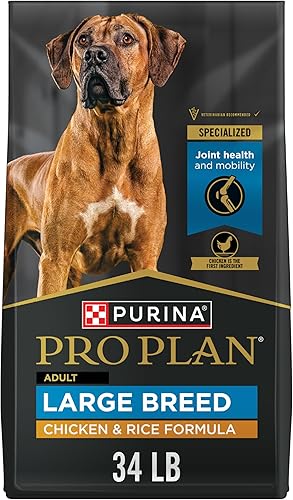
This is what both my dogs eat right now, and I’m not shy about recommending it. It’s backed by solid research, includes guaranteed levels of glucosamine and EPA, and my dogs’ coats have never looked better.
- Pros: Excellent joint support ingredients, highly digestible, consistent quality batch to batch, reasonably priced for a premium food
- Cons: Contains corn and poultry by-product meal, which bothers some owners philosophically (though nutritionally they’re perfectly fine)
- Best for: Adult Goldens who need reliable, research-backed nutrition without breaking the bank

2. Royal Canin Golden Retriever Adult
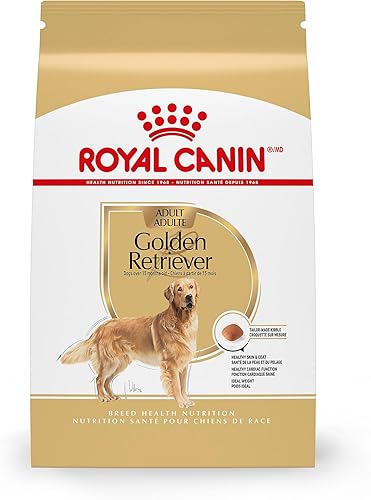
This is the only food on this list formulated specifically for the breed. Royal Canin designed the kibble shape for a Golden’s jaw, and the formula targets skin, coat, and cardiac health. It’s one of the most popular choices among Golden Retriever breeders for good reason.
- Pros: Breed-specific kibble shape, excellent taurine levels for heart health, strong coat results
- Cons: More expensive than most competitors, ingredient list won’t impress the “grain-free” crowd
- Best for: Owners who want a breed-specific formula and don’t mind paying a premium
3. Hill’s Science Diet Large Breed Adult
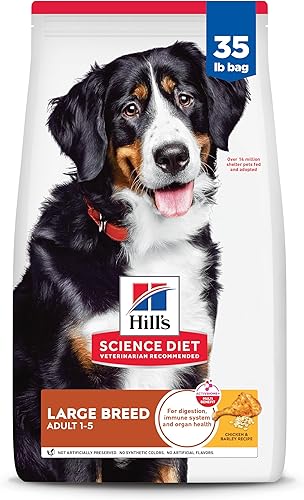
Hill’s is the go-to recommendation from many veterinarians, and for good reason. Their formulas are extensively tested in feeding trials, not just formulated to meet AAFCO minimums on paper. The large breed formula has solid glucosamine levels and controlled calorie density.
- Pros: Vet-trusted, feeding trial tested, excellent for weight management, good digestibility
- Cons: Some dogs find it less palatable than competitors, higher price point
- Best for: Goldens with sensitive stomachs or those who need calorie control
4. Eukanuba Large Breed Adult
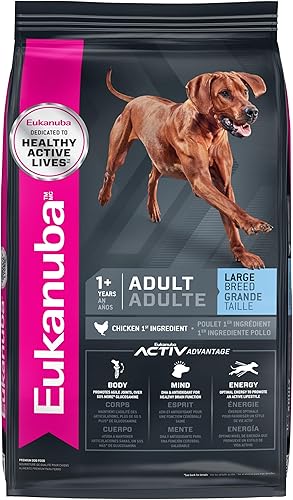
Eukanuba has been a staple in the sporting dog world for decades. Their large breed formula features animal protein as the first ingredient and includes their 3D DentaDefense system for dental health, which is a nice bonus for a breed that’s prone to tartar buildup.
- Pros: High animal protein content, good dental health support, strong muscle maintenance
- Cons: Contains some filler ingredients, not as widely available as it used to be
- Best for: Active Goldens who need higher protein for muscle maintenance
5. Wellness CORE Large Breed Original
If you prefer a food with a cleaner-looking ingredient list and no corn, wheat, or soy, Wellness CORE is a strong pick. It uses deboned turkey and chicken meal as primary proteins, and it includes flaxseed and salmon oil for coat health.
- Pros: No artificial preservatives, high protein from quality sources, good omega fatty acid profile
- Cons: Pricier than the top three picks, some batches have had palatability complaints online
- Best for: Owners who prioritize ingredient transparency and are willing to pay more
6. Nutro Ultra Large Breed Adult
Nutro Ultra uses a trio of proteins — chicken, lamb, and salmon — which gives a nice amino acid variety and usually makes it appealing to picky eaters. It also includes a good blend of superfoods like coconut, chia, and kale, which contribute antioxidants.
- Pros: Triple protein source, no chicken by-product meal, rich antioxidant profile
- Cons: Lower glucosamine levels than some competitors, slightly higher fat content
- Best for: Goldens who get bored with single-protein foods or need more palatability
7. Diamond Naturals Large Breed Adult — Lamb & Rice
This is my budget pick, and I don’t say that as a backhanded compliment. Diamond Naturals delivers solid nutrition at a price that makes feeding a large breed manageable. Lamb is the first ingredient, and it includes probiotics for digestive health.
- Pros: Excellent value for money, includes probiotics, real lamb as first ingredient
- Cons: Has had recall history in years past, less research behind the formulation
- Best for: Budget-conscious families who still want quality ingredients
Golden Retriever Feeding Guide by Age
This table is a general guideline based on average-sized Goldens. Your individual dog’s needs will vary based on activity level, metabolism, and whether they’ve been spayed or neutered. Always adjust based on body condition — you should be able to feel your Golden’s ribs without pressing hard, but not see them.
| Age | Daily Amount | Meals Per Day | Key Nutritional Focus |
|---|---|---|---|
| 8–12 weeks | 1 to 1.5 cups | 3–4 | High-quality puppy formula, DHA for brain development |
| 3–6 months | 1.5 to 2.5 cups | 3 | Controlled calcium for steady bone growth |
| 6–12 months | 2.5 to 3.5 cups | 2 | Large breed puppy food, gradual transition preparation |
| 1–2 years | 3 to 4 cups | 2 | Transition to adult formula, joint support begins |
| 2–7 years (adult) | 2.5 to 3.5 cups | 2 | Maintenance protein and fat, weight monitoring |
| 7+ years (senior) | 2 to 3 cups | 2 | Lower calories, increased joint support, easy digestibility |
A note on puppies: Always use a large breed puppy formula, not a regular puppy food. Standard puppy foods can cause Golden Retriever puppies to grow too fast, which puts dangerous stress on developing joints. This isn’t optional — it’s one of the most important nutritional decisions you’ll make for your pup.
Foods That Are Dangerous for Dogs
Goldens are notorious counter-surfers and garbage investigators. Maple once ate an entire loaf of banana bread off the kitchen island while I was in the bathroom for two minutes. Knowing which human foods are genuinely dangerous could save your dog’s life.
Toxic — Seek Veterinary Help Immediately
- Chocolate — Dark chocolate and baking chocolate are the most dangerous. Even small amounts of baking chocolate can cause seizures and heart failure in a large dog.
- Grapes and raisins — Even a handful can cause acute kidney failure. Scientists still don’t fully understand why, but the toxicity is well documented. Don’t risk it.
- Xylitol (birch sugar) — Found in sugar-free gum, some peanut butters, and baked goods. Causes a rapid insulin spike that can be fatal. Always check peanut butter labels before sharing with your dog.
- Onions and garlic — Damage red blood cells and can cause anemia. This includes onion powder in processed foods, which people forget about.
- Macadamia nuts — Cause weakness, vomiting, tremors, and hyperthermia. Usually not fatal but can make your dog very sick.
Harmful — Avoid Completely
- Cooked bones — They splinter and can puncture the intestines. Raw bones are debatable, but cooked bones are a hard no.
- Alcohol — Even small amounts can cause dangerous drops in blood sugar, blood pressure, and body temperature.
- Caffeine — Similar effects to chocolate toxicity. Keep coffee grounds, tea bags, and energy drinks out of reach.
- Avocado — The pit is a choking hazard and persin in the fruit can cause vomiting and diarrhea.
- Raw yeast dough — Expands in the stomach and produces alcohol as it ferments. It’s a double threat.
If your Golden eats something toxic, call the ASPCA Animal Poison Control Center at (888) 426-4435 or your emergency vet immediately. Don’t wait for symptoms — with many toxins, by the time you see signs, the damage is already progressing.
Frequently Asked Questions
Should I feed my Golden Retriever grain-free food?
I’d recommend against it unless your vet has diagnosed a specific grain allergy, which is actually quite rare in dogs. The FDA has been investigating a potential link between grain-free diets and dilated cardiomyopathy (DCM) in dogs since 2018, and Golden Retrievers are already genetically predisposed to DCM. Until we have definitive answers, I’m keeping my dogs on grain-inclusive formulas. The risk isn’t worth it when most dogs do perfectly well with grains like rice and barley.
How much should an adult Golden Retriever weigh?
Males typically weigh between 65 and 75 pounds, and females between 55 and 65 pounds. But honestly, the number on the scale matters less than body condition. Run your hands along your dog’s sides — you should feel ribs easily under a thin layer of fat. From above, your Golden should have a visible waist. From the side, the belly should tuck up slightly. If your Golden looks like a furry ottoman from every angle, it’s time to cut back on the portions and treats.
How often should I feed my adult Golden Retriever?
Twice a day, every day, no exceptions. I feed Maple and Biscuit at 7 AM and 5 PM. Splitting meals into two servings reduces the risk of bloat, helps maintain stable blood sugar, and makes it easier to monitor appetite changes that could signal health issues. Some people free-feed, but with a breed this food-motivated, that’s asking for an overweight dog. Goldens do not self-regulate. They will eat until they’re physically uncomfortable and then look at you like they haven’t been fed in days.
Can I mix wet food with dry kibble for my Golden?
Absolutely, and I actually recommend it for picky eaters or senior dogs with dental issues. I add a couple of tablespoons of wet food to Maple’s dinner because she’s gotten fussier as she’s gotten older. Just make sure you account for the extra calories from the wet food by reducing the kibble portion slightly. A common mistake is adding wet food on top of a full serving of kibble — that’s just adding calories your dog doesn’t need.
When should I switch my Golden Retriever puppy to adult food?
Most Golden Retrievers should transition to an adult large breed formula between 12 and 18 months of age. I switched both of mine at around 14 months. Don’t rush it — large breed puppies need the controlled calcium and phosphorus ratios in puppy food to support proper skeletal development. When you do switch, transition gradually over 7 to 10 days by mixing increasing amounts of adult food with decreasing amounts of puppy food. Sudden switches almost always cause digestive upset, and nobody wants to deal with Golden Retriever diarrhea. Trust me on that one.
Featured Image Source: Pexels