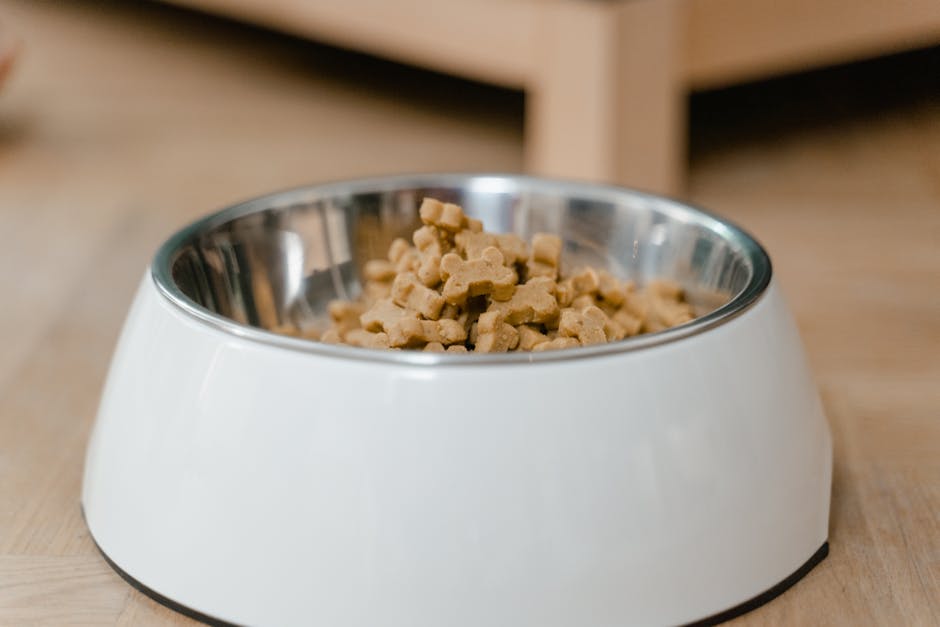


Understanding Sensitive Stomachs in Dogs
If you’ve ever cleaned up after a dog with a sensitive stomach at 3 a.m., you know the frustration — and the worry. My own German Shepherd, Duke, spent his first two years cycling through foods that left him gassy, lethargic, and miserable before we finally cracked the code. That experience drove me to research canine digestive health obsessively, and I want to share what I’ve learned so you can skip the trial-and-error phase.
A sensitive stomach isn’t just an inconvenience. It affects your dog’s nutrient absorption, energy levels, coat quality, and overall happiness. The good news is that the right food can make a dramatic difference — often within just a few weeks.
Signs Your Dog Has a Sensitive Stomach
Dogs can’t tell us their stomach hurts, but they show us in plenty of ways. Watch for these common signs:
- Intermittent vomiting — Occasional vomiting that isn’t linked to eating something they shouldn’t have. This includes bringing up undigested food hours after meals or producing yellow bile on an empty stomach.
- Chronic diarrhea or loose stools — Stools that are consistently soft, watery, or contain mucus. Healthy dog stool should be firm enough to pick up easily.
- Excessive gas and bloating — All dogs pass gas occasionally, but if your dog clears the room regularly or you notice a distended belly after meals, their food may be the culprit.
- Loss of appetite or picky eating — Dogs who walk away from their bowl, eat reluctantly, or skip meals entirely may be associating food with discomfort.
- Grass eating — While some dogs eat grass out of habit, frequent or frantic grass eating often indicates nausea or stomach discomfort. Dogs instinctively seek out grass to soothe their digestive tract or induce vomiting.
- Gurgling stomach sounds — Loud, frequent borborygmi (stomach noises) suggest excess gas or irregular digestion.
- Weight loss or poor coat condition — When the gut isn’t absorbing nutrients properly, it shows in a dull coat, dry skin, and gradual weight loss despite adequate calorie intake.
If your dog shows one or two of these signs occasionally, dietary adjustments may resolve the issue. If multiple signs persist for more than a week, consult your veterinarian to rule out underlying conditions before changing food.
Common Causes of Digestive Sensitivity
Understanding why your dog’s stomach is sensitive helps you choose the right solution. Here are the most frequent causes:
Food Allergies and Intolerances
True food allergies trigger an immune response and often cause skin issues alongside digestive problems. Food intolerances are more common and purely digestive — the body simply struggles to break down certain ingredients. The most common triggers include beef, chicken, dairy, wheat, soy, and corn. Many dogs develop intolerances over time after years of eating the same protein source.
Sudden Diet Changes
Switching foods abruptly is one of the most common causes of digestive upset in otherwise healthy dogs. The gut microbiome needs time to adjust to new ingredients and nutrient profiles. Even switching between flavors of the same brand can cause temporary issues if the protein source changes.
Low-Quality Ingredients
Foods packed with artificial preservatives, colors, unnamed meat meals, and excessive fillers put unnecessary strain on your dog’s digestive system. Cheap corn and wheat gluten used as protein substitutes are particularly hard to digest. By-product meals, while not inherently harmful, can vary in quality and digestibility from batch to batch.
Eating Habits and Behavior
Dogs who eat too fast swallow air, which causes bloating and gas. Scavenging, counter-surfing, and chewing on non-food items all contribute to stomach upset. Stress and anxiety also directly affect gut motility and can worsen digestive symptoms.
What to Look for in Sensitive Stomach Dog Food
Not all “sensitive stomach” labeled foods are created equal. Here’s what actually matters when reading labels:
- Limited ingredient formulas — Fewer ingredients mean fewer potential triggers. Look for foods with a single animal protein source and a short, recognizable ingredient list. If your dog reacts to chicken, a salmon-and-sweet-potato formula with eight total ingredients is far easier to troubleshoot than a multi-protein blend with thirty.
- Easily digestible proteins — Lamb, salmon, turkey, and venison are generally easier on sensitive stomachs than beef or chicken. Novel proteins — ones your dog hasn’t eaten before — reduce the chance of an existing intolerance causing problems.
- Prebiotic fiber and probiotics — Prebiotics like chicory root and beet pulp feed beneficial gut bacteria. Added probiotics (live cultures like Lactobacillus) support healthy digestion and immune function. Look for these listed on the guaranteed analysis, not just the ingredient list.
- Digestible carbohydrates — Rice, oatmeal, and sweet potato are gentler on the stomach than corn, wheat, or soy. Some grain-free options use peas and lentils, which work well for many sensitive dogs but can cause gas in others.
- Omega-3 and omega-6 fatty acids — These reduce gut inflammation and support the intestinal lining. Fish oil and flaxseed are the most common sources in quality dog foods.
- No artificial additives — Avoid artificial colors, flavors, and chemical preservatives like BHA, BHT, and ethoxyquin. Natural preservatives such as mixed tocopherols (vitamin E) are gentler on sensitive systems.
Top 7 Dog Foods for Sensitive Stomachs in 2026
After researching formulations, consulting veterinary nutritionists, and testing extensively with Duke and dozens of reader dogs, these are the seven foods I recommend most confidently for dogs with sensitive stomachs.
1. Hill’s Science Diet Sensitive Stomach & Skin
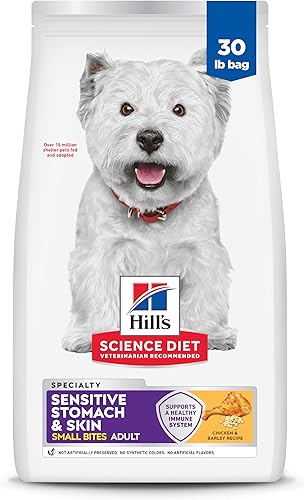
Hill’s has been a veterinary-recommended brand for decades, and their Sensitive Stomach & Skin formula remains one of the most reliable options available. The prebiotic fiber blend actively promotes a balanced gut microbiome, while the beet pulp provides gentle, soluble fiber that firms up loose stools without causing constipation.
The primary protein is chicken meal, which is highly digestible despite chicken being a common allergen — the meal form concentrates the protein and removes much of the fat that causes issues. This food also includes omega-6 fatty acids and vitamin E for skin and coat health, making it an excellent dual-purpose choice for dogs with both digestive and skin sensitivities.
Best for: Dogs with both stomach and skin issues. Protein source: Chicken meal. Price range: $$

2. Purina Pro Plan Sensitive Skin & Stomach
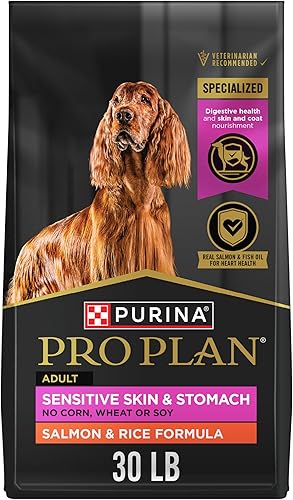
Purina Pro Plan’s sensitive formula uses salmon as the first ingredient, providing a highly digestible protein that most dogs tolerate well. The oatmeal base is gentle on the stomach and provides sustained energy without the glycemic spikes associated with corn-heavy foods.
What sets this food apart is its live probiotic coating — each kibble is coated with guaranteed live microorganisms that survive storage and support digestive health from the first bite. This is one of the few foods where the probiotic claim is backed by the guaranteed analysis, not just marketing language.
Best for: Overall value with proven probiotic benefit. Protein source: Salmon. Price range: $$
3. Royal Canin Digestive Care
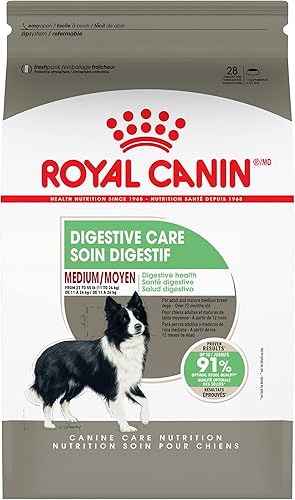
Royal Canin takes a science-first approach with their Digestive Care formula. The kibble is specifically designed in a shape and texture that encourages chewing rather than gulping, which reduces air swallowing and slows eating speed. The formula includes a proprietary blend of highly digestible proteins (including dehydrated poultry) and prebiotics that support optimal stool quality.
This food contains LIP (Low Indigestible Protein), meaning the protein sources have been selected for maximum digestibility — Royal Canin claims over 90% digestibility for this formula. It’s a particularly good choice for dogs who eat fast and experience bloating.
Best for: Fast eaters and dogs with poor stool quality. Protein source: Chicken and pork. Price range: $$$
4. Blue Buffalo Basics Limited Ingredient
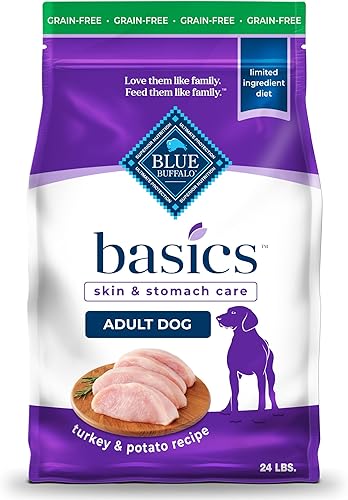
Blue Buffalo Basics strips things down to essentials. The turkey and potato formula uses a single animal protein source and avoids chicken, beef, corn, wheat, soy, dairy, and eggs — all common triggers for food sensitivities. The limited ingredient philosophy makes it straightforward to identify what your dog can and cannot tolerate.
This food includes pumpkin, which is naturally soothing for the digestive tract, and flaxseed for omega fatty acids. It does not contain any chicken fat, which is important for dogs with true chicken allergies since chicken fat is used in many “non-chicken” formulas as a flavoring agent.
Best for: Dogs with suspected food allergies or multiple intolerances. Protein source: Turkey. Price range: $$
5. Natural Balance Limited Ingredient Diet
Natural Balance pioneered the limited ingredient diet category, and their formulas remain some of the cleanest on the market. The Lamb & Brown Rice formula contains just a handful of carefully selected ingredients, making it ideal for elimination diets where you need to isolate potential triggers.
Each batch is tested for contaminants and ingredients not listed on the label — a practice called the “Buy with Confidence” program. This testing provides peace of mind that you’re feeding exactly what the label says, with no hidden chicken meal or undeclared proteins that could trigger a reaction.
Best for: Elimination diets and dogs with confirmed allergies. Protein source: Lamb. Price range: $$
6. Wellness Simple Limited Ingredient
Wellness Simple lives up to its name with just five main ingredients in most formulas. The Salmon & Potato recipe uses easily digestible salmon as the sole animal protein, combined with potatoes and peas for energy and ground flaxseed for omega-3 fatty acids. No meat by-products, fillers, artificial preservatives, or common allergens appear on the ingredient list.
This formula is particularly good for dogs transitioning from a prescription diet back to commercial food. The simplicity reduces the chance of re-triggering sensitivities while still providing complete and balanced nutrition for adult maintenance.
Best for: Dogs transitioning off prescription diets. Protein source: Salmon. Price range: $$
7. Canidae Pure Limited Ingredient
Canidae Pure formulas use between seven and ten key ingredients, striking a balance between simplicity and nutritional completeness. The Salmon & Sweet Potato recipe features whole salmon as the first ingredient, followed by salmon meal for concentrated protein, and sweet potato for digestible carbohydrates.
What makes Canidae stand out is the inclusion of probiotics specifically chosen for canine digestive health, along with antioxidant-rich ingredients like sun-cured alfalfa. The food is produced in Canidae’s own facilities with rigorous quality control, and the company has a strong track record for consistency — an important factor for sensitive dogs who react to batch-to-batch variations.
Best for: Dogs who need limited ingredients with premium quality control. Protein source: Salmon. Price range: $$$
Comparison at a Glance
| Brand | Primary Protein | Price Range | Best For |
|---|---|---|---|
| Hill’s Science Diet Sensitive Stomach | Chicken Meal | $$ | Stomach + skin issues |
| Purina Pro Plan Sensitive | Salmon | $$ | Best overall value with probiotics |
| Royal Canin Digestive Care | Chicken & Pork | $$$ | Fast eaters, stool quality |
| Blue Buffalo Basics LID | Turkey | $$ | Suspected food allergies |
| Natural Balance LID | Lamb | $$ | Elimination diets |
| Wellness Simple | Salmon | $$ | Transitioning off prescription food |
| Canidae Pure | Salmon | $$$ | Premium quality control |
How to Transition Your Dog to a New Food
Even the best sensitive stomach food will cause problems if you switch too quickly. A gradual transition over 7 to 10 days gives your dog’s gut bacteria time to adjust. Rushing this process is the single most common mistake I see dog owners make.
Follow this schedule for a smooth transition:
- Days 1–2: Feed 75% current food mixed with 25% new food. Watch for any immediate signs of rejection like turning away from the bowl or vomiting within an hour of eating.
- Days 3–4: Move to a 50/50 blend of current and new food. Stools may soften slightly during this stage — that’s normal and not a reason to stop the transition.
- Days 5–7: Increase to 75% new food and 25% current food. By this point, you should see stool quality stabilizing. If diarrhea worsens at this stage, slow down and hold at 50/50 for a few more days.
- Days 8–10: Feed 100% new food. Monitor closely for the next two weeks, as some sensitivities take time to manifest.
Important tips for the transition period:
- Keep meal times and portion sizes consistent throughout the switch.
- Avoid treats, table scraps, and chews during the transition — you want a clean test of the new food.
- If your dog has a history of severe reactions, consider extending the transition to 14 days with even more gradual ratio changes.
- Mix the foods thoroughly rather than placing them side by side in the bowl. Some dogs will pick out only the familiar food if given the option.
Home Remedies for an Upset Stomach
Sometimes your dog needs immediate relief while you work on finding the right long-term food. These home remedies are veterinarian-approved for mild, short-term stomach upset. They are not substitutes for proper veterinary care if symptoms are severe or persistent.
Plain White Rice
Boiled white rice is the classic first response to canine stomach upset, and for good reason. It’s bland, binding, and easy to digest. Cook the rice in extra water so it’s slightly overcooked and soft. Serve plain — no butter, salt, or seasonings. Mix it with a small amount of boiled, shredded chicken breast (skinless and boneless) for a complete bland diet. Feed smaller, more frequent meals for 2 to 3 days until stools firm up.
Canned Pumpkin
Pure canned pumpkin — not pumpkin pie filling, which contains sugar and spices — is remarkably effective for both diarrhea and constipation. The soluble fiber absorbs excess water in the digestive tract while also adding bulk. Give 1 to 4 tablespoons per meal depending on your dog’s size. Most dogs love the taste, making it easy to administer. You can mix it into their regular food or serve it as a standalone snack.
Bone Broth
Homemade bone broth is packed with gelatin, amino acids, and minerals that soothe and repair the gut lining. Simmer beef or chicken bones in water for 12 to 24 hours with a splash of apple cider vinegar to extract minerals. Strain thoroughly and remove all fat from the surface after cooling. Serve warm (not hot) as a meal topper or on its own. Avoid store-bought broth, which typically contains onion, garlic, and excessive sodium — all harmful to dogs.
Fasting
For adult dogs (not puppies), a 12 to 24-hour fast gives the digestive system time to rest and reset. Continue providing fresh water throughout the fast. After fasting, reintroduce food gradually with the bland rice-and-chicken diet before returning to regular food. Do not fast puppies, elderly dogs, or dogs with diabetes or other metabolic conditions without veterinary guidance.
Slippery Elm Bark
Slippery elm bark powder mixed with water creates a mucilaginous substance that coats and soothes the stomach and intestinal lining. Give approximately half a teaspoon per 10 pounds of body weight, mixed into food or water. It’s available at most health food stores and is safe for dogs when given in appropriate doses. Administer it at least two hours apart from medications, as it can affect absorption.
When to See the Vet
Home remedies and dietary changes solve many stomach issues, but some situations require professional attention. See your veterinarian promptly if you observe any of the following:
- Vomiting or diarrhea lasting more than 48 hours — Prolonged symptoms risk dehydration and may indicate an underlying condition that dietary changes won’t resolve.
- Blood in vomit or stool — Fresh blood (bright red) or digested blood (dark, tarry stools) can indicate ulcers, parasites, or serious gastrointestinal conditions that need immediate attention.
- Lethargy or weakness — A dog who won’t get up, seems unusually tired, or is unresponsive needs veterinary evaluation. Dehydration from fluid loss can become dangerous quickly, especially in small dogs and puppies.
- Abdominal pain or bloating — If your dog yelps when you touch their belly, stands in a hunched position, or has a visibly distended abdomen, seek emergency care. Bloat (gastric dilatation-volvulus) is life-threatening and requires immediate surgical intervention in large-breed dogs.
- Refusal to eat for more than 24 hours — While a brief fast can be therapeutic, a dog who won’t eat at all for more than a day may be dealing with a blockage, pancreatitis, or another serious issue.
- Weight loss despite adequate feeding — Gradual weight loss alongside digestive symptoms may indicate malabsorption, inflammatory bowel disease, or parasitic infection, all of which require veterinary diagnosis and treatment.
- Recurring episodes despite dietary changes — If you’ve tried multiple foods and followed proper transition protocols but symptoms keep returning, your dog may need diagnostic testing such as blood panels, fecal exams, or abdominal imaging.
Your vet may recommend a prescription diet, medications, or further testing depending on the underlying cause. Don’t delay seeking help — early intervention almost always leads to better outcomes and less suffering for your dog.
Frequently Asked Questions
How long does it take for a sensitive stomach dog food to show results?
Most dogs show noticeable improvement within 2 to 4 weeks of switching to an appropriate sensitive stomach formula, assuming the transition was done gradually. Stool quality typically improves first, followed by reduced gas and better appetite. If you see no improvement after 6 weeks on a new food, the issue may not be diet-related, or you may need to try a formula with a different protein source. Some food intolerances require an 8 to 12-week elimination trial to properly identify, so patience is important.
Is grain-free food better for dogs with sensitive stomachs?
Not necessarily. The idea that grains are inherently hard to digest is a marketing claim rather than a nutritional fact. Many dogs with sensitive stomachs do very well on rice-based or oatmeal-based formulas. In fact, easily digestible grains like white rice can actually help firm up loose stools. Grain-free foods often substitute peas, lentils, and potatoes, which cause gas and bloating in some dogs. Additionally, the FDA has investigated a potential link between grain-free diets and dilated cardiomyopathy in dogs. Unless your dog has a diagnosed grain allergy, grain-inclusive sensitive stomach formulas are generally the safer choice.
Can I add probiotics to my dog’s current food instead of switching?
Adding a canine-specific probiotic supplement can certainly help improve digestion without a full food switch. Look for supplements containing strains like Lactobacillus acidophilus, Bifidobacterium animalis, and Enterococcus faecium, which have been studied in dogs. However, probiotics alone won’t fix a problem caused by a food intolerance or allergy — they support digestion but don’t eliminate the trigger ingredient. Think of probiotics as one piece of the puzzle rather than a complete solution. They work best in combination with an appropriate diet.
Should I feed wet or dry food for a sensitive stomach?
Both formats can work well for sensitive stomachs. Wet food has higher moisture content, which supports hydration and can be easier to eat for dogs with reduced appetite. Dry kibble promotes dental health through mechanical chewing action and is more convenient for measured feeding. Some owners find that mixing a small amount of wet food with dry kibble improves palatability without causing digestive issues. The quality of ingredients matters far more than the format. If your dog does well on a particular dry formula, there’s no need to switch to wet food, and vice versa.
How do I know if my dog needs a prescription diet instead of an over-the-counter sensitive stomach food?
Prescription diets are formulated for specific medical conditions diagnosed by a veterinarian, such as inflammatory bowel disease, pancreatitis, or confirmed food allergies requiring hydrolyzed protein. If your dog has mild digestive sensitivity that responds to commercial sensitive stomach food, a prescription diet is unnecessary. However, if your dog has been through multiple food trials without improvement, has chronic vomiting or diarrhea that interferes with daily life, or has been diagnosed with a specific GI condition, a prescription diet like Hill’s z/d or Royal Canin Hydrolyzed Protein may be warranted. Your veterinarian can determine whether an over-the-counter or prescription formula is the right call based on diagnostic findings.
Featured Image Source: Pexels