
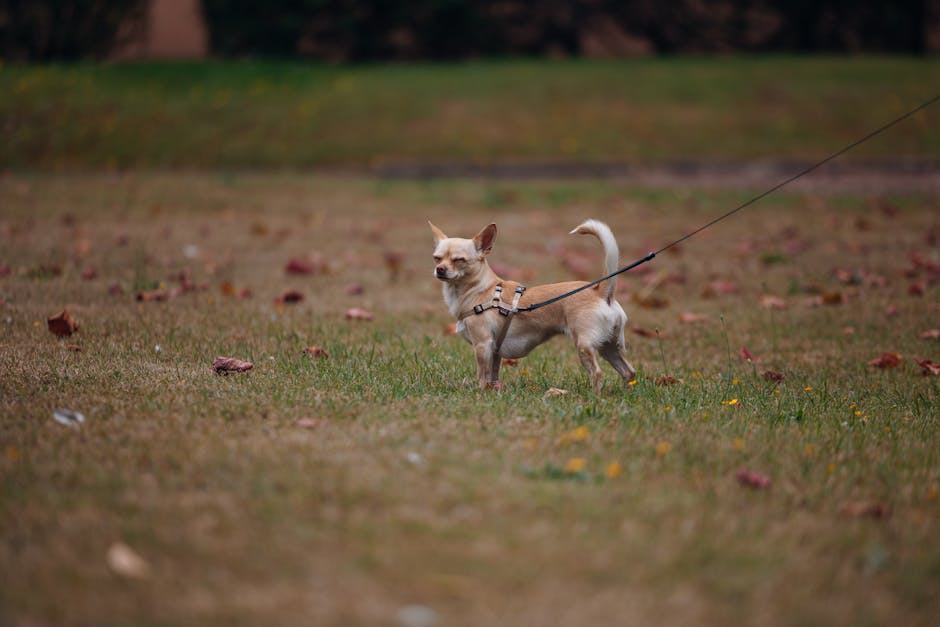

I’ve been fitting harnesses on small dogs for over a decade now — starting with my friend Lisa’s Chihuahua who absolutely destroyed her trachea pulling on a flat collar. That was the wake-up call. Since then, I’ve tested more small dog harnesses than I can count, both on my own dogs and on the parade of tiny breeds that come through our local rescue group.
Here’s what I’ve learned: most harnesses are designed for medium to large dogs first, then scaled down. And that’s a problem. A miniaturized version of a Lab harness doesn’t work on a 6-pound Yorkie. The proportions are wrong, the buckles are too heavy, and the fit points miss entirely. Small breeds need harnesses built specifically for their bodies.
So I put together this guide with seven harnesses I’ve actually handled, researched thoroughly, and would recommend to friends. No filler picks. No harnesses that technically come in size XS but clearly weren’t designed for it.
Why Small Dogs Need a Different Harness
This isn’t about being precious with your tiny dog. There are real anatomical reasons why small breeds require specific gear.
Tracheal Collapse Risk With Collars
Small breeds — Chihuahuas, Pomeranians, Yorkies, Maltese, toy Poodles — are genetically predisposed to tracheal collapse. Their tracheal rings are weaker and more prone to flattening. When a small dog pulls against a collar, all that force concentrates on a windpipe that might be the diameter of a drinking straw.
Tracheal collapse is progressive and irreversible. Once those cartilage rings start weakening, they don’t bounce back. The classic honking cough you hear in older small dogs? That’s often tracheal damage that accumulated over years of collar pressure.
A harness shifts force to the chest and shoulders — areas with muscle and bone structure that can handle it. For any dog under 15 pounds, I consider a harness non-negotiable. Not optional. Not a nice-to-have. Essential.
Harness Escape Problems in Tiny Dogs
The other issue? Small dogs are escape artists. I’ve watched a 4-pound Chihuahua back out of a “secure” harness in about three seconds flat. Their narrow chests and slim heads make it shockingly easy to slip free from poorly designed gear.
This isn’t just annoying — it’s dangerous. A loose small dog near traffic is a nightmare scenario. Their size makes them nearly invisible to drivers.
The breeds most prone to escaping:
– Chihuahuas (narrow chest, wedge-shaped head)
– Italian Greyhounds (deep chest but incredibly slim)
– Miniature Pinschers (muscular wigglers)
– Papillons (fine-boned, surprisingly strong)
You need a harness that accounts for these body types. Not just one that’s small enough to fit, but one designed so backing out isn’t possible.
What to Look for in a Small Dog Harness
Adjustable Straps for Precise Fit
This matters more for small dogs than large ones. The difference between a 5-pound and a 9-pound Chihuahua is massive in terms of chest girth. You need multiple adjustment points — minimum two, ideally three or four.
Always measure your dog’s chest girth, not just weight. I’ve seen 8-pound dogs with 12-inch chests and 8-pound dogs with 16-inch chests. Weight-based sizing charts are rough guidelines at best. More on measuring below.
Velcro closures work well for tiny dogs because you can get micro-adjustments that buckles can’t match. The downside is that Velcro weakens over time. Buckle closures are more durable but less precise. The best harnesses combine both.
Soft Padding to Prevent Rubbing
Small dog skin is thinner and more sensitive than you’d think. A stiff nylon harness that works fine on a 50-pound dog will create raw spots on a Yorkie within a week. Look for:
- Mesh materials that breathe and flex
- Padded chest panels that distribute pressure
- Smooth interior linings with no exposed stitching
- Lightweight construction — a harness shouldn’t feel like armor on a 7-pound dog
I’m a big fan of air mesh for small breeds. It’s light, breathable, and soft against the skin. Neoprene padding works too but can get warm in summer.
Escape-Proof Design Elements
The best small dog harnesses use specific features to prevent escapes:
Double belly straps — Two points of contact around the torso instead of one. If the dog manages to loosen one, the other holds.
Vest-style coverage — More fabric contact means more friction. Harder to wiggle free from a vest than from straps.
Martingale-style tightening — Some harnesses gently tighten when the dog pulls back, closing the escape route without choking.
Step-in designs — These wrap under the dog rather than going over the head. For dogs that panic when things go over their face (looking at you, every Chihuahua I’ve ever met), step-in styles reduce the drama significantly.
7 Best Harnesses for Small Breeds Compared
Puppia Soft Vest Harness
The Puppia is probably the most popular small dog harness in the world, and honestly? It earns that reputation. The air mesh material is genuinely soft — not “soft for a harness” soft, but actually comfortable-feeling fabric. It weighs almost nothing.
Best for: Calm to moderate walkers, everyday use, warm climates.
The fit uses Velcro closure on the back with a quick-release buckle. Adjustment is decent but limited to the neck area. If your dog is between sizes, that can be a problem. I’d call it a great harness for dogs that don’t pull hard and don’t try to escape. For pullers or escape artists, keep reading.
Sizes available: XS fits chest 10–13 inches (roughly 3–7 lbs). Comes in about 30 colors, which is fun if you’re into that.
Gooby Escape-Free Easy Fit Harness
Gooby designed this specifically to solve the escape problem, and they nailed it. The patented four-point adjustment system means you can dial in the fit on the chest, belly, and two shoulder points. Once it’s snug, backing out is genuinely difficult.
Best for: Escape-prone dogs, Chihuahuas, nervous dogs that back away on leash.
The neoprene padding is comfortable, and the whole thing is machine washable — a bigger deal than you’d think once your dog rolls in something awful. My one gripe: the buckles feel slightly oversized for the smallest dogs. On a 4-pound dog, the hardware is noticeable. On anything 7 pounds and up, no issue.
Sizes available: XS fits chest 11–13 inches. Not as many color options as Puppia, but the important thing works.
Voyager Step-In Mesh Harness
I recommend this one constantly for first-time small dog owners. It’s affordable, the step-in design is dead simple to put on, and the mesh is comfortable. You place it on the floor, dog steps into the two holes, you clip it on the back. Done. No wrestling, no pulling over the head.
Best for: Wiggly puppies, dogs that hate things going over their heads, budget-conscious owners.
The double D-ring leash attachment is secure, and the mesh breathes well. But — and this matters — the Voyager is not great for determined escape artists. The step-in design means the harness relies on snugness alone to stay on. No structural escape prevention. Fine for most small dogs. Not ideal for a panic-prone Italian Greyhound.
Sizes available: XXXS fits chest 9.5–10.5 inches, going up from there. One of the few brands that accommodates truly tiny dogs.
Frisco Padded Step-In Harness
Chewy’s house brand, and a genuine bargain. The padded interior is surprisingly nice for the price point. Like the Voyager, it’s a step-in design with a back clip. The padding is noticeably thicker, though, which matters for dogs prone to chafing.
Best for: Budget pick, everyday walks, dogs with sensitive skin.
Two adjustment points at the back give reasonable fit customization. The stitching quality isn’t premium — I’d expect to replace this annually with daily use. But at the price, buying a new one each year still costs less than one premium harness.
Sizes available: XS fits chest 12–16 inches. Runs slightly large in my experience, so measure carefully.
Chai’s Choice Best Outdoor Adventure Harness
This is the most “serious” harness on the list. If you have a small dog that actually hikes, runs, or does anything more intense than neighborhood walks, Chai’s Choice is worth the higher price. The handle on the back is genuinely useful — I’ve used it to lift small dogs over obstacles on trails.
Best for: Active small dogs, hiking, dogs that need a handle for quick grabbing.
Reflective stitching for night visibility, dual clip points (front and back), and a padded chest plate that distributes pulling force well. It’s heavier than mesh options — that’s the trade-off. On a 5-pound dog, the weight might be too much. On a 10-15 pound dog, it’s fine.
Sizes available: XXS fits chest 13–17 inches. Not ideal for the very smallest dogs.
Poylepet No-Pull Small Dog Harness
The front clip option on this one actually works for small breeds, which is rare. Most front-clip harnesses are designed for 30+ pound dogs and don’t function properly when scaled down. Poylepet got the geometry right.
Best for: Small dogs that pull, training, dogs transitioning from collar to harness.
The padded vest design covers more surface area than strap-style harnesses, and the no-pull front attachment redirects your dog’s momentum sideways when they lunge. Doesn’t feel restrictive like some no-pull designs. Four adjustable straps give solid fit options.
Sizes available: XS fits chest 13–15.5 inches. Limited color selection but functional.
EcoBark Max Comfort Harness
If sustainability matters to you — and the harness is genuinely good, not just “good for an eco product” — EcoBark is interesting. Made from recycled plastic bottles, it’s a step-in mesh design that’s extremely lightweight. My friend uses this on her 6-pound Maltese and swears by it.
Best for: Eco-conscious owners, extremely lightweight needs, dogs sensitive to heavy gear.
The control mesh is breathable and flexible. Double D-ring attachment on the back. The fit is slightly less adjustable than some competitors — basically just the back buckle — so getting the right size matters more here. When it fits right, though, it’s one of the most comfortable options I’ve handled.
Sizes available: XXS fits chest 11–13 inches. Made in the USA, which is a nice bonus.
Side-by-Side Comparison Table
| Harness | Style | Weight Range | Escape-Proof | Padding | Best Feature |
|---|---|---|---|---|---|
| Puppia Soft Vest | Vest/Velcro | 3–7 lbs (XS) | Moderate | Air mesh | Ultra-lightweight comfort |
| Gooby Escape-Free | Buckle/4-point | 7–13 lbs (XS) | Excellent | Neoprene | Anti-escape design |
| Voyager Step-In | Step-in/Clip | 3–8 lbs (XXXS-XS) | Low-Moderate | Mesh | Easy on/off |
| Frisco Padded | Step-in/Clip | 8–14 lbs (XS) | Moderate | Thick padding | Budget friendly |
| Chai’s Choice | Buckle/Dual clip | 10–15 lbs (XXS) | High | Padded plate | Back handle, reflective |
| Poylepet No-Pull | Vest/4-strap | 8–13 lbs (XS) | High | Padded vest | Front clip no-pull |
| EcoBark Max | Step-in/Clip | 5–10 lbs (XXS) | Moderate | Control mesh | Eco-friendly, ultra-light |
How to Measure Your Small Dog for a Harness
Forget the weight charts. Measure your actual dog. Here’s how:
Chest girth — This is the most important measurement. Wrap a soft measuring tape around the widest part of your dog’s ribcage, right behind the front legs. Keep two fingers between the tape and the dog’s body. That’s your chest girth with appropriate breathing room.
Neck circumference — Measure around the base of the neck, where a collar would sit. Again, two-finger gap.
Back length — From the base of the neck to the base of the tail. This matters more for vest-style harnesses.
A few tips from years of doing this:
- Measure when your dog is standing, not sitting or lying down
- If you’re between sizes, go with the larger size — you can tighten straps, but you can’t add material
- Re-measure every few months for puppies and senior dogs whose weight fluctuates
- Don’t measure over thick fur without pressing the tape gently to the body — fluff skews everything
Pro tip: Use a piece of string if you don’t have a soft tape measure. Mark the string, then measure the string against a ruler. Works perfectly.
Frequently Asked Questions
Can small dogs wear collars at all?
For ID tags, yes — keep a lightweight flat collar with tags on your dog at all times. But for walking and leash attachment, use a harness. The collar is for identification. The harness is for control. Separating those two functions protects your dog’s throat.
How tight should a small dog harness be?
You should be able to fit two fingers between the harness and your dog’s body at any point. Snug enough that they can’t back out, loose enough that it doesn’t restrict breathing or movement. Check the fit every time you put it on — small dogs are good at puffing up during fitting and then deflating once you let go.
My dog hates putting on a harness. What do I do?
Step-in harnesses are usually the answer. Most harness resistance comes from the over-the-head motion. If your dog freezes, backs away, or snaps when you try to put something over their face, switch to a step-in style. Also: high-value treats during harness time. Every single time. Make the harness predict chicken, and the problem usually resolves within a couple weeks.
Do small dogs need a front-clip or back-clip harness?
Back-clip for most small dogs. Front-clip is only necessary if your small dog is a serious puller, and honestly, a 10-pound dog pulling isn’t generating dangerous force. The Poylepet on this list has a front clip that works well if you want that option, but most small breed owners do just fine with a standard back-clip setup.
How often should I replace my dog’s harness?
Check monthly for fraying, weakened Velcro, or stretched-out straps. Most mesh harnesses last 12–18 months with daily use. Buckle-style harnesses with quality hardware can last 2–3 years. Replace immediately if you notice any damage to the leash attachment point — that’s not something you gamble on.
Wrapping Up
The best dog harness for small breeds depends on your specific dog and situation. For everyday comfort, the Puppia Soft Vest is hard to beat. For escape artists, the Gooby Escape-Free is my go-to recommendation. For budget shoppers, the Voyager Step-In punches well above its price point.
Whatever you choose, just get your small dog off a collar for walks. Their tiny tracheas will thank you — and you’ll have better control, fewer escape scares, and a more enjoyable walk for both of you.
Featured Image Source: Pexels