

I still remember the first time I bathed my Golden Retriever puppy, Maple. She was about nine weeks old, had rolled in something unspeakable in the backyard, and I panicked. Grabbed whatever shampoo was under the bathroom sink — human shampoo, no less — and spent the next two days dealing with flaky, irritated skin. Lesson learned the hard way.
Finding the best puppy shampoo for young puppies isn’t just about grabbing whatever bottle says “puppy” on the label. Puppies under 12 weeks have incredibly delicate skin that’s still developing its natural protective barrier. The wrong product can cause dryness, irritation, allergic reactions, or worse. And a bad first bath experience? That can make your dog hate water for years.
I’ve bathed a lot of puppies over the past 15+ years — my own and plenty belonging to friends and family. Here’s everything I’ve learned about keeping those tiny furballs clean without wrecking their skin or their trust.
When Can You First Bathe a Puppy?
Minimum Age Guidelines
The short answer: most puppies can have their first bath at 8 weeks old, but only with a gentle, puppy-specific formula. Before that, their bodies just aren’t ready.
If your puppy is younger than 8 weeks and gets dirty, a warm damp washcloth is your best friend. Spot-clean the mess and leave it at that. Newborn puppies can’t regulate their body temperature well, so a full bath poses a real risk of them getting too cold too fast.
Between 8 and 12 weeks is when most people bring their puppy home, and it’s also when first baths usually happen. Just keep it short — five minutes max — and make sure the room is warm. I always close the bathroom door and lay towels on the floor before I even turn on the water.
Why Puppy Skin is Different From Adult Dogs
Here’s something most new puppy owners don’t realize. Puppy skin has a different pH level than adult dog skin. Adult dogs typically sit around 6.2 to 7.4 on the pH scale. Puppies skew more sensitive, and their skin barrier — the outermost layer that keeps moisture in and irritants out — is still maturing.
Think of it like a baby’s skin compared to yours. Thinner. More permeable. Way more reactive to harsh chemicals. That’s why you can’t just use your adult dog’s flea shampoo on a 10-week-old puppy. The surfactants and active ingredients that an adult dog handles fine can cause real problems on developing skin.
Their coat is different too. Puppy fur is softer, finer, and single-layered (most breeds don’t develop their adult double coat until 4-6 months). So there’s less natural protection between the product and their skin.
What to Look for in a Puppy Shampoo
Tear-Free Formulas
This is non-negotiable for me. A tear-free puppy shampoo uses milder surfactants that won’t sting or irritate eyes. And trust me — you will get shampoo near their eyes no matter how careful you are. Puppies wiggle. A lot.
Tear-free doesn’t mean the shampoo is weak or won’t clean properly. It just means the cleansing agents are gentler versions of what you’d find in regular formulas. Amphoteric surfactants (like cocamidopropyl betaine) are common in tear-free products, and they work great.
My Border Collie pup, Finn, was the worst for flinging his head around during baths. If I hadn’t been using tear-free shampoo, those first few baths would’ve been traumatic for both of us.
Fragrance-Free and Hypoallergenic
I know that “fresh puppy” scent is tempting. But artificial fragrances are one of the most common causes of skin reactions in young dogs. If a shampoo smells strongly of lavender, vanilla, or anything else that seems designed for your nose rather than your dog’s skin — be cautious.
Look for:
– “Fragrance-free” or “unscented” on the label
– Hypoallergenic formulations
– Natural scent from ingredients (like coconut or oatmeal) rather than added perfumes
Some light, naturally-derived scents are fine. But if a puppy shampoo smells like a Bath & Body Works store, put it back.
pH Balanced for Puppy Skin
Human shampoo sits around pH 4.5-5.5. Dog shampoo should be in the 6.0-7.5 range. Using a product formulated for human pH on a puppy is asking for trouble — it strips their already-fragile skin barrier.
Always check that the label specifically says “pH balanced for dogs” or “pH balanced for puppies.” Some budget shampoos skip this entirely, and you’d never know unless you looked. I made this mistake early on and won’t again.
Ingredients to Absolutely Avoid
Some ingredients have no business being anywhere near a young puppy. Here’s my hard-no list:
| Ingredient | Why It’s Dangerous |
|---|---|
| Tea tree oil | Toxic to dogs in concentrated amounts; causes tremors, weakness |
| Permethrin | Pesticide too harsh for puppies under 12 weeks |
| Artificial dyes | Zero benefit, potential allergen |
| Parabens | Endocrine disruptors; unnecessary preservatives |
| Formaldehyde releasers | DMDM hydantoin and similar — skin sensitizers |
| Alcohol (isopropyl) | Dries out skin severely |
And a general rule: if the ingredient list is 40 items long and you can’t pronounce half of them, that’s a red flag. Simpler is almost always better for puppies.
Top 6 Shampoos Safe for Young Puppies
I’ve tested a lot of puppy shampoos over the years. These six are the ones I actually recommend to people — not because they sent me free bottles, but because they consistently work without causing problems.
Burt’s Bees Tearless Puppy Shampoo (Best Overall)
This is my go-to recommendation and the one I reach for first. The formula uses buttermilk and linseed oil — two ingredients that genuinely soothe and condition puppy skin. It’s tear-free, pH balanced for dogs, and has no sulfates, colorants, or harsh chemicals.
The consistency is thin (thinner than most adult dog shampoos), which I actually prefer for puppies because it rinses out faster. Less time in the tub means a happier puppy. It lathers decently for how gentle it is, and the light honey scent fades quickly.
Price point: Around $5-8 for 16 oz. Hard to beat for the quality.
I’ve used this on three different puppies now. Zero skin reactions every time.
Earthbath Ultra-Mild Puppy Shampoo
Earthbath has been making solid pet products for ages, and their puppy formula is excellent. It’s a wild cherry-scented, ultra-mild formula that cleans well without overdoing it. Tear-free, biodegradable, and free from parabens and sulfates.
The scent is noticeable but not overpowering — more natural cherry than artificial candy. Lather is good, rinses clean, and it leaves the coat soft. My only minor gripe is that the bottle design makes it easy to squeeze out too much.
Great option if Burt’s Bees is sold out at your local store.
TropiClean Gentle Coconut Puppy Shampoo
If your puppy already has dry or flaky skin, this one’s worth trying. The coconut base is naturally moisturizing, and the formula is designed to be safe for puppies 12 weeks and older — so keep that in mind if your pup is younger. Some owners use it from 8 weeks without issues, but the manufacturer’s recommendation is 12 weeks.
It’s soap-free, which means it won’t strip natural oils the way traditional detergent-based shampoos can. Smells like actual coconut — pleasant and mild. Good lather.
Wahl Gentle Puppy Shampoo
Wahl surprised me. I associate them with hair clippers, not dog shampoo. But their puppy formula is genuinely good — plant-derived, coconut-based, and free from PEG-80, alcohol, and parabens. It’s concentrated too, so a little goes a long way.
The lavender chamomile version smells nice without being overwhelming. It rinses out quickly, which is a huge plus when you’re wrestling a wet, slippery puppy. And it’s usually priced under $10 for a big bottle.
One thing: it’s thicker than Burt’s Bees, so dilute it a bit if you’re bathing a very small puppy.
4-Legger Organic Puppy Shampoo (Best Natural)
For the ingredient-conscious owner, this is the gold standard. USDA Certified Organic, which means every ingredient has been verified. The base is organic coconut oil, organic aloe vera, and organic lemongrass essential oil.
It’s more expensive than the others — around $16-20 for 16 oz — but if you’re the type who reads every label (I respect that), this eliminates the guesswork. No synthetic anything.
The lemongrass scent is subtle and fresh. Lather is moderate since it doesn’t contain synthetic foaming agents, but it cleans effectively. My friend uses this on her Australian Shepherd pups exclusively, and their coats look fantastic.
Vet’s Best Puppy Shampoo
A solid middle-ground option that uses aloe vera and vitamin E as its star ingredients. It’s tear-free, soap-free, and won’t wash off topical flea treatments if your vet has already started your puppy on those.
That last point matters more than people think. Some shampoos will strip spot-on flea treatments right off — Vet’s Best specifically formulated theirs to avoid that.
Not the cheapest option, but not the priciest either. Good if your vet recommends starting flea prevention early and you need a compatible shampoo.
Step-by-Step Guide to Bathing a Puppy
Water Temperature and Setup
Get everything ready before the puppy enters the room. Seriously. Once a wet puppy decides bath time is over, you’ve got about three seconds before chaos.
Water temperature should be around 100°F (38°C) — lukewarm, not warm. Test it on the inside of your wrist, just like you would for a baby’s bottle. If it feels slightly warm to you, it’s probably right for them.
What you’ll need laid out beforehand:
– Puppy shampoo (opened, cap off)
– Two towels minimum (one for the tub floor for grip, one for drying)
– A cup or gentle sprayer for rinsing
– Treats — lots of them
– A non-slip mat if you’re using a bathtub
I prefer using the kitchen sink for very small puppies. It’s the right height so you’re not hunched over, and it feels less overwhelming to them than a big bathtub.
Making Bath Time a Positive Experience
The first bath sets the tone for every bath that follows. I’m not being dramatic. A puppy that panics during their first bath will associate water with fear, and you’ll fight that association for months or years.
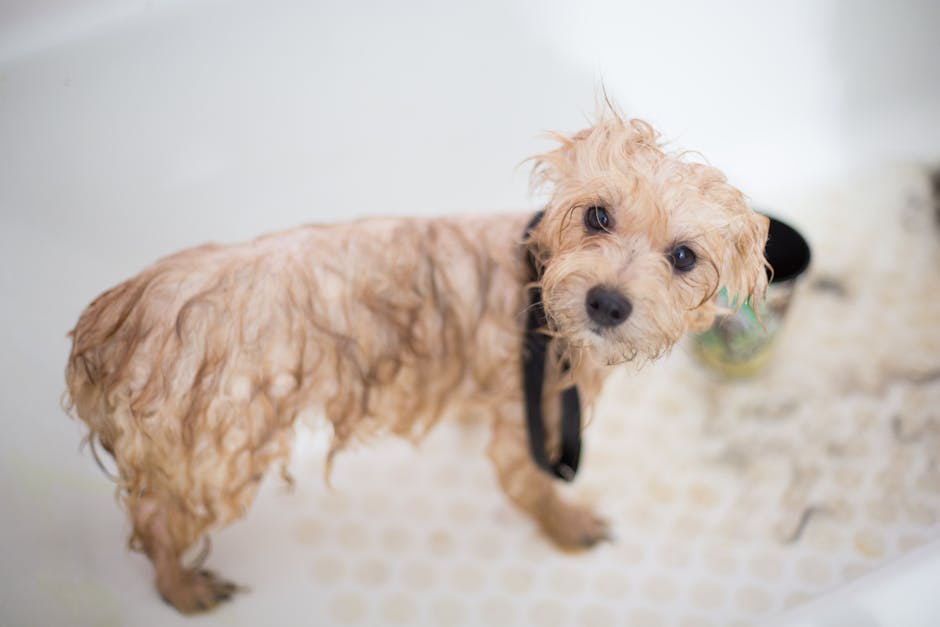
Here’s what works. Let them explore the dry tub or sink first. Treats for sniffing it. Then add just an inch of lukewarm water. More treats. Wet their paws. Treats again. You’re building a mental file in their brain that says “tub = good things happen.”
Keep your voice calm and upbeat — not high-pitched excited, just relaxed and happy. Lather gently, working from the neck down (keep their head mostly dry if possible). The whole bath should take no more than 5 minutes for the first few times.
And here’s a tip I learned from a breeder friend: smear a tiny bit of peanut butter on the tub wall. Game changer. The puppy licks the peanut butter while you wash them. They barely notice the bath.
Drying Techniques for Puppies
Do not use a hair dryer on a young puppy. The noise alone can terrify them, and even on a low setting, concentrated heat can burn their thin skin. I know some groomers use dryers on puppies, but they have professional low-velocity dryers that are nothing like your bathroom Revlon.
Towel drying is the way to go. Wrap them up gently and pat — don’t rub vigorously. Rubbing can tangle longer coats and irritate their skin. I usually wrap Maple in what I call a “puppy burrito” and just hold her on my lap for a few minutes. She loves it now.
Make sure the room is warm. Close windows, maybe bump the thermostat up a degree or two. Puppies lose body heat fast when wet. If your puppy is shivering, get them warmed up immediately — a dry towel, body heat, and a draft-free room.
How Often to Bathe a Puppy
Less than you think. Once a month is plenty for most puppies, unless they’ve gotten into mud, rolled in something foul, or have a skin condition your vet is treating with medicated baths.
Over-bathing is actually worse than under-bathing. Every bath strips some of the natural oils from your puppy’s coat and skin. Those oils are protective — they keep the skin moisturized and the coat healthy. Wash them away too often and you’ll end up with a dry, itchy, flaky puppy.
Between baths, a quick wipe-down with a damp cloth handles everyday dirt. Puppy wipes work too, but check the ingredients — some contain alcohol or fragrances that can irritate sensitive skin.
One exception: if your puppy is a breed prone to skin issues (Bulldogs, Shar-Peis, some Retrievers), your vet might recommend a specific bathing schedule. Always follow their guidance over general advice.
Frequently Asked Questions
Can I use regular dog shampoo on a puppy?
It depends on the formula, but generally — no. Adult dog shampoos often contain stronger surfactants, fragrances, and active ingredients that can irritate a puppy’s developing skin. Always use a shampoo specifically labeled for puppies or one that your vet has confirmed is safe for young dogs. The “gentle” or “sensitive” versions of adult shampoos might be okay, but why risk it when puppy-specific options are cheap and widely available?
Is baby shampoo safe for puppies?
It won’t hurt them in a pinch, but it’s not ideal. Human baby shampoo is formulated for human skin pH (around 4.5-5.5), while puppy skin needs something in the 6.0-7.5 range. Using it once in an emergency is fine. Using it regularly can gradually dry out their skin. Stick with a proper gentle dog shampoo for puppies when you can.
When can you bathe a puppy for the first time?
Eight weeks is the general minimum age for a puppy’s first real bath. Before that, use a warm damp cloth for spot cleaning. When you do give that first bath, use lukewarm water, a tear-free puppy shampoo, and keep it under five minutes. Make it positive with treats and a calm voice.
What if my puppy hates baths?
Slow down and go back a step. Don’t force a full bath if your puppy is panicking — that just reinforces the fear. Spend a few days letting them get used to standing in the dry tub with treats. Then add a little water. Build up gradually. The peanut butter trick I mentioned earlier works wonders. And if your puppy is truly terrified, talk to your vet — some puppies have noise sensitivities or anxiety that might need addressing beyond just bath training.
Can I bathe my puppy after vaccinations?
Yes, but wait at least 48 hours after vaccinations before bathing. Your puppy’s immune system is working hard after shots, and the stress of a bath (plus the slight risk of the injection site getting irritated by water and shampoo) isn’t worth it. Give them a couple days to recover, then bathe as normal.
Bathing a young puppy doesn’t need to be stressful — for either of you. Get the right shampoo (my vote’s still with Burt’s Bees for most people), keep the water lukewarm, keep it short, and load up on treats. Your puppy won’t just tolerate baths eventually. With enough positive repetition, some of them actually learn to enjoy it. Maple still hops into the tub on her own sometimes, just to see if peanut butter might appear.
Featured Image Source: Pexels