

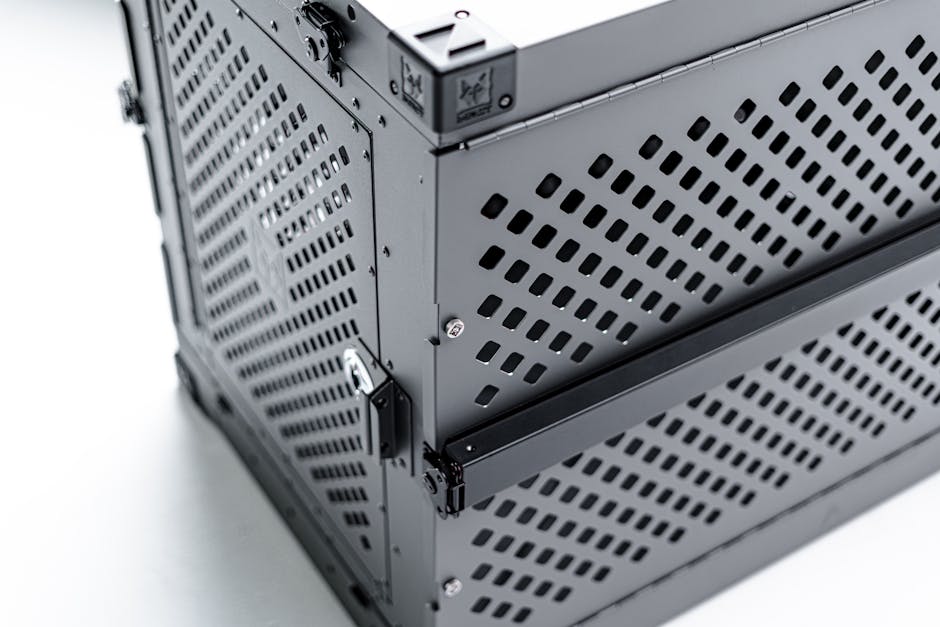

Let me be honest with you — I’ve seen what a determined dog can do to a standard wire crate. My friend’s German Shepherd bent the bars of a “heavy duty” crate from a big box store like they were made of aluminum foil. He cut his gums, scraped his paws raw, and ended up at the emergency vet. That was a $400 vet bill on top of a $90 crate that lasted exactly three days.
If your dog is an escape artist, you already know that flimsy crates aren’t just a waste of money. They’re dangerous. And finding an indestructible dog crate for escape artists isn’t about being mean or locking your dog up — it’s about keeping them safe when you can’t be there to supervise.
I’ve spent the last several years helping friends and readers find crates that actually hold up. I’ve seen dogs defeat supposedly “escape-proof” latches, pop welds, and squeeze through gaps that shouldn’t be possible. So when I recommend something here, it’s because it genuinely works — not because it looks good in a product listing.
Why Some Dogs Need an Escape-Proof Crate
Not every dog needs a heavy duty dog crate. Most dogs do just fine with a standard wire crate or even a plastic airline kennel. But some dogs? They’re different. And it’s not a behavior problem — it’s usually something deeper going on.
Separation Anxiety and Crate Destruction
Separation anxiety is the number one reason dogs destroy crates. This isn’t your dog being “bad.” It’s panic. Pure, full-body panic.
Dogs with separation anxiety don’t calmly work at the latch until it opens. They throw themselves against the walls. They bite the bars hard enough to chip teeth. They dig at the tray until their nails bleed. I watched my neighbor’s rescue pit bull — sweetest dog you’d ever meet — bend a 20-gauge wire crate door completely off its hinges in under 20 minutes. She was terrified, not naughty.
Other triggers include:
- Storm phobia — thunder, fireworks, any loud unpredictable noise
- Recent rehoming — rescue dogs in new environments often panic
- Changes in routine — new baby, new work schedule, moving houses
- Breed tendencies — Huskies, Malinois, and other high-drive breeds are notorious escape artists even without anxiety
If your dog is destroying crates out of genuine fear, please talk to your vet. The right crate keeps them physically safe, but medication or behavioral work addresses the root cause. A strong dog crate for anxious dogs is one piece of the puzzle — not the whole solution.
Safety Risks of Flimsy Crates
Here’s what I wish more people understood: a cheap crate with a determined dog is worse than no crate at all.
Dogs have broken teeth on thin wire bars. They’ve lacerated their gums pushing their muzzle through gaps. I’ve heard of dogs getting their jaw stuck between bars they managed to bend apart. And once a dog escapes? They can swallow dangerous objects, chew electrical cords, or bolt out a door.
A standard 20-gauge wire crate is designed for dogs that accept crating. That’s it. It was never meant to contain a 70-pound dog in full panic mode. Using one for an escape artist is like putting a screen door on a submarine.
What Makes a Crate Truly Escape-Proof
So what separates a real escape proof dog crate from one that just claims to be? Three things: materials, locks, and design.
Material and Gauge Steel Thickness
This is the single most important factor. Steel gauge works on an inverted scale — lower numbers mean thicker steel. Here’s a quick reference:
| Steel Gauge | Approximate Thickness | Typical Use |
|---|---|---|
| 20-gauge | 0.036 inches | Standard pet store crates |
| 16-gauge | 0.060 inches | Mid-range “heavy duty” crates |
| 14-gauge | 0.075 inches | True heavy duty crates |
| 11-gauge | 0.120 inches | Maximum security crates |
For a genuine escape artist, don’t go thinner than 14-gauge steel. Period. The jump from 20-gauge to 14-gauge isn’t just a little stronger — it’s roughly twice as thick. A 90-pound dog can bend 20-gauge bars with sustained pressure. 14-gauge? Not happening.
Also pay attention to how the bars are joined. Spot welding is the weak point on most crates. The bars themselves might be strong, but if the welds are sloppy, a determined dog will find and exploit that weakness. Look for reinforced welds or crates where bars are inserted into a solid frame rather than just tacked on.
Latch and Lock Systems
The second most common escape method? The door. Dogs are surprisingly good at figuring out simple slide-bolt latches, especially if they can push the door outward and jiggle the mechanism.
What to look for:
- Dual-latch systems — latches at both top and bottom of the door
- Padlock-compatible hasps — you can add a small padlock for extra security
- Recessed latches — mechanisms the dog can’t reach with their mouth or paws
- Slam-lock doors — doors that lock automatically when closed, eliminating the chance you forgot to fully engage the latch
Single-point latches are a dealbreaker for true escape artists. Don’t even consider them.
Ventilation and Comfort
An indestructible crate that turns into an oven is a non-starter. Solid-wall aluminum crates exist, but they need adequate airflow. Steel bar crates naturally ventilate well, which is one reason they’re my preferred recommendation for most situations.
Look for crates with a removable steel tray — not a plastic one a dog can chew through. Some owners skip the tray entirely and put the crate on a rubber mat. That works too. Drainage holes in the tray are useful because anxious dogs sometimes have accidents, and you don’t want them sitting in it.
A crate doesn’t need to be comfortable enough for a spa day. But it does need to be safe, ventilated, and appropriately sized.
Top 7 Indestructible Dog Crates Reviewed
I’ve narrowed this down to seven crates that consistently hold up based on owner reports, construction quality, and real-world performance with escape-prone dogs. Prices fluctuate, but I’ve included approximate ranges to help you budget.
Impact Collapsible Dog Crate
Price range: $350–$575 depending on size
This is the gold standard. If money isn’t a concern, just buy this one and stop reading.
Impact crates are made from 20-gauge aluminum — which sounds thin until you realize aluminum has different strength properties than steel, and Impact’s construction is exceptional. The corners are reinforced, the door uses a slam-lock mechanism with rounded interior edges (so no sharp points for your dog to catch on), and the whole thing collapses flat for transport.
What I like most: the rounded bar ends and smooth interior. Many heavy duty crates have rough welds or sharp edges inside that can cut a panicking dog. Impact clearly thought about the dog’s safety, not just containment. They also offer a lifetime warranty against escape, which tells you how confident they are.
Best for: Dogs with moderate to severe escape behavior. Airlines approve many Impact models for air travel too.
ProSelect Empire Dog Cage
Price range: $250–$400
The ProSelect Empire is the crate most people picture when they think “indestructible dog crate for escape artists.” It’s built from 20-gauge steel with reinforced 0.5-inch diameter tubes and heavy-duty dual latches. This thing weighs around 48 pounds for the medium size. It means business.
The steel floor grate is a huge plus — no plastic tray to chew through. It sits on four removable casters, which is handy for moving it but also means you should lock those casters or remove them if your dog rocks the crate.
One complaint: the spacing between bars is slightly wider than some competitors, and I’ve heard of very small dogs squeezing their heads through. Make sure you’re buying the right size. This crate is really designed for medium to large dogs — think 40 pounds and up.
Best for: Large, powerful dogs. Pit bulls, Rottweilers, German Shepherds. This crate takes serious abuse.
Grain Valley Collapsible Heavy Duty Crate
Price range: $300–$500
Grain Valley makes crates for working dogs — police K-9s, military dogs, search and rescue. That pedigree shows in the build quality.
These crates use 14-gauge steel with reinforced corner brackets and dual-latch doors. They collapse flat, which is a big deal if you need to travel or store the crate when not in use. At around 55 pounds for a 40-inch model, they’re not light, but they’re built to handle dogs that would destroy anything less.
The interior is smooth with no exposed bolt heads or sharp weld points. They also include a steel floor tray rather than plastic. Ventilation is excellent with bars on all four sides plus the top.
Best for: Owners who need portability without sacrificing strength. Excellent for dogs who need crating during travel.
Xtreme Heavy Duty Dog Crate
Price range: $400–$650
If the Impact is the gold standard, the Xtreme is the nuclear option. These crates are built from 11-gauge steel — the thickest I’ve seen in a consumer dog crate. We’re talking nearly 1/8-inch thick steel bars.
The Xtreme features a unique door design with pins that slide into the top and bottom frame simultaneously, making it essentially impossible for a dog to manipulate. The welds are industrial quality. These crates weigh 70+ pounds for the large size, so you’re not moving it around casually.
The downside: price and weight. This is the most expensive option on this list, and at 70-plus pounds, you’re basically placing it once and leaving it. No collapsing, no easy transport.
Best for: The most extreme escape artists and the strongest, most determined dogs. If nothing else has worked, this probably will.
Homey Pet Heavy Duty Metal Cage
Price range: $150–$250
Here’s the budget-friendly entry on the list. The Homey Pet isn’t in the same league as Impact or Xtreme, but it’s dramatically better than standard pet store crates and won’t empty your wallet.
It uses thicker-than-average steel (roughly 16-gauge) with a top-loading door option in addition to the front door. The latches are basic but effective — I’d recommend adding padlocks to the hasps for a serious escape artist. It includes a removable plastic tray and sits on rolling casters.
Be realistic about this one. For moderate escape artists — dogs that pop open simple latches or push out lightweight doors — the Homey Pet is solid. For a 90-pound dog throwing himself against the walls in a thunderstorm? Spend more.
Best for: Budget-conscious owners with moderate escape artists. Good starter option before investing in a premium crate.
Lucky Dog Sliding Door Crate
Price range: $150–$300
The Lucky Dog takes a different approach with its sliding door design. Instead of a hinged door that a dog can push against, the door slides up into the top of the crate. It’s harder for dogs to manipulate because pushing outward doesn’t create leverage against the lock mechanism.
The steel construction is solid — around 16-gauge with decent welds. The corners are reinforced, and it comes with a removable tray. Assembly is straightforward, and the whole unit has a smaller footprint than some competitors because the door doesn’t swing out.
My concern: the sliding mechanism itself. Moving parts mean potential failure points. If the track gets bent or jammed, you could have trouble opening the door yourself. A few owners have reported the slide getting sticky after several months of use.
Best for: Dogs who specifically target hinged doors. The sliding mechanism eliminates the most common escape method.
Smonter Heavy Duty Dog Crate
Price range: $200–$350
Smonter isn’t a brand name you see everywhere, but their heavy duty crates have built a quiet following among owners of escape-prone dogs. The construction uses reinforced steel tubes with a Y-shaped bar pattern on the sides that makes it harder for dogs to get their mouth around individual bars.
It features dual doors (front and top), heavy-duty latch mechanisms on both, and sits on lockable casters. The steel tray is a nice touch at this price point — many competitors in the $200 range still use plastic.
Worth noting: sizing runs slightly small compared to other brands. If your dog is between sizes, go up. An anxious dog in a too-small crate is a recipe for more panic, not less.
Best for: Mid-range budget with solid construction needs. The Y-bar design is genuinely clever for dogs that bite at bars.
Size Guide for Heavy-Duty Crates
Getting the size right matters even more with heavy-duty crates than standard ones. Too small and your dog panics. Too big and they don’t feel the “den” security that makes crating work.
The rule: your dog should be able to stand up without their head touching the top, turn around completely, and lie down stretched out. That’s it. You don’t need extra room for activities.
| Dog Weight | Recommended Crate Size | Example Breeds |
|---|---|---|
| 30–40 lbs | 30–36 inches | Beagles, Cocker Spaniels, Corgis |
| 40–70 lbs | 36–42 inches | Labs, Goldens, Boxers, Pit Bulls |
| 70–90 lbs | 42–48 inches | German Shepherds, Rottweilers, Dobermans |
| 90+ lbs | 48–54 inches | Great Danes, Mastiffs, Saint Bernards |
Measure your actual dog. Breed averages are guidelines, not guarantees. My friend’s “standard” Golden Retriever is 85 pounds and needed a crate sized for dogs 20 pounds heavier than the breed average suggested.
Tips to Reduce Crate Anxiety
The best indestructible dog crate in the world won’t fix the underlying problem. These tips make the crate a better experience for your dog — which means less destruction, less stress, and less guilt for you.
Start slow. Don’t just shove your dog in a new crate and leave for eight hours. Feed meals inside it with the door open. Toss treats in randomly. Let them explore it on their own terms for days before you close the door.
Cover three sides. A blanket or crate cover over the top and sides creates a den feeling. Leave the front open so they don’t feel trapped. This simple change reduces anxiety in a lot of dogs.
Exercise before crating. A tired dog is a calm dog. Thirty minutes of real exercise — not just a backyard potty break — before crating makes a massive difference. My Border Collie was a completely different dog in the crate after a morning run versus after just lounging around.
Leave background noise. A radio or TV on low gives anxious dogs something to focus on besides the silence of an empty house. Classical music has actual research behind it for calming dogs — look up the studies, they’re real.
Don’t make departures dramatic. No long goodbyes. No baby voice. Just a treat, a quick “be good,” and out the door. The more you dramatize leaving, the more your dog thinks leaving is a big scary deal.
Talk to your vet about serious cases. If your dog is injuring themselves trying to escape, this goes beyond what any crate or training tip can solve alone. Anti-anxiety medication combined with behavioral training has transformed dogs I personally know. There’s zero shame in it.
Frequently Asked Questions
Can any dog crate truly be escape-proof?
No crate is 100% guaranteed against every dog in every situation. But crates built from 14-gauge or thicker steel with dual-latch systems will contain the vast majority of escape artists. The companies that offer escape-proof warranties — like Impact — are your safest bet if you need a guarantee.
Are heavy duty dog crates safe for puppies?
Yes, as long as the bar spacing is appropriate for the puppy’s size. Most heavy duty crates are designed for adult dogs, and the bar spacing can be too wide for small puppies. Wait until your dog is at least six months old and big enough that they can’t squeeze between bars — or use a divider panel.
How much should I spend on an escape proof dog crate?
Budget at least $250–$400 for a crate that will genuinely hold up. You can find options starting around $150, but the sweet spot for quality versus price is the $300–$500 range. Spending less usually means you’ll end up buying twice — or paying vet bills when the cheap one fails.
Will a heavy-duty crate make my dog’s anxiety worse?
Not if you introduce it properly. A strong, secure crate actually helps many anxious dogs because they can’t hurt themselves trying to escape. The key is gradual introduction with positive associations — never use the crate as punishment. If anxiety worsens despite proper introduction, consult your vet.
How do I clean a heavy-duty steel crate?
Remove the tray, wash it with soap and water or a pet-safe disinfectant. Wipe down the bars with a damp cloth. For stuck-on messes, a diluted vinegar solution works well. Make sure everything is completely dry before putting bedding back — steel crates can develop rust spots if they stay wet.
Is crate training cruel?
No. Done properly, crate training gives your dog a safe space that mimics a natural den. Dogs are denning animals. What’s cruel is leaving an anxious dog loose in a house where they can swallow socks, chew electrical cords, or jump through a window — all things that actually happen. A proper crate, introduced with patience and positive reinforcement, is one of the kindest things you can provide.
Finding the right escape proof dog crate takes some research and a real investment, but it’s worth every penny. The right crate keeps your dog safe, protects your home, and gives you peace of mind when you walk out the door. Start with proper sizing, choose a gauge of steel that matches your dog’s strength, and — most importantly — pair that crate with training and veterinary support for the anxiety driving the escape behavior in the first place. Your dog isn’t trying to be difficult. They’re scared. Give them a safe place to be scared in, and then help them not be scared anymore.
Featured Image Source: Pexels