
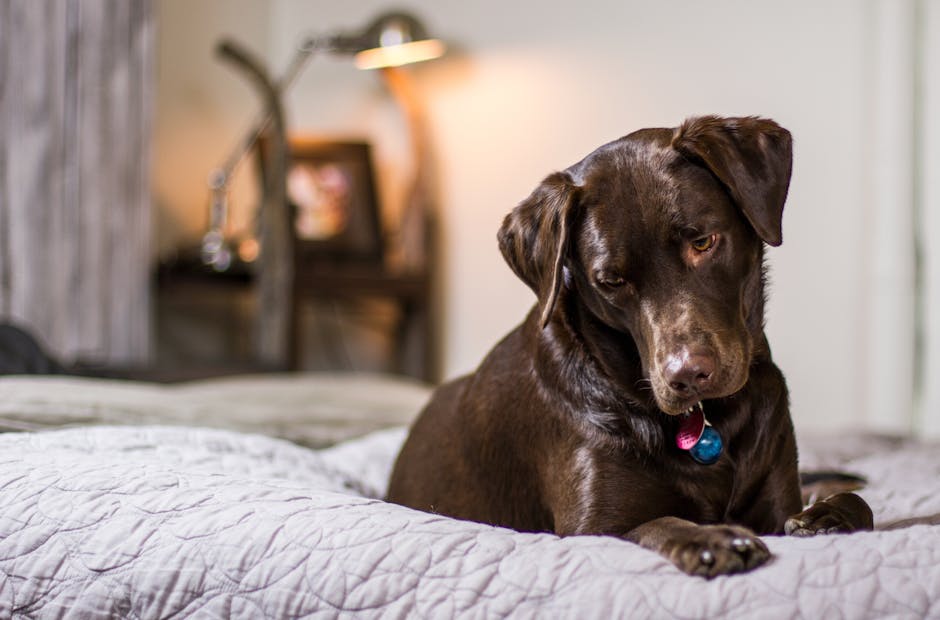

If you’ve watched your senior dog struggle to get up from a nap, you know that gut-punch feeling. My Golden Retriever, Beau, started showing it around age nine — that stiffness in the morning, the hesitation before lying down, the little groan as he finally settled. I spent way too long assuming his old bed was “good enough.” It wasn’t.
Finding the best orthopedic dog bed for senior dogs changed everything for him. Not overnight, but within a couple of weeks he was getting up easier, sleeping longer, and actually choosing to nap instead of pacing around looking uncomfortable. The right bed won’t cure arthritis, but it can genuinely improve your old dog’s quality of life.
I’ve tested and researched more beds than I’d like to admit — bought some, returned some, and watched Beau claim others as his personal throne. Here’s what I’ve learned about what actually works and what’s just marketing fluff.
Why Senior Dogs Need Orthopedic Support
This isn’t about pampering. It’s about pain management.
Joint Deterioration and Arthritis in Aging Dogs
By the time most dogs hit seven or eight, some degree of joint wear is already happening. Large breeds like German Shepherds and Labradors often show it earlier — sometimes by age five or six. The Arthritis Foundation estimates that roughly 80% of dogs over age eight have some form of osteoarthritis, though many owners don’t recognize the signs until it’s advanced.
What happens is pretty straightforward. Cartilage between joints breaks down over time. Without that cushion, bones start grinding. Inflammation sets in. Your dog compensates by shifting weight, which strains other joints and muscles. It’s a cascade.
Sleeping on a flat, unsupportive surface makes all of this worse. Think about it — your dog spends 12 to 14 hours a day sleeping. That’s 12 to 14 hours of pressure on already painful joints. A standard polyester-fill bed compresses flat within months, offering basically zero support. Your dog might as well be sleeping on the floor.
How Memory Foam Helps With Pain Relief
Memory foam works by distributing your dog’s weight evenly across the surface rather than creating pressure points. When a dog lies on standard foam or fiberfill, their heaviest areas — hips, shoulders, elbows — bear most of the load. Memory foam contours around those areas and spreads the weight.
The result? Less pressure on arthritic joints, better blood circulation, and reduced pain when getting up. It’s the same reason orthopedic surgeons recommend memory foam mattresses for people recovering from joint surgery.
But — and this is important — not all memory foam is created equal. The cheap stuff on Amazon that claims to be “memory foam” is often just regular polyurethane foam. It’ll flatten out in weeks. Real, supportive memory foam has specific density requirements, which I’ll get into below.
What to Look for in a Senior Dog Bed
Price tags mean nothing if you don’t know what you’re actually evaluating. These are the features that separate a genuinely supportive dog bed for arthritis from a glorified pillow.
Foam Density and Thickness
This is the single most important spec and the one most companies try to hide. Foam density should be at least 4 lb/ft³ for adequate support. Anything under 3 lb/ft³ will compress and flatten within a few months, leaving your senior dog right back where they started.
Thickness matters too. For dogs under 50 pounds, 4 inches of foam is usually sufficient. Dogs between 50 and 100 pounds need at least 5 to 6 inches. Giant breeds over 100 pounds — think Great Danes, Mastiffs, Saint Bernards — should have 7 inches minimum.
Here’s the annoying part: many manufacturers don’t list foam density at all. If a company won’t tell you the density of their foam, that’s a red flag. The good ones are proud of it.
Waterproof Liners for Incontinence
Nobody wants to talk about this, but it’s reality. Senior dogs frequently develop some degree of incontinence. Sometimes it’s a dribble while sleeping; sometimes it’s more than that. A memory foam dog bed for old dogs needs a waterproof liner between the foam and the outer cover.
Without it, urine soaks into the foam and you’ll never fully get the smell out. I learned this the expensive way with Beau’s first orthopedic bed — a $120 bed destroyed in two months because it had no liner. Look for beds with a sealed, waterproof inner liner that fully encases the foam. Not water-resistant. Waterproof.
Low-Entry Design for Easy Access
A bed with 8-inch bolsters all the way around might look cozy, but watch a dog with hip dysplasia try to step over that wall. It’s painful.
The best senior dog sleeping solutions feature either a low-entry front, a completely flat platform design, or bolsters on only two or three sides. Your dog should be able to walk onto the bed without lifting their legs significantly. This seems like a small detail until you see the difference it makes.
Machine-Washable Covers
Between drool, dander, accidents, and general dog funk, you’re going to be washing that cover frequently. Every two weeks at minimum if your dog has skin issues or incontinence.
Look for covers with heavy-duty zippers and fabric that holds up after dozens of wash cycles. Microsuede and canvas tend to outlast cheaper polyester covers. And make sure the zipper actually goes all the way around — some covers have tiny zipper openings that make removing and replacing the cover an absolute wrestling match.
Top 7 Orthopedic Dog Beds Reviewed
I’ve evaluated these based on foam quality, durability, ease of cleaning, and — most importantly — how well they actually support aging joints.
Big Barker Sleek Orthopedic Bed
This is the gold standard. Full stop. Big Barker uses proprietary 7-inch American-made foam with a density that genuinely doesn’t flatten. They back it with a 10-year no-flatten guarantee, and from everything I’ve seen, they honor it without hassle.
The Sleek model has a flat platform design — no bolsters — which makes it perfect for senior dogs who struggle with stepping over edges. The microfiber cover is machine-washable and surprisingly durable. It’s calibrated specifically for large and giant breeds, which is where most orthopedic beds fail.
The downside: Price. You’re looking at $200 to $370 depending on size. And it’s big — this isn’t a bed you tuck into a corner easily. But if you have a large senior dog, this is the bed I recommend first. My friend’s 11-year-old Lab basically lives on his.
Best for: Large and giant breeds, dogs with severe arthritis, owners who want a buy-it-once solution.
PetFusion Ultimate Dog Bed
PetFusion hits a sweet spot between quality and affordability. It uses 4-inch memory foam base with a 2-inch supportive polyfoam layer on top — a smart combination that gives you both contouring and structural support. The bolsters are solid memory foam too, not just stuffed fabric.
The cover is water-resistant (not fully waterproof — important distinction) and machine-washable. CertiPUR-US certified foam means no harmful off-gassing, which matters when your dog’s nose is pressed against it all day.
The downside: The water-resistant cover isn’t enough if your dog has real incontinence issues. You’ll want to add a separate waterproof mattress protector underneath. The bolsters also aren’t low enough for all mobility-impaired dogs.
Best for: Medium to large dogs, budget-conscious owners who still want quality foam.
Furhaven Orthopedic Mattress
Furhaven offers the widest variety of styles and sizes at the most accessible price point. Their L-shaped bolster design is particularly good for senior dogs — support on two sides for head-resting, open front for easy entry.
Foam quality is decent but not exceptional. The egg-crate orthopedic foam provides good airflow and reasonable pressure distribution, but it doesn’t have the density of Big Barker or PetFusion. For lighter dogs under 40 pounds, it works well. For heavier dogs, you may see more compression over time.
The downside: Durability. These beds are priced between $30 and $80, and the lifespan reflects that — expect 12 to 18 months before noticeable sagging. The covers pill after several washes.
Best for: Smaller senior dogs, owners on a tight budget, multi-dog households where you need several beds.
Barkbox Memory Foam Platform Bed
Barkbox surprised me with this one. Their 3-inch high-density memory foam with gel-infused cooling layer is genuinely well-made. The gel layer is a nice touch for dogs who overheat — senior dogs with thicker coats like Huskies or Bernese Mountain Dogs will appreciate it.
The waterproof liner fully encases the foam, which immediately puts it ahead of many competitors. Platform design means zero barriers for arthritic dogs. And the cover has a non-skid bottom that actually works on hardwood floors.
The downside: Only 3 inches of foam. For dogs under 60 pounds, it’s fine. Heavier dogs will likely bottom out over time. And the sizing runs a bit small — order up if your dog stretches out when sleeping.
Best for: Small to medium senior dogs, dogs that sleep hot, hardwood floor homes.
K&H Pet Products Ortho Bolster Bed
K&H has been making pet products for decades, and their ortho bolster shows that experience. The bed combines thick orthopedic foam with a quilted pillow-top that adds a comfort layer without sacrificing support. The three-sided bolster gives neck and head support while keeping the front completely open.
What I particularly like is the build quality. Reinforced stitching, heavy-duty fabric, solid zippers. This bed feels like it’ll last. The foam is reasonably dense and holds its shape well even after months of use.
The downside: No waterproof liner included. For the price point ($80 to $130), that’s a miss. You’ll need to add your own. The cover is also a bit harder to remove than others on this list.
Best for: Dogs who like to rest their chin on a bolster, medium to large breeds, homes without incontinence concerns.
Kopeks Orthopedic Memory Foam Bed
Kopeks goes all in on foam thickness — their large bed has a 6-inch memory foam base that’s among the thickest in this price range. The pillow-top adds another layer of cushion. For big dogs with significant joint issues, that extra thickness means they’re truly supported rather than touching the floor through compressed foam.
The waterproof inner liner is a solid addition, and the removable cover is durable. The anti-slip base is textured rubber rather than just fabric dots, so it genuinely grips.
The downside: It’s heavy. The large size weighs over 25 pounds, which makes moving it for cleaning a chore. And the cover fabric, while durable, attracts hair like a magnet. You’ll be lint-rolling it constantly.
Best for: Large to giant breeds, dogs with advanced joint disease, owners who prioritize foam thickness above all else.
Friends Forever Orthopedic Bed
Friends Forever rounds out the list as a solid all-around option. The human-grade memory foam (their words, backed by CertiPUR-US certification) provides good support, and the four-sided bolster design creates a genuine “nest” feeling that many dogs love.
The cover is removable and machine-washable, with a waterproof liner included. The base has a non-slip coating. It checks all the practical boxes without any single standout feature.
The downside: The bolsters on all four sides mean your dog has to step over at least one to get in. For dogs with severe mobility issues, that’s a problem. The foam is also a touch softer than I’d like for dogs over 70 pounds — decent, but not premium.
Best for: Dogs who love feeling enclosed, medium-sized breeds, general senior comfort rather than severe joint issues.
Bed Size Chart by Dog Weight
Getting the right size matters more than most people realize. Too small and your dog hangs off the edges, defeating the whole purpose. Too large and the foam doesn’t compress enough to contour properly.
| Dog Weight | Recommended Bed Size | Minimum Foam Thickness | Example Breeds |
|---|---|---|---|
| Under 25 lbs | Small (24″ x 18″) | 3 inches | Dachshund, Shih Tzu, Pomeranian |
| 25–50 lbs | Medium (36″ x 28″) | 4 inches | Beagle, Cocker Spaniel, Border Collie |
| 50–80 lbs | Large (44″ x 34″) | 5 inches | Labrador, Golden Retriever, Boxer |
| 80–120 lbs | XL (52″ x 36″) | 6 inches | German Shepherd, Rottweiler, Doberman |
| 120+ lbs | Giant (60″ x 48″) | 7 inches | Great Dane, Mastiff, Saint Bernard |
Pro tip: Measure your dog while they’re sleeping in their most stretched-out position. Add 6 to 8 inches to both length and width. That’s your minimum bed size. Dogs who curl up tight can go slightly smaller, but sleepers who sprawl need every inch.
How to Transition Your Senior Dog to a New Bed
Don’t just toss the old bed and plop down the new one. Senior dogs — especially those with cognitive decline — can be surprisingly resistant to change.
Put the new bed next to the old one first. Let it sit there for a few days so it picks up ambient household smells and stops being a foreign object. Toss a worn t-shirt or blanket your dog already uses onto it.
Use treats strategically. Place a few treats on the bed. When your dog steps on it to get them, praise calmly. Don’t make a huge production of it. After a few days of this, try placing a treat on the bed right at nap time.
Don’t remove the old bed immediately. Let your dog choose between the two for at least a week. Most dogs will naturally gravitate to the supportive bed for arthritis because it genuinely feels better on their joints. With Beau, it took about four days before he stopped even looking at his old bed.
And if your dog is a creature of pure habit? Move the new bed to the exact spot where the old one was. Same location, same orientation. Some dogs don’t care about the bed itself — they care about the spot.
One more thing — if the new bed has a strong foam smell, let it air out for 24 to 48 hours before introducing it. CertiPUR-US certified foams have minimal off-gassing, but dogs have noses roughly 10,000 times more sensitive than ours. What smells like nothing to you might be overwhelming to them.
Frequently Asked Questions
How thick should an orthopedic dog bed be for a large senior dog?
For large senior dogs weighing 50 to 80 pounds, you need at least 5 inches of foam. Dogs over 80 pounds need 6 to 7 inches. The key isn’t just thickness though — foam density of 4+ lb/ft³ is what prevents your dog from bottoming out and essentially sleeping on the floor. A 6-inch bed with cheap, low-density foam will flatten faster than a 4-inch bed with high-quality, dense memory foam.
Are heated orthopedic beds safe for senior dogs?
They can be, but with caution. Heated beds help soothe stiff joints and can be especially beneficial in cold weather. Look for beds with auto-shutoff features and low-voltage heating elements. Never use a heated bed for dogs with diabetes, open wounds, or reduced sensation in their limbs — they may not move away if it gets too warm. Always supervise initially.
How often should I replace my senior dog’s orthopedic bed?
It depends entirely on foam quality. Budget beds with low-density foam might need replacing every 12 to 18 months. Mid-range options typically last 2 to 3 years. Premium beds like Big Barker, with their 10-year guarantee, can genuinely last a decade if the cover is maintained. Check the foam regularly — press your hand into it firmly. If it doesn’t spring back within a few seconds, it’s lost its support.
Can an orthopedic bed help with my dog’s hip dysplasia?
An orthopedic bed won’t fix hip dysplasia, but it can significantly reduce discomfort. Memory foam distributes weight away from the hip joints, reducing pressure point pain. Many veterinarians recommend supportive dog beds for joint pain as part of a multi-pronged approach that includes weight management, supplements like glucosamine, and sometimes medication. Think of the bed as one piece of the pain management puzzle — an important piece.
What’s the difference between orthopedic foam and memory foam?
“Orthopedic” is a marketing term with no regulated definition — any company can slap it on any bed. Memory foam is a specific type of viscoelastic polyurethane foam that responds to body heat and pressure by conforming to the sleeper’s shape. What you want is genuine memory foam with a density of 4+ lb/ft³. Ignore “orthopedic” on the label and look at the actual foam specifications. If a company won’t tell you what’s inside the bed, assume the worst.
Do veterinarians recommend orthopedic dog beds?
Yes. The American Kennel Club and numerous veterinary orthopedic specialists recommend quality orthopedic beds as part of managing age-related joint conditions. Dr. James St. Clair, a veterinary orthopedic surgeon, has specifically endorsed high-density memory foam beds for post-surgical recovery and chronic arthritis management. Your vet can also help determine whether your dog needs additional interventions beyond a supportive bed.
Final Thoughts
The best orthopedic dog bed for senior dogs isn’t necessarily the most expensive one. It’s the one that matches your dog’s size, sleeping style, and specific health needs with genuinely high-quality foam and practical features like waterproof liners and washable covers.
If I had to pick just one recommendation: Big Barker for large breeds, PetFusion for medium breeds, and Barkbox for small breeds. Those three cover most situations well.
Your senior dog gave you their best years. A decent bed is the least we can give back. Beau’s twelve now, and watching him settle into his bed without that groan — no hesitation, no circling five times trying to find a position that doesn’t hurt — that’s worth every penny.
Featured Image Source: Pexels