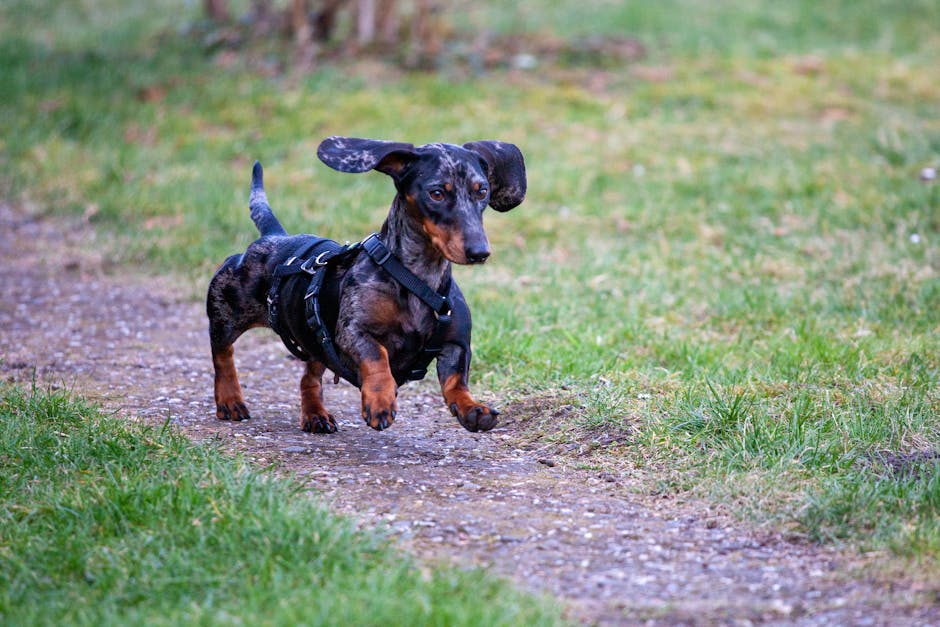

My friend Lisa called me at 11 PM on a Tuesday, sobbing. Her dachshund, Pretzel, had suddenly yelped getting off the couch and couldn’t walk properly. His back legs were dragging. I’d seen this before — and I knew exactly what it meant.
If you own a dachshund, dachshund back problems IVDD isn’t some distant maybe. It’s a when-not-if conversation you need to have with yourself. One in four dachshunds will deal with some form of intervertebral disc disease in their lifetime. That’s not a scare tactic. That’s just the math.
I’ve spent years helping dachshund owners navigate this — from prevention to post-surgery recovery. Here’s everything I wish someone had told Lisa before that Tuesday night.
Why Dachshunds Are Prone to Back Problems
Let’s get the uncomfortable truth out of the way first. That adorable long body and short legs? It’s the very thing that puts your dachshund at risk.
Chondrodystrophy and the Long Spine
Dachshunds are a chondrodystrophic breed. Fancy word, simple meaning — they carry a genetic mutation that affects how their cartilage develops. This same gene that gives them their signature short legs also causes the discs between their vertebrae to degenerate much earlier than in other breeds.
In most dogs, spinal discs stay flexible and gel-like well into old age. In dachshunds? Those discs start hardening and calcifying as early as age two. By the time your dachshund is five or six, multiple discs may already be compromised. They’re basically walking around with a spine that’s aging twice as fast as the rest of their body.
And here’s the thing that really gets me — this isn’t something breeding has fixed or even tried to fix. The chondrodystrophic gene IS the breed. You can’t breed it out without fundamentally changing what a dachshund is. So instead, we manage it.
IVDD Types (Hansen Type I vs Type II)
Not all disc disease looks the same. There are two main types, and they behave very differently.
Hansen Type I is the dramatic one. A hardened disc suddenly ruptures and explodes material into the spinal canal. It’s like a jelly donut that’s been left in the freezer — the filling turns solid, and when pressure builds, it blasts through the outer shell. This is what happened to Pretzel. One moment fine, the next moment paralyzed. Type I typically hits younger dogs, ages 3–7, and it’s far more common in dachshunds than Type II.
Hansen Type II is the slow burn. The disc gradually bulges over months or years, slowly compressing the spinal cord. Older dachshunds (8+) are more likely to develop this. The symptoms creep in — a little stiffness here, reluctance to jump there. It’s easier to dismiss as “just getting old.”
Both are serious. But Type I is the emergency that sends owners rushing to the vet at midnight.
Warning Signs of a Disc Problem
This section might save your dog’s life. I’m not being dramatic.
Early Symptoms Most Owners Miss
The tricky part about dachshund intervertebral disc disease is that early signs are subtle. Really subtle. Here’s what to watch for:
- Reluctance to jump on furniture they used to leap onto without hesitation
- Shivering or trembling when it’s not cold — this is pain, not temperature
- A hunched back — their spine curves upward and they look tense
- Yelping when picked up or when turning their head a certain way
- Walking slowly or carefully like they’re tiptoeing on ice
- Refusing to eat — pain kills appetite fast
- Neck stiffness — yes, IVDD can affect the neck too, not just the lower back
Lisa told me afterward that Pretzel had been “a little off” for about a week before the crisis. He’d stopped jumping on the bed. She thought he was just being lazy. He wasn’t lazy. He was hurting.
Emergency Signs Requiring Immediate Vet Visit
Drop everything and get to a vet — or emergency vet — if you see any of these:
- Dragging one or both back legs
- Loss of bladder or bowel control
- Complete inability to stand
- Crying out in pain when touched along the spine
- Knuckling — walking on the tops of their paws instead of the pads
Time matters enormously here. With severe IVDD, you’re often working within a 24–48 hour window where surgery can make the difference between recovery and permanent paralysis. Don’t take a wait-and-see approach. Don’t Google remedies. Go. Now.
The Grading Scale (1-5) for IVDD Severity
Vets grade IVDD on a scale of 1 to 5. Understanding where your dog falls helps you grasp what treatment looks like.
| Grade | Symptoms | Prognosis |
|---|---|---|
| 1 | Pain only, no neurological deficits | Excellent — conservative treatment usually works |
| 2 | Wobbly walking (ataxia), still ambulatory | Very good — 90%+ recovery with appropriate treatment |
| 3 | Can’t walk but can still move legs | Good — surgery success rate above 90% |
| 4 | Paralyzed, no voluntary movement, but has deep pain sensation | Fair to good — surgery success rate ~90% |
| 5 | Paralyzed, no deep pain sensation | Guarded — surgery success rate drops to 50–60% |
That deep pain test at Grade 5? The vet firmly pinches your dog’s back toes. If the dog doesn’t react at all — not even a flinch — that’s the worst sign. It means the spinal cord damage is severe. But even at Grade 5, roughly half of dogs recover with emergency surgery. I’ve seen it happen.
Prevention Strategies That Actually Work
You can’t change your dachshund’s genetics. But you can absolutely stack the deck in their favor. These aren’t suggestions — they’re non-negotiables if you’re serious about protecting your dachshund’s spine.
Ramps and Stairs — Essential for Every Dachshund Home
Every single jump your dachshund makes off a couch, bed, or car seat sends a shockwave through those vulnerable discs. Every. Single. One. This is the hill I will die on — if you have a dachshund, you need ramps.
Here’s what to look for:
- Angle matters. A ramp should have a gentle incline, ideally 18–25 degrees. Too steep and your dog won’t use it. Too flat and it takes up your entire living room.
- Surface grip is essential. Carpet-covered or rubberized surfaces. A slick ramp is almost worse than no ramp, because a slip on the ramp can cause injury too.
- Height matching. Get ramps sized for your specific furniture. Couch ramp, bed ramp, car ramp — yes, all three.
- Stability. The ramp shouldn’t wobble or slide. A dachshund who doesn’t trust the ramp won’t use it.
Training your dachshund to use ramps takes patience. Start with treats at the bottom, work up to treats at the top. Make it the only way up and down. Block jump-off points with pillows if you have to. Most dachshunds figure it out within a week or two.
And your car? A portable folding ramp for getting in and out is worth every penny. The jump from an SUV to the ground is basically a dachshund’s worst nightmare, biomechanically speaking.
Weight Management (The #1 Preventable Risk Factor)
I’ll say it plainly: weight is the single most controllable risk factor for dachshund back problems IVDD. Every extra pound on a dachshund’s frame adds compression to those already-compromised discs.
A standard dachshund should weigh between 16–32 pounds depending on size. Miniatures should be under 11 pounds. And I see overweight dachshunds constantly. They’re cute and they beg with those eyes, and people cave. I get it. But those extra treats are literally crushing their spine.
What actually works:
- Measure food precisely. No eyeballing. Use a kitchen scale.
- Cut treats in half — your dachshund doesn’t know the difference.
- Green beans and carrots make great low-calorie training treats.
- Feed for the weight they should be, not the weight they are.
- Regular weigh-ins. Monthly. Write it down. A pound gained on a 20-pound dog is like a human gaining 7–8 pounds.
If your dachshund is overweight right now, talk to your vet about a structured weight loss plan. Crash dieting isn’t safe for dogs either. Slow and steady — about 1–2% body weight loss per week.
Proper Handling and Picking Up Techniques
This one drives me crazy because I see people do it wrong all the time, even at the vet’s office.
The correct way to pick up a dachshund: One hand under the chest, one hand supporting the rear end. Their spine should stay level — like you’re picking up a loaf of French bread. Horizontal. Always horizontal.
Never, ever:
– Scoop them up with one hand under the belly (their spine sags)
– Let them dangle vertically
– Hold them with their back end unsupported
– Let kids carry them around like stuffed animals
Teach everyone in your household the two-hand technique. Guests too. I’ve literally stopped people mid-reach and shown them the right way. Some think I’m being dramatic. I don’t care. One bad pickup on a bad day could be the trigger.
Exercise Dos and Don’ts
Dachshunds need exercise — they’re not fragile glass figurines. But the type of exercise matters a lot.
Good exercises:
– Leash walks on flat ground (30–45 minutes daily is great)
– Swimming — takes all weight off the spine while building muscle
– Gentle fetch on grass
– Sniff walks — mental stimulation without physical strain
Exercises to avoid or limit:
– Jumping for toys or treats
– Running up and down stairs repeatedly
– Rough wrestling with other dogs
– Agility courses with jumps (seriously, I’ve seen people do this)
– Playing on slippery floors — tile and hardwood are especially risky
Strong core and back muscles actually help protect the spine. Short, consistent daily walks do more good than weekend warrior sessions. And if you have hardwood floors, put down runners or rugs along your dachshund’s main routes. Slipping is a real risk.
Treatment Options by Severity
So your dachshund has been diagnosed. What now? Treatment depends almost entirely on the grade.
Conservative Treatment (Crate Rest Protocol)
For Grade 1 and some Grade 2 cases, conservative treatment — meaning no surgery — can work. But let me be clear about what “conservative” actually involves, because it’s harder than it sounds.
Strict crate rest for 4–8 weeks. And I mean strict. Your dachshund lives in the crate. They come out only for very brief, leash-guided bathroom breaks. No walking around the house. No couch time. No playing. Nothing.
This is brutal. For you and for them. Your dachshund will whine. They’ll look at you with those big eyes. You’ll feel like a monster. But the disc needs time to heal, and any movement can re-injure it.
Your vet will likely prescribe:
– Anti-inflammatory medication (usually a steroid like prednisone or an NSAID)
– Pain management (gabapentin is common)
– Muscle relaxants in some cases
– Strict activity restriction — the most important prescription of all
The crate should be just big enough for them to stand, turn around, and lie down. Not bigger. You don’t want them pacing.
Success rate for conservative treatment in Grade 1–2? Pretty good — around 50–80% depending on the study. But there’s a catch: recurrence rates are higher with conservative treatment than with surgery. The disc that caused the problem is still there, still damaged.
When Surgery Is Necessary
For Grade 3 and above, surgery is usually the recommended path. And honestly? Even for some Grade 2 cases where conservative treatment fails or where imaging shows significant disc material in the spinal canal.
The most common surgery is a hemilaminectomy — the surgeon removes a small window of bone to access and remove the ruptured disc material pressing on the spinal cord. It’s not a minor procedure, but it’s well-established and veterinary neurological surgeons perform it regularly.
Cost is the elephant in the room. IVDD surgery typically runs $3,000–$8,000 depending on your location, the severity, and whether you’re seeing a specialist or a general surgeon. Emergency and after-hours cases cost more. MRI imaging alone can be $1,500–$2,500.
Pet insurance that covers hereditary conditions is something I recommend to every dachshund owner. Get it when they’re young, before any symptoms appear. It won’t cover pre-existing conditions.
Surgery Success Rates and Recovery Timeline
The numbers are genuinely encouraging for most grades:
| Grade | Surgery Success Rate | Typical Recovery Time |
|---|---|---|
| 1–2 | 95%+ | 4–6 weeks |
| 3 | 90%+ | 6–8 weeks |
| 4 | ~90% | 8–12 weeks |
| 5 (with deep pain) | 50–60% | 12+ weeks, sometimes incomplete |
“Success” means regaining the ability to walk, though some dogs may always have a slightly different gait. And Grade 5 outcomes depend hugely on how quickly surgery happens after deep pain is lost. Within 24 hours gives the best chance. After 48 hours, the odds drop significantly.
Post-surgery recovery looks a lot like conservative treatment — crate rest, medications, restricted activity. But the advantage is that the offending disc material has been physically removed, which means lower recurrence from that specific disc.
Rehabilitation and Physical Therapy
Recovery doesn’t end when crate rest is over. This is where many owners drop the ball, and I think it’s because they’re so relieved their dog is walking again that they forget about the rebuilding phase.
Hydrotherapy and Laser Therapy
Hydrotherapy is, in my opinion, the gold standard for IVDD recovery. An underwater treadmill lets your dachshund walk and build muscle with the water supporting their body weight. Most rehab facilities recommend 1–2 sessions per week for 6–8 weeks post-crate rest. It’s not cheap — $50–$75 per session typically — but the difference it makes is visible.
Cold laser therapy (also called low-level laser therapy or photobiomodulation) can reduce inflammation and promote healing. The evidence is building, though it’s not yet a slam dunk in the research. Anecdotally, I’ve seen dogs respond really well to it — especially for pain management. Sessions are quick, 10–15 minutes, and usually run $30–$50 each.
At-home exercises your vet or rehab therapist may recommend:
– Cavaletti rails (walking over low poles to improve leg coordination)
– Sit-to-stand repetitions for building rear leg strength
– Balance work on wobble cushions
– Gentle range-of-motion stretches
Don’t wing this on your own. Work with a certified canine rehabilitation therapist who can create a program specific to your dog’s grade and recovery stage. Doing the wrong exercise at the wrong time can set recovery back weeks.
Living with a Dachshund Post-IVDD
Here’s the reality nobody really talks about: life after an IVDD episode is different. Not worse — but different.
Pretzel had surgery. Grade 4. He recovered beautifully, walks fine now, even runs a little. But Lisa’s entire house is different. Ramps on every piece of furniture. Baby gates at the stairs. Rugs on the hardwood. She measures his food to the gram. He wears a harness — never a collar — because even neck pressure is a concern with dachshund spine care.
Some practical changes for post-IVDD life:
- Ramps become permanent fixtures, not optional accessories
- Weight monitoring gets stricter — there’s no margin for error now
- Regular vet checkups every 6 months to catch early signs of recurrence
- Joint supplements — glucosamine and omega-3s are commonly recommended, though evidence varies
- Modified exercise routine — swimming becomes your best friend
- Back brace consideration — some owners use supportive harnesses during walks for extra stability
About 20–30% of dogs who have one IVDD episode will have another. Sometimes the same disc, sometimes a different one. That’s not meant to terrify you — it’s meant to keep you vigilant. The prevention strategies I outlined earlier aren’t just for dogs who haven’t had an episode. They’re especially important for dogs who have.
And for the dogs who don’t fully recover — the ones who need wheels (yes, dog wheelchairs) — life goes on. I’ve met wheelchair dachshunds who are the happiest, most determined little dogs you’ve ever seen. They adapt. Dogs are remarkable that way.
Frequently Asked Questions
Can dachshund IVDD be prevented entirely?
No, not entirely. The genetic predisposition is baked into the breed. But you can dramatically reduce the risk and severity. Weight management, ramps, proper handling, and appropriate exercise can make the difference between a dachshund who never has an episode and one who does. Think of prevention as stacking the odds in your favor — you can’t guarantee an outcome, but you can influence it heavily.
At what age do dachshund back problems usually start?
Most IVDD episodes occur between ages 3 and 7, with a peak around ages 4–6. But disc degeneration starts much earlier — sometimes as young as age 2. Type II disc disease tends to show up later, in dogs 8 and older. The important thing is that prevention should start from day one, not when symptoms appear.
Is crate rest really necessary or can my dachshund just “take it easy”?
Crate rest is non-negotiable for IVDD treatment. “Taking it easy” isn’t enough. Dogs don’t understand the concept of limiting activity — the moment they feel slightly better, they’ll try to jump, play, and run. One wrong move during the healing period can cause the disc to re-rupture. The crate isn’t punishment. It’s protection.
Should I get pet insurance for my dachshund?
Absolutely yes. Get it as early as possible — ideally when they’re a puppy, before any back issues appear. IVDD surgery can cost $3,000–$8,000, and many dachshunds have multiple episodes. Make sure the policy specifically covers hereditary and breed-specific conditions. Read the fine print. Some policies exclude IVDD for dachshunds, which defeats the entire purpose.
Are there any supplements that help prevent dachshund back problems IVDD?
Glucosamine, chondroitin, and omega-3 fatty acids are commonly recommended for joint and disc health. The scientific evidence is mixed — some studies show modest benefits, others show none. But they’re generally safe and inexpensive. I’d consider them part of an overall prevention strategy, not a standalone solution. Always check with your vet before starting supplements, especially if your dog is on other medications.
Can a dachshund live a normal life after IVDD surgery?
Most can, yes. The majority of dogs who undergo surgery for Grade 1–4 IVDD return to walking and enjoying life. They’ll need permanent lifestyle modifications — ramps, weight management, careful exercise — but they can be happy, active dogs. Even dogs with incomplete recovery often adapt remarkably well. The key is committing to the prevention measures long-term so you reduce the chance of it happening again.
Dachshund back problems are scary. There’s no sugarcoating that. But being prepared — knowing the signs, having ramps in place, keeping weight in check — gives your dog the best possible shot at a healthy spine. And if the worst does happen, modern veterinary medicine offers genuinely good outcomes for most cases.
Pretzel is three years post-surgery now. He zooms around Lisa’s house, up and down his ramps, tail wagging like nothing ever happened. The ramps stay. The measured meals stay. The vigilance stays. But so does the joy. That’s the deal with dachshunds — a little extra care for a whole lot of love.
Featured Image Source: Pexels