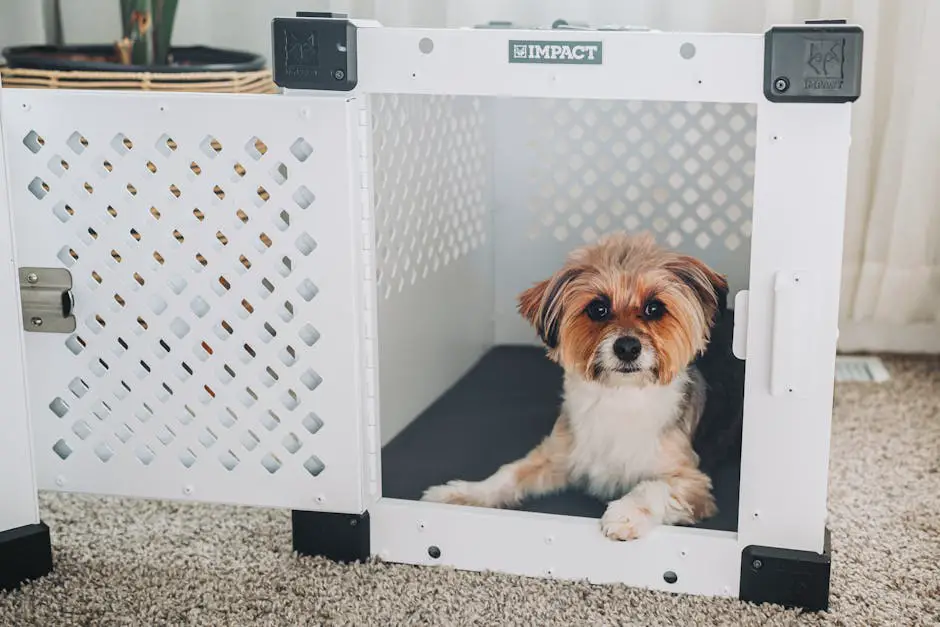

Why Crate Training Works
If you’ve ever watched a dog curl up under a desk, wedge themselves behind the sofa, or burrow into a pile of blankets, you’ve already seen the den instinct at work. Dogs are naturally drawn to enclosed, secure spaces — it’s hardwired into their biology from ancestors who sought out dens for safety, rest, and raising their young. A crate, when introduced properly, taps directly into this instinct and becomes your dog’s own personal sanctuary.
Crate training isn’t about confinement. It’s about giving your dog a space that belongs entirely to them — a place where they can decompress, sleep undisturbed, and feel genuinely safe. As a certified dog behaviorist, I’ve seen hundreds of dogs go from anxious, destructive, and unsettled to calm, confident, and well-adjusted through proper crate training. The key word there is proper.
The Four Core Benefits
- House training accelerator: Dogs instinctively avoid soiling their sleeping area. A correctly sized crate leverages this natural tendency, making house training dramatically faster and less stressful for both of you. Most puppies crate-trained from day one are reliably house-trained weeks earlier than those trained without a crate.
- Safe space and stress reduction: A crate gives your dog a predictable retreat during thunderstorms, fireworks, house guests, or any situation that feels overwhelming. Dogs who have a reliable safe space show measurably lower cortisol levels during stressful events.
- Preventing destructive behavior: Unsupervised puppies and newly adopted adults can chew electrical cords, swallow dangerous objects, and destroy furniture. A crate keeps them safe when you can’t directly supervise — not as punishment, but as protection.
- Travel and veterinary readiness: Dogs who are comfortable in crates handle car travel, airline flights, boarding stays, and veterinary hospitalizations with far less stress. If your dog ever needs emergency veterinary care, crate comfort could genuinely save their life by reducing recovery stress.
Choosing the Right Crate
Not all crates are created equal, and the wrong choice can undermine your training before it begins. Here’s what you need to know about each type.
Wire Crates
Wire crates are the gold standard for most training situations. They offer excellent ventilation, full visibility so your dog doesn’t feel isolated, and most models fold flat for storage or travel. Many come with a removable divider panel, which is invaluable for puppy training — you can adjust the interior space as your puppy grows rather than buying multiple crates. The open design also lets you drape a blanket over the top to create a more den-like atmosphere when your dog wants quiet time.
Plastic Crates (Airline-Style)
Plastic crates are more enclosed, which some dogs actually prefer — particularly anxious dogs who feel safer with less visual stimulation. They’re the standard for airline travel and tend to retain warmth better than wire crates, making them a solid choice for cooler climates. The downside is reduced airflow in warm weather and limited visibility, which can increase anxiety in some dogs during the introduction phase.
Soft-Sided Crates
Soft-sided crates are lightweight, portable, and comfortable, but they are not suitable for crate training. A determined puppy or anxious dog can chew through, unzip, or collapse a soft crate in minutes. Reserve these for already crate-trained dogs during travel, camping trips, or competitions. They’re a convenience tool, not a training tool.
Sizing Your Crate Correctly
A crate that’s too large defeats the purpose of house training because your dog can soil one end and sleep comfortably at the other. A crate that’s too small is genuinely uncomfortable and will create negative associations. The correct size allows your dog to stand up without ducking, turn around fully, and lie down stretched out on their side. Measure your dog from the tip of their nose to the base of their tail, then add 2-4 inches. Measure from the floor to the top of their ears (or head, for erect-eared breeds), and add 2-4 inches.
For puppies, buy the adult-sized crate and use a divider panel to reduce the interior space during training. Adjust the divider as they grow.
Crate Size Guide by Weight
| Dog Weight | Crate Size | Dimensions (L x W x H) | Example Breeds |
|---|---|---|---|
| Up to 10 lbs | Extra Small (18″-22″) | 18″ x 12″ x 14″ | Chihuahua, Yorkie, Maltese |
| 11-25 lbs | Small (24″) | 24″ x 18″ x 19″ | French Bulldog, Dachshund, Shih Tzu |
| 26-40 lbs | Medium (30″) | 30″ x 19″ x 21″ | Cocker Spaniel, Beagle, Corgi |
| 41-70 lbs | Intermediate (36″) | 36″ x 23″ x 25″ | Border Collie, Bulldog, Springer Spaniel |
| 71-90 lbs | Large (42″) | 42″ x 28″ x 30″ | Labrador, Golden Retriever, Boxer |
| 91-110 lbs | Extra Large (48″) | 48″ x 30″ x 33″ | German Shepherd, Rottweiler, Doberman |
| 110+ lbs | Giant (54″) | 54″ x 37″ x 45″ | Great Dane, Mastiff, Saint Bernard |
Step-by-Step Crate Training Process
Rushing crate training is the single most common mistake I see. The process should feel gradual, positive, and completely pressure-free. Your dog sets the pace — not your schedule. That said, most dogs progress comfortably through the following timeline when you stay consistent.
Days 1-3: Introduction and Exploration
Your only goal during the first three days is to build a positive association with the crate. Nothing else matters yet.
- Place the crate in a common area where your family spends time — the living room or kitchen, not a back bedroom or garage. Leave the door open and secured so it can’t swing shut and startle your dog.
- Let your dog investigate naturally. Don’t push, lure heavily, or place them inside. Simply leave the crate open with a comfortable blanket inside and let curiosity do its work. Some dogs walk right in. Others circle it suspiciously for a full day. Both responses are perfectly normal.
- Create a treat trail. Place a few high-value treats near the crate entrance, then just inside the door, then toward the middle, and finally at the back. Let your dog collect them at their own pace. Repeat this several times throughout the day.
- Feed meals near the crate, gradually moving the food bowl closer to the crate and eventually just inside the entrance over the course of these three days. By day three, aim to have the food bowl placed toward the back of the crate with your dog stepping fully inside to eat. The door stays open the entire time.
- Praise calmly any time your dog voluntarily enters or shows interest. Avoid excited, high-pitched praise that might overstimulate. A quiet “good dog” and a treat is ideal.
Days 4-7: Short Periods with the Door Closed
Once your dog is willingly entering the crate to eat or collect treats, you can start closing the door for brief periods.
- Close the door during meals. As your dog eats, gently close the crate door. Open it the moment they finish eating. Do this for every meal over the next few days.
- Gradually extend the closed-door time. After your dog finishes eating, wait 30 seconds before opening. Then one minute. Then two. Then five. If your dog whines, wait for a brief pause in the whining before opening — you don’t want to reward the vocalization, but you also don’t want to push too hard this early.
- Introduce a cue word. Choose a consistent command like “crate,” “kennel,” or “bed.” Say it as you toss a treat inside. Over these days, your dog should start associating the word with entering the crate.
- Stay in the room. During this phase, don’t leave your dog’s sight while the door is closed. Sit nearby, read a book, watch television. You’re building trust that the closed door is temporary and safe.
Week 2: Building Duration
This is where the real conditioning happens. You’re now teaching your dog that the crate is a comfortable place to relax for extended periods.
- Start with 10-15 minute sessions with the door closed while you remain in the room. Give your dog a long-lasting chew or a stuffed Kong to create a positive activity association.
- Begin brief departures. After your dog is calm for 15 minutes, step out of the room for 1-2 minutes. Return calmly — no excited greetings. Gradually extend these departures to 5, then 10, then 20 minutes over the course of the week.
- Vary your departure routine. Don’t always leave immediately after crating. Sometimes crate your dog and stay home. This prevents the crate from becoming a predictor of isolation, which can trigger anxiety.
- Practice “crate naps.” If your dog falls asleep in the crate during the day, let them sleep. Waking naturally in the crate reinforces that it’s a safe, restful place.
Weeks 3-4: Overnight Stays and Alone Time
- Move the crate to your bedroom for nighttime. Having you nearby provides comfort during those first overnight stays. Place the crate next to your bed where your dog can hear and smell you.
- Establish a bedtime routine. A final bathroom trip, a small treat tossed into the crate, your cue word, and lights out. Consistency here is critical — dogs thrive on predictable routines.
- Expect some nighttime noise. Puppies especially may whine during the first few nights. A brief verbal reassurance (“you’re okay”) is fine, but avoid letting them out in response to whining unless you genuinely believe they need a bathroom break. Puppies under 16 weeks will likely need one overnight bathroom trip.
- Build toward full alone-time crating. By the end of week four, most dogs can comfortably stay crated for 3-4 hours while you’re away from home. Practice leaving and returning without fanfare. The less dramatic the departure and arrival, the less anxious the experience becomes.
Crate Training Schedule by Age
Age dramatically affects how long a dog can and should spend in a crate. A young puppy’s bladder simply cannot hold as long as an adult dog’s, and their need for socialization and movement is higher.
Puppies (8-16 Weeks)
- Maximum crate time: 1-2 hours during the day, 4-6 hours overnight (with a bathroom break)
- Frequency: 3-4 short crate sessions per day, interspersed with play, training, socialization, and bathroom breaks
- Schedule example: 30 minutes crated after morning play → bathroom break → 1 hour free time → 30 minutes crated → lunch and bathroom break → 1 hour crated during your lunch → afternoon play and socialization → 30 minutes crated → dinner and evening routine → overnight crating with one midnight break
Adolescent Puppies (4-12 Months)
- Maximum crate time: 3-4 hours during the day, full night (7-8 hours) without a break
- Frequency: 2-3 crate sessions per day
- Key note: Adolescent dogs have more energy and need more exercise before crating. A tired dog is a content crate dog. Always provide a solid walk or play session before expecting them to settle in the crate.
Adult Dogs (1+ Years)
- Maximum crate time: 4-6 hours during the day, full night
- Frequency: As needed — many adult dogs choose to use their crate voluntarily once trained
- Key note: No dog, regardless of age, should spend more than 8 hours in a crate. If your schedule requires longer absences, arrange for a dog walker, daycare, or a dog-proofed room instead.
Newly Adopted Adults
- Follow the same gradual introduction process as puppies, but adults may progress faster or slower depending on their history. A dog from a shelter environment may already be crate-comfortable, while a dog with unknown history may need extra patience. Watch their body language and adjust accordingly.
Common Mistakes That Ruin Crate Training
I’ve worked with countless families who came to me convinced their dog “hates the crate” — and in nearly every case, the issue wasn’t the crate itself. It was how the crate was introduced. These are the mistakes I see most often.
Using the Crate as Punishment
This is the most damaging mistake you can make. If you shout “go to your crate!” when your dog misbehaves, the crate becomes associated with anger, isolation, and negative emotion. Your dog will begin resisting the crate entirely, and you’ll have lost your most valuable training tool. The crate must always be a positive place. If you need to remove your dog from a situation, use a calm voice and a treat to guide them in.
Crating for Too Long
A crate is not a storage unit. Dogs left crated for 10-12 hours regularly develop behavioral problems including anxiety, depression, excessive barking, and even self-harming behaviors like excessive licking or tail chewing. If you work full-time, arrange for midday breaks, hire a dog walker, or use a combination of crate time and a dog-proofed room with enrichment.
Forcing the Dog Inside
Physically placing a struggling dog into a crate teaches them that the crate is something that happens to them, not for them. This creates lasting resistance. Every crate entry should be voluntary, motivated by treats, meals, or the dog’s own desire to rest there.
Moving Too Fast
Skipping directly to closed-door, alone-time crating because your schedule demands it almost always backfires. The dog panics, develops negative associations, and you spend weeks undoing the damage. Two weeks of patient introduction saves months of remedial training.
Inconsistency
Crating sometimes and allowing bed sleeping other times, or using the crate unpredictably, prevents your dog from forming a reliable positive association. During the training period, maintain a consistent routine. Once your dog is fully crate-trained, you can offer more flexibility.
Dealing with Whining and Crying
This is the question every new crate trainer asks: “My dog is crying — do I let them out?” The answer depends on why they’re crying.
When to Ignore the Whining
If you’ve followed the gradual introduction process, your dog has been to the bathroom recently, they’ve had adequate exercise, and they’re whining simply because they’d prefer to be out of the crate — this is protest whining. It typically starts loudly, escalates for a few minutes, then gradually decreases as the dog self-soothes and settles. Opening the crate during protest whining teaches your dog that noise equals freedom, which will make every future crating session louder and longer.
Wait for a pause in the whining — even a few seconds of quiet — then calmly reward. Over several sessions, the quiet periods will lengthen naturally.
When to Respond
You should respond to whining if:
- Your puppy may need a bathroom break. Young puppies whining after 1-2 hours in the crate often genuinely need to go outside. Take them out for a brief, boring bathroom trip — no play, no excitement — then return them to the crate.
- The whining is escalating into panic. True panic looks different from protest. A panicking dog will thrash, drool excessively, bite at the crate bars, pant heavily, and may injure themselves trying to escape. This indicates you’ve moved too fast in the training process. Let the dog out, take several steps back in your training, and progress more slowly.
- Your dog is showing signs of separation anxiety. Dogs with clinical separation anxiety cannot be “trained through it” with a crate. The crate will make their anxiety worse. If your dog shows extreme distress every time you leave — regardless of the crate — consult a veterinary behaviorist.
Practical Tips for Managing Nighttime Whining
- Cover the crate partially with a blanket to reduce visual stimulation
- Place a worn t-shirt of yours inside for scent comfort
- Use a white noise machine or leave quiet music playing
- Ensure the last activity before crating is a calm bathroom trip, not exciting play
- Avoid talking to or looking at your dog when they whine — even negative attention reinforces the behavior
When NOT to Use a Crate
Crate training is appropriate for the vast majority of dogs, but there are genuine situations where it is not the right tool.
Dogs with Separation Anxiety
True separation anxiety is a clinical condition, not a behavior problem you can train away with a crate. Dogs with separation anxiety will injure themselves attempting to escape confinement — broken teeth, torn nails, lacerated gums, and self-inflicted wounds are common. If your dog exhibits extreme distress specifically when left alone, work with a veterinary behaviorist who can develop a comprehensive treatment plan that may include medication, desensitization protocols, and management strategies that do not involve crating.
Dogs with Crate-Specific Trauma
Some rescue dogs have been confined in cages for extended periods in neglectful or abusive situations. For these dogs, a crate may trigger genuine post-traumatic stress. Alternative management solutions — baby gates, exercise pens, or dog-proofed rooms — are more humane choices. With patient, long-term counter-conditioning, some of these dogs can eventually learn to see a crate positively, but it should never be forced.
Extreme Temperatures
Crates placed in direct sunlight, unventilated rooms, garages, or outdoors in hot weather can become dangerously overheated. Dogs cannot cool themselves efficiently, and a crate restricts their ability to seek cooler surfaces. Never crate a dog in an environment above 80°F (27°C) without air conditioning, and never place a crate in a location with no airflow.
Medical Conditions
Dogs recovering from certain surgeries, dogs with mobility issues that make entering and exiting a crate painful, or dogs with conditions that cause frequent urination or diarrhea should not be crated in standard fashion. Consult your veterinarian about modified confinement options if medical rest is needed.
When the Crate is Too Small
A dog crammed into an undersized crate is uncomfortable, stressed, and at risk for joint and muscle problems. If you can’t afford or find the correct size crate, don’t use one at all. Use an exercise pen or gated area instead until you can provide the right fit.
Best Crate Accessories
The right accessories make the crate more comfortable and the training process smoother. Here’s what’s worth investing in.
Crate Pads and Bedding
For puppies still in the house-training phase, use a thin, washable crate pad or a folded towel rather than expensive bedding — accidents happen, and you want something easy to clean. Once your dog is reliably house-trained, upgrade to a thicker orthopedic crate pad, particularly for larger breeds prone to joint issues. Avoid loose blankets with puppies who chew, as ingested fabric can cause dangerous intestinal blockages.
Crate Covers
A fitted crate cover transforms a wire crate into a den-like space and can significantly reduce anxiety for dogs who are visually reactive or easily overstimulated. Look for covers made from breathable fabric with roll-up panels so you can adjust ventilation. In a pinch, a dark bedsheet draped over the crate works just as well.
Attach-On Water Bottles or Bowls
For longer crating periods, a no-spill water bottle that attaches to the crate door ensures your dog stays hydrated without soaking their bedding. These are especially valuable during warm weather, overnight crating, and travel. Avoid open water bowls inside crates — they tip, soak everything, and create a miserable sleeping environment.
Enrichment Toys
A stuffed Kong, a lick mat smeared with peanut butter (xylitol-free only), or a durable chew toy gives your dog a positive activity to associate with crate time. Freeze the Kong for longer-lasting entertainment. Only provide toys you’ve confirmed are safe for unsupervised use — nothing small enough to swallow or with parts that could break off.
Crate Fan or Cooling Mat
For dogs who run warm, brachycephalic breeds (Bulldogs, Pugs, French Bulldogs), or summer months, a clip-on crate fan or a pressure-activated cooling mat can make a significant difference in comfort. Dogs who are physically comfortable in their crate settle faster and stay calmer.
Frequently Asked Questions
How long does crate training take?
Most puppies can be comfortably crate-trained in 2-4 weeks with consistent daily practice. Adult dogs with no prior crate experience or negative associations may take 3-6 weeks. Dogs with trauma history around confinement may take several months of gentle counter-conditioning, and some may never fully accept a crate — which is okay. The goal is your dog’s comfort and safety, not rigid adherence to a timeline. If progress stalls, consult a professional trainer or behaviorist rather than pushing through resistance.
Should I crate my dog at night?
Yes, crating at night is one of the most effective uses of a crate, particularly during house training. Place the crate in your bedroom so your dog can hear and smell you — this dramatically reduces nighttime anxiety. Most puppies sleep through the night in the crate by 12-16 weeks of age with one brief bathroom break. Adult dogs typically adjust to overnight crating within the first week. Once your dog is fully house-trained and trustworthy unsupervised, you can transition to leaving the crate door open at night and letting them choose where to sleep. Many dogs continue choosing their crate voluntarily.
My dog keeps having accidents in the crate. What am I doing wrong?
First, verify the crate isn’t too large — if your dog can comfortably use one end as a bathroom and sleep at the other, the crate is too big. Use a divider to reduce the space. Second, check your timing — puppies need bathroom breaks every 1-2 hours during the day and cannot hold it for more than 4-6 hours overnight. Third, rule out medical issues. Urinary tract infections, gastrointestinal problems, and other conditions can cause frequent, uncontrollable elimination. If your dog was previously reliable and suddenly begins having accidents, see your veterinarian before assuming it’s a training issue.
Is it cruel to crate a dog while I’m at work?
Crating during a standard work shift of 4-5 hours is reasonable for an adult dog, provided they receive adequate exercise before and after, and the crate is properly sized and comfortable. However, crating for 8-10 hours straight is too long for any dog and can lead to physical discomfort, anxiety, and behavioral issues. If your workday requires longer absences, arrange for a midday dog walker, use doggy daycare on some days, or set up a larger confined area with a crate (door open), water, and space to move. The crate should be a component of your management plan, not the entirety of it.
My adult rescue dog panics in the crate. Can they still be crate trained?
Many adult rescue dogs can learn to accept and even enjoy a crate, but the process requires significantly more patience and a much slower timeline than training a puppy. Start by leaving the crate open in a common area for several days without interacting with it at all. Let your dog approach, sniff, and investigate entirely on their own terms. Feed meals progressively closer to and then inside the open crate. Some rescue dogs with severe confinement trauma may never comfortably accept a closed crate door, and that’s a valid outcome — not a failure. For these dogs, an exercise pen, a baby-gated room, or a dog-proofed area provides the management benefits of a crate without the confinement trigger. If your rescue shows signs of true panic — excessive drooling, self-injury attempts, screaming, or destructive escape behavior — stop crate training immediately and consult a veterinary behaviorist.
Featured Image Source: Pexels