

Why German Shepherds Need Structured Early Training
I get emails every week from GSD owners who skipped early training and now have an 80-pound dog they can’t walk past a bicycle without a full meltdown. Every single one says the same thing: I didn’t think it would matter this much.
It does. And with German Shepherds, it matters more than almost any other breed.
The GSD Brain — Intelligence and Drive
German Shepherds rank third in Stanley Coren’s canine intelligence rankings, behind Border Collies and Poodles. They can pick up a new command in fewer than five repetitions and, in a controlled test environment, obey the first command 95% of the time. In your living room with a squirrel outside the window? Expect more like 60%.
Smart is only useful if you’re the one directing it. An unsupervised GSD will teach himself to open the trash can, unlatch the baby gate, and alert-bark at the mail carrier — all in about three days flat. I worked with a five-month-old named Diesel who’d figured out how to open his crate latch by watching his owner do it twice. Brilliant dog. Also a nightmare without structure.
Beyond raw intelligence, these dogs were bred for work. Strong prey drive, territorial instincts, and an intense need to have a job. A GSD puppy who isn’t given structured outlets will invent their own job — and it usually involves shredding couch cushions, barking at everything that breathes, or herding your toddler into corners.
GSDs bond hard to their person. Great for training. Terrible if they never learn that other humans aren’t threats. I had a client whose 10-month-old GSD growled at every single person who entered their house — including the client’s mother, who visited weekly. That dog had been “socialized” at a puppy class once and never again.
What Happens Without Early Training
The consequences of skipping structured training in a German Shepherd are more severe than with most breeds. An untrained Golden Retriever is annoying. An untrained German Shepherd can become genuinely dangerous. That’s not breed fearmongering — it’s physics combined with drive.
Common problems in GSDs who missed early training windows:
- Leash reactivity and lunging at other dogs, people, or vehicles
- Resource guarding of food, toys, or their owner (a known breed tendency that gets ugly fast in a dog this size)
- Barrier frustration — frantic behavior behind fences, windows, or doors
- Over-bonding to one handler, leading to separation anxiety and aggression toward visitors
- Excessive mouthing and nipping that never got redirected during the critical puppy phase
The German Shepherd who ends up in rescue at 18 months almost always missed these early training windows. Starting late is possible, but you’re looking at triple the effort to undo learned behavior versus building it right from the start. Ask me how I know.
8-12 Weeks: Foundation and Socialization
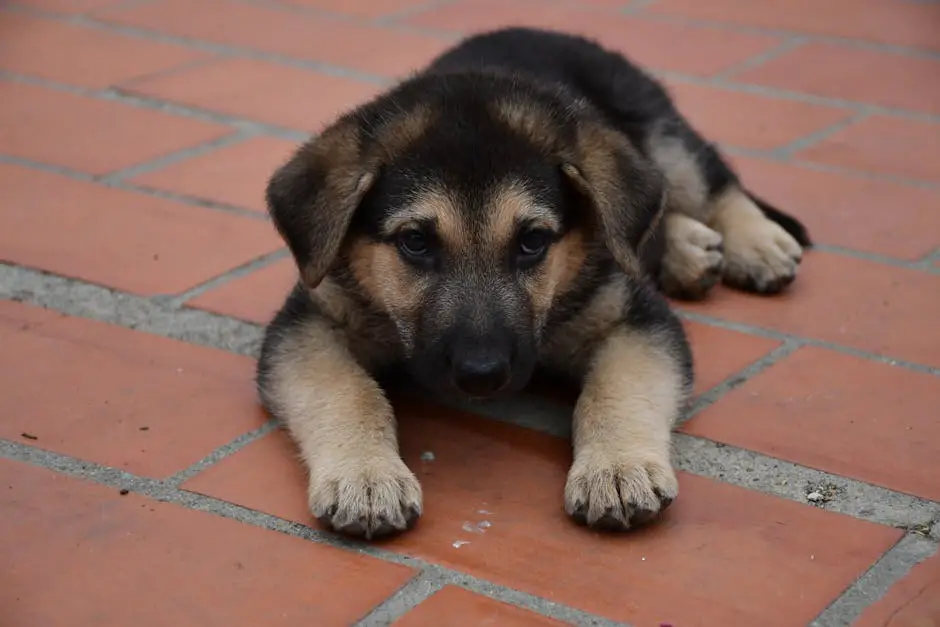
Your GSD puppy’s first month home is the single most important training period. Full stop. The neural pathways forming during this window shape behavior for life. Keep sessions to five minutes max and always end on a win — even if you have to make the last repetition stupidly easy to get there.
Name Recognition and Basic Commands
Before anything else, your puppy needs to know their name means “look at me.” Say it once — once, not five times in a row like you’re calling a kid in for dinner — and the moment they glance your way, mark it with “yes” and reward. Most GSD puppies have solid name recognition within three to five days.
From there, three foundation commands:
- Sit: Treat above the nose, move it back over the head. Rear touches ground, mark and reward. GSDs typically nail this in a single session. Sometimes two if they’re having a wild day.
- Down: From sit, lure the treat to the floor between the front paws. Wait for elbows to touch. Two to three sessions for most puppies.
- Come: Call their name followed by “come” whenever they’re already heading your way. High-value treat every single time. You’re building a recall reflex, and at this age you can make it nearly automatic. Don’t waste this window — a recall built at 9 weeks is worth ten times one you try to build at 9 months.
Use a consistent marker word (“yes”) or a clicker. GSDs thrive on clear, predictable communication. They want to know exactly what earned the reward, and they get frustrated by ambiguity.
Critical Socialization Window
Here’s the thing most people don’t take seriously enough: the socialization window starts closing at roughly 14 weeks. Everything your GSD puppy encounters before that cutoff gets filed as “normal.” Everything they don’t encounter becomes potentially suspicious. For a breed with natural guarding instincts, this window is non-negotiable.
Skip the generic puppy socialization class at PetSmart. I know that’s controversial, but hear me out. Find a trainer who does controlled exposure sessions where each puppy interacts with one calm adult dog at a time. Group puppy free-for-alls teach GSDs that other dogs are overwhelming, not fun. I’ve seen too many GSD puppies come out of chaotic group classes more reactive than when they went in.
Your socialization priorities:
People — Men, women, children, people wearing hats, sunglasses, uniforms, and using mobility aids. Aim for 100 new people before 14 weeks, but quality matters more than hitting a number. Every interaction should be positive. Never forced. If your puppy backs away from someone, let them. Forcing the issue does more damage than skipping that one interaction.
Dogs — Vaccinated, known-temperament adult dogs beat puppy classes every time. One bad experience during this window can create lifelong dog reactivity. One. I had a client whose GSD puppy got bowled over by an overexcited Lab at 11 weeks. That dog was reactive to large dogs for the next three years of his life.
The thing everyone forgets — People approaching from behind. GSDs who never experience this as puppies become the dogs who spin and bark when a jogger passes them on the sidewalk. Practice it early. Have friends walk up behind you and your leashed puppy, toss a treat, and keep walking.
Sounds and surfaces — Vacuum cleaners, doorbells, thunder recordings played at low volume with treats. Different floor surfaces: tile, metal grates, gravel. Elevators. Automatic doors. Get creative, but keep it positive.
Handling — Touch ears, paws, mouth, tail daily. Have strangers offer treats. Practice gentle restraint. This prevents the adult GSD who has a panic attack at the vet. Your future self will thank you when your 90-pound dog needs his nails trimmed.
Two caveats: don’t take your unvaccinated puppy to dog parks or high-traffic pet areas (parvo is real and it’s terrible), and don’t flood your puppy with everything at once. Socialization means positive, controlled exposure. Not a sensory assault.
Crate Training and Housebreaking
German Shepherds are naturally clean dogs, which makes housebreaking relatively straightforward if — and this is a big if — you’re consistent. Use a crate sized so your puppy can stand, turn around, and lie down. Not bigger. Too much space and they’ll designate a bathroom corner.
The schedule for an 8-12 week old:
- Out immediately after waking up
- Out within 10 minutes of eating or drinking
- Out after every play session
- Out every 60-90 minutes during waking hours
- Last trip at your bedtime
Yeah, it’s a lot. Nobody said raising a GSD puppy was convenient.
Expect nighttime bathroom trips until about 12 weeks. Set an alarm for every 3-4 hours rather than waiting for crying — you want to prevent accidents, not react to them. Never punish accidents. Clean with an enzymatic cleaner (not ammonia-based, which smells like urine to a dog) and tighten up your schedule. More than one accident a week means you’re giving too much freedom too fast.
3-6 Months: Building Obedience
Your four-month-old GSD just dragged you halfway down the block chasing a squirrel. Time to fix that.
This phase is about adding difficulty to the commands your puppy already knows — longer durations, more distance from your dog, and real distractions like squirrels, other dogs, and the neighbor’s cat. Sessions can stretch to 10-15 minutes now, and your puppy’s bladder control is finally improving. Small mercies.
Exercise at this age follows the five-minutes-per-month rule: a four-month-old gets 20 minutes of structured exercise per session. This protects developing joints, and it’s especially important for German Shepherds given their predisposition to hip dysplasia. No jogging, no jumping, no stair-climbing until growth plates close around 12-18 months. I don’t care how much energy they have. Protect those joints.
Leash Manners and Recall
Leash walking is where most GSD owners first feel their puppy’s real strength. At four months, a German Shepherd already has enough muscle to drag an unprepared handler off their feet. I’ve seen it happen. Start leash training before they get any bigger.
The method that works best for GSDs: be a tree. When your puppy pulls, stop completely. Don’t yank back, don’t say anything. Just stop. Wait until the leash goes slack, mark, and move forward. Pulling means everything stops. Slack leash means we go. Simple concept. Takes about two weeks of consistent practice before most GSD puppies get it.
Combine this with frequent direction changes — walk five steps, turn 90 degrees, five more steps, turn again. Your puppy has to watch you because they can’t predict where you’re going next. It’s boring for you. It works.
Proofing against squirrels? That comes with maturity and a lot of practice. Don’t expect it yet.
For recall, graduate from indoor recall (easy) to backyard (medium) to a long-line in open spaces (hard). Use a 20-30 foot line. Never practice recall off-leash in an unfenced area until you have months of reliable proof behind you. GSDs have enough prey drive that a running rabbit will override a shaky recall every single time. Don’t test it.
Managing the Mouthy Phase
German Shepherd puppies are mouthy. Famously, obnoxiously mouthy. Those shark teeth find every exposed piece of skin, and the breed’s natural tendency to use their mouth during play makes this phase more intense than most breeds. Teething peaks between four and six months, and some days it feels like your puppy is trying to eat you alive.
Redirect to a chew toy immediately — the instant teeth touch skin, say “ouch” in a normal tone (not screaming, that just amps up a GSD) and shove an appropriate chew toy in their mouth. Frozen wet washcloths and rubber Kongs are great for teething pain. And before you think about holding their mouth shut — don’t. I’ve seen that backfire into genuine hand-shyness more times than I can count. Same goes for pushing the puppy away, which most GSDs interpret as a fun new game, and alpha rolls, which damage trust with a sensitive breed and can create defensive aggression. Just don’t.
If redirection doesn’t cut it, stand up and completely disengage for 15-30 seconds. German Shepherds hate losing your attention more than almost anything. Teeth on skin means fun stops. Period. They figure this out fast.
Stock up on legal chew outlets and rotate them so they stay interesting. Bully sticks, Nylabones, frozen stuffed Kongs. A GSD who doesn’t have appropriate things to chew will find inappropriate things to chew. Like your baseboards. Or your shoes. Or your couch.
The mouthing resolves by about six months if you’re consistent. If it’s getting worse instead of better — actually escalating in intensity — that’s different from normal puppy mouthing, and you should get a professional trainer involved. There’s a line between “annoying baby teeth” and early-onset frustration biting, and a good trainer can spot it.
6-12 Months: Adolescent Challenges
Here’s the bad news about month six.
Your GSD who had reliable recall at five months? Now pretends they’ve never heard their name. Commands they knew perfectly get met with a blank stare — or, worse, direct eye contact while they do the exact opposite of what you asked. Welcome to the teenage phase.
This is also when a second fear period typically hits, around 8-11 months. Things that didn’t bother your puppy before — a garbage truck, a person in a hood, a new piece of furniture — might suddenly trigger fearful or reactive behavior. Don’t push them through it. Give them space, use treats to rebuild positive associations, and wait for it to pass. Usually takes 2-4 weeks. Flooding a GSD with what scares them during a fear period is one of the fastest ways to create a permanently reactive dog.
Testing Boundaries and Selective Hearing
Your adolescent GSD isn’t being stubborn out of spite, even though it absolutely feels that way. Their brain is literally rewiring. The prefrontal cortex — impulse control, decision-making — is still under construction. They hear you fine. They’re just running a cost-benefit analysis on whether listening is worth more than whatever squirrel or dog or interesting smell has their attention.
The response is boring but it works: go back to basics. If your GSD has stopped sitting on the first command, go back to luring the sit as if they’ve never learned it. Rebuild from there. Shorter sessions. Higher reward rate. Fewer distractions. It feels like regression. It’s not. It’s maintenance.
This is the phase where a lot of owners make the mistake of piling on new commands when the existing ones aren’t solid. Don’t teach “shake” and “spin” when your dog doesn’t have a reliable sit-stay. Depth beats breadth right now. Every time.
And keep socializing. An adolescent GSD who stops getting regular positive exposure to new people and environments will backslide fast. Continue weekly outings to new places. If you see any signs of reactivity — stiffening, hard staring, lunging — address it with a qualified trainer immediately. Not next month. Now. Reactivity that takes root during adolescence is the number one behavior issue in adult German Shepherds, and it’s exponentially harder to fix once it’s established.
Impulse Control Exercises
Impulse control is the single most important skill set for an adolescent GSD. More important than flashy tricks. More important than off-leash reliability. A dog who can control their impulses can handle anything.
The place command is the one I’d save if I could only keep one exercise on this list. Teach your GSD to go to a specific spot — a mat or bed — and stay there until released. Start with 30 seconds. Build to 30 minutes. I use this more than sit, more than down, more than anything else. It gives you a reliable way to manage your dog during meals, when guests arrive, when delivery drivers ring the bell. If you only have time for one impulse control exercise, make it this one.
Wait at doorways — your dog sits and waits at every door until released. No charging through. Ever. This is more than manners. It translates directly to self-control in high-excitement situations, and it reinforces that you control access to the good stuff.
Leave it is straightforward but powerful. Place a treat on the floor, cover it with your hand. When your dog stops mugging your hand, mark and reward from the other hand. Progress to an uncovered treat on the floor. Then dropped treats. Then treats tossed past their nose. Most GSDs get competitive about this one, which actually works in your favor.
Structured walking — no sniffing, no pulling, no reacting. Just walking at your pace, focused on you. Five minutes of this is mentally exhausting for a young GSD. Use it as a warm-up before free time, not as the entire walk. Nobody — dog or human — wants a walk that’s all work and no fun.
12-18 Months: Advanced Skills
By 12 months, your German Shepherd’s adult personality is showing up. The foundation you built during the first year is paying off — or the gaps are becoming painfully obvious. There’s no faking it at this stage. Either the work got done or it didn’t.
Growth plates are closing or closed, which means you can finally introduce more demanding physical exercise. Running, hiking, agility foundations. Your GSD has been waiting for this, trust me. The mental and physical energy that’s been building for a year finally has real outlets.
Proofing Commands in the Real World
Everything your dog learned in your living room and backyard now needs to work at the park, on a busy sidewalk, at the outdoor café, in the vet’s waiting room. This is proofing, and it’s where most people discover their dog’s training has holes.
Start with low-distraction public spaces and work up. A quiet park on a Tuesday morning before you try the Saturday farmer’s market. Your GSD might nail a two-minute down-stay at home and fall apart after 15 seconds with a dog walking past. That’s normal. Go back to 10 seconds in that environment and rebuild.
The recall is the big one. If you’ve been building this since 8 weeks, you should have a solid foundation. Test it on a long line in increasingly distracting environments before you even think about off-leash work. Most trainers I respect won’t recommend off-leash reliability for a GSD under 18 months, and plenty wait until two years. The stakes are too high with a dog this powerful and this driven.
Channeling Drive Into a Job
A German Shepherd without a job is a German Shepherd who’s going to create problems. By 12-18 months, your dog needs a real outlet for their working drive. This doesn’t mean you need to join the police force.
Options that work well for pet GSDs:
- Nosework — hide treats or scent articles around the house and yard. GSDs are naturals at this and it’s incredibly tiring mentally. Twenty minutes of nosework can replace an hour-long walk for energy management.
- Structured fetch or tug with rules (drop it on command, wait to be released, no snatching)
- Obedience rally or competition if you want a structured hobby
- Backpack walking — a fitted dog backpack with light weight gives your GSD the feeling of having a job on every walk
Most trainers will tell you agility and Schutzhund are the gold standard for GSDs. Personally, I think nosework is underrated and more accessible for the average owner. You don’t need equipment, you don’t need a club, and your dog gets to use the part of their brain they were built to use.
When to Get Professional Help
No shame in this. Seriously. If your adolescent or young adult GSD is showing any of the following, call a trainer — a real one, with credentials and experience with working breeds, not your neighbor who watched some YouTube videos:
- Aggression toward people or dogs that’s escalating
- Resource guarding that includes hard stares, freezing, or snapping
- Reactivity on leash that you can’t manage safely
- Separation anxiety severe enough to cause property destruction or self-injury
- Any bite that breaks skin
The difference between a GSD behavior problem at 12 months and the same problem at 24 months is staggering. Early intervention isn’t optional with this breed. It’s the whole game.
A well-trained German Shepherd is one of the most rewarding dogs you’ll ever own. They’re loyal, brilliant, versatile, and genuinely fun to work with. But they earn that reputation through the work you put in during these first 18 months — not by accident. Put in the time now. Your future self, your dog, and everyone who interacts with your dog will be better for it.
Featured Image Source: Pexels