


How Much Does a Dog Cost Per Year? The Honest Numbers Nobody Warns You About
I’ll never forget bringing home my first dog — a scruffy terrier mix I adopted for $150. I thought I’d gotten the deal of a lifetime. Then came the vet bill. Then the crate. Then the training classes after he ate my couch cushions. By month three, I’d spent more on that “cheap” dog than on my last vacation.
Here’s the thing: dogs aren’t expensive because something’s wrong with the system. They’re expensive because they’re living, breathing family members who need food, healthcare, and the occasional $30 chew toy they’ll destroy in eleven minutes. But if you go in with your eyes open, you can plan for these costs instead of getting blindsided by them.
So let’s break it all down — every dollar, every surprise expense, every place where you can save without shortchanging your best friend.
The Real First-Year Cost (It’s More Than You Think)
The first year of dog ownership is always the most expensive. You’re buying everything from scratch, and your new pup needs a pile of veterinary work upfront. Here’s what a realistic first-year budget looks like in 2026:
Adoption or Purchase Fee
Shelter adoption typically runs $50–$350, and that usually includes spaying/neutering and initial vaccinations — genuinely one of the best deals in pet ownership. Buying from a reputable breeder? You’re looking at $1,500–$4,000+ depending on the breed, with some designer breeds pushing well past $5,000. I’m not here to judge either path, but know that breeder puppies also come with the full slate of vet costs on top of that price tag.
First-Year Veterinary Care
Budget $500–$800 for the first year. Your puppy needs a series of vaccinations (usually three rounds), a spay or neuter surgery if it wasn’t included in adoption, a microchip, flea and tick prevention, heartworm prevention, and at least two or three wellness exams. Don’t skip any of this. Preventive care now saves you thousands later — I’ve seen it firsthand.
Essential Supplies
This is where first-time owners consistently underestimate. You’ll need:
- Crate: $40–$120
- Bed: $30–$80
- Leash, collar, and ID tag: $25–$60
- Food and water bowls: $15–$40
- Initial food supply: $30–$70
- Puppy gates and exercise pen: $40–$100
- Basic grooming tools: $20–$50
- Toys and chews: $30–$75
- Cleaning supplies (you’ll need them, trust me): $20–$40
Total for supplies alone: $250–$635. And that’s before the impulse buys at the pet store, which — let’s be honest — will happen.
The Stuff You Didn’t Budget For
Training classes run $150–$300 for a basic obedience course, and I’d argue they’re non-negotiable for first-time owners. Then there’s the “puppy tax” — the shoes they chew, the rug they stain, the screen door they barrel through. Budget an extra $200–$500 in miscellaneous damage and replacement costs for the first year. It sounds ridiculous until you’re standing in your kitchen at 2 a.m. wondering how a 12-pound puppy ripped the trim off your door frame.
Realistic first-year total: $1,200–$3,000+ for an adopted dog, and $3,000–$7,000+ if you’re buying from a breeder.
Annual Recurring Costs: Where Your Money Actually Goes
After that brutal first year, costs settle into a more predictable rhythm. Here’s what you’re looking at annually, starting in year two:
Food: $400–$1,200/year
This is your biggest recurring expense, and it scales directly with your dog’s size. A Chihuahua eating a cup of kibble a day is wildly cheaper to feed than a Great Dane demolishing six cups. I personally land in the mid-range — I buy a quality brand without going full boutique. A good rule of thumb: spend enough that the first ingredient is actual meat, not corn meal or “poultry by-product.” Your dog’s coat, energy, and vet bills will reflect the difference.
Veterinary Care: $300–$700/year
Annual wellness exams, vaccinations, flea/tick and heartworm prevention — this is your baseline. Healthy adult dogs can stay on the lower end. Senior dogs or breeds prone to health issues will push toward the top. Don’t skip the annual checkup. It’s the cheapest diagnostic tool in veterinary medicine.
Pet Insurance: $300–$800/year
This one’s polarizing, and I’ll tell you where I stand: pet insurance is worth it for most people. A good accident-and-illness policy runs $25–$65/month depending on breed, age, and coverage level. It won’t cover pre-existing conditions, and you’ll still pay a deductible, but it turns a potential $8,000 emergency surgery into a manageable $500 out-of-pocket hit. If you can genuinely self-insure with $10,000+ in savings earmarked for vet emergencies, you might skip it. Most people can’t.
Grooming: $0–$800/year
The range here is massive because it depends entirely on your breed. Short-haired dogs like Beagles or Boxers? A bath every few weeks and some nail trims — you can do it at home for nearly nothing. A Poodle, Bichon, or Shih Tzu that needs professional grooming every 6–8 weeks? That’s $60–$100 per session, and it adds up fast. Factor this in before you fall in love with that fluffy breed at the shelter.
Boarding or Pet Sitting: $200–$1,000/year
If you travel at all, this cost is unavoidable. Boarding kennels charge $30–$75/night. In-home pet sitters run $50–$100/night. A two-week vacation can easily cost $500–$1,000 in dog care alone. This is the expense that catches people off guard the most — suddenly your $2,000 vacation costs $3,000.
Toys, Treats, and Miscellaneous: $100–$400/year
Treats for training, chew toys to keep them busy, the occasional bandana because they looked cute. It’s not the biggest line item, but it’s relentless. My advice: invest in durable toys upfront. A $25 Kong lasts years. A $5 stuffed animal lasts until Tuesday.
Cost Comparison by Dog Size
Size matters — a lot. Here’s a realistic annual cost comparison for adult dogs in year two and beyond:
| Expense | Small (under 20 lbs) | Medium (20–50 lbs) | Large (50–90 lbs) | Giant (90+ lbs) |
|---|---|---|---|---|
| Food | $300–$500 | $500–$800 | $700–$1,100 | $1,000–$1,500 |
| Veterinary Care | $300–$500 | $350–$600 | $400–$700 | $500–$900 |
| Pet Insurance | $250–$500 | $300–$600 | $400–$750 | $500–$900 |
| Grooming | $0–$600 | $0–$700 | $0–$800 | $0–$900 |
| Boarding (2 weeks) | $350–$600 | $400–$700 | $500–$850 | $600–$1,000 |
| Toys, Treats, Misc. | $100–$250 | $150–$300 | $200–$400 | $250–$500 |
| Annual Total | $1,300–$2,950 | $1,700–$3,700 | $2,200–$4,600 | $2,850–$5,700 |
Look at those giant breed numbers and let them sink in. That Newfoundland puppy is adorable, but you’re signing up for a serious financial commitment. I say this with love — giant breeds are wonderful — but go in with a budget, not just a dream.
Hidden Costs People Always Forget
These are the expenses that don’t show up on any “how much does a dog cost” infographic, and they’re the ones that wreck budgets.
Emergency Veterinary Care
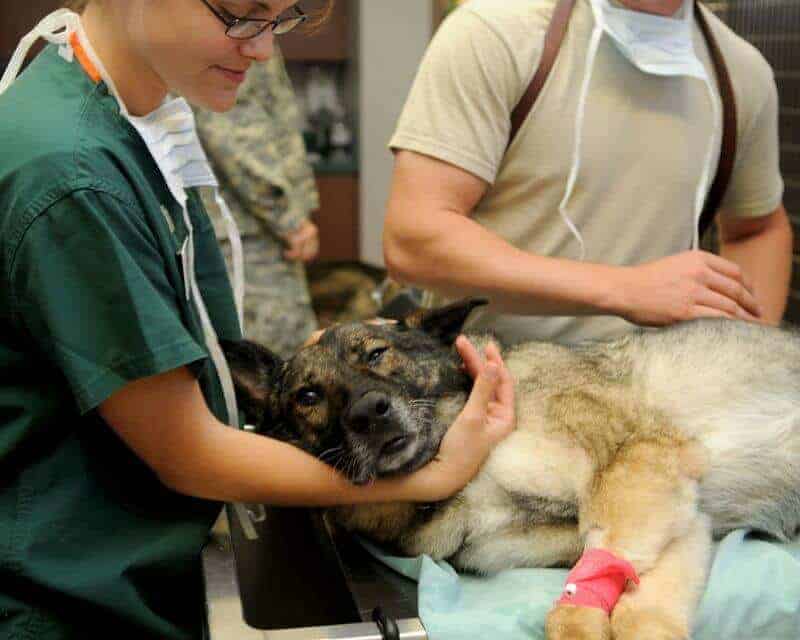
A single emergency vet visit averages $1,500–$5,000. A swallowed sock requiring surgery? $3,000–$7,000. A torn ACL? $4,000–$6,000 per knee. Bloat surgery? $5,000–$10,000. These aren’t rare events — they’re the kinds of things that happen to normal dogs living normal lives. An emergency fund or insurance policy isn’t optional. It’s the most important financial decision you’ll make as a dog owner.
Dental Care
Most dogs need a professional dental cleaning by age three, and it costs $400–$1,200 depending on whether extractions are needed. Small breeds are especially prone to dental disease. Annual dental costs are almost never included in those cheerful “cost of owning a dog” articles, and that’s a disservice to readers. Budget for it.
End-of-Life Care
Nobody wants to think about this, but it’s a real cost. Euthanasia and cremation typically run $200–$500. If your senior dog needs palliative care, pain management, or treatment for age-related conditions in their final year, you could spend $2,000–$5,000+. It’s a cost driven by love, and it deserves a place in your long-term financial plan.
Home Modifications and Damage
Fencing a yard costs $1,500–$4,000+. Replacing carpet with hard flooring because of accidents and scratching? Another few thousand. Pet deposits and monthly pet rent for apartment dwellers add $25–$75/month on top of your lease. These are real, ongoing costs that rarely make the standard lists.
Opportunity Cost of Time
This isn’t a dollar figure, but it’s real. You’ll turn down spontaneous weekend trips. You’ll come home from work at lunch for potty breaks. You’ll spend Saturday morning at the dog park instead of sleeping in. I wouldn’t trade any of it — but if you value complete schedule flexibility, factor this into your decision.
Smart Ways to Save Money Without Cutting Corners
You don’t have to spend a fortune to be a great dog owner. Here’s where I think you can genuinely save without compromising your dog’s wellbeing:
Where to Save
- Buy food in bulk. A 30-lb bag costs significantly less per pound than a 5-lb bag. Just store it in an airtight container to keep it fresh.
- Learn basic grooming at home. Nail trimming, ear cleaning, brushing, and bathing are all learnable skills. YouTube is your friend here. Even if you still need professional grooming for haircuts, doing maintenance yourself stretches time between appointments.
- Use preventive care religiously. A $20/month heartworm pill prevents a $3,000 treatment. A $35 annual dental chew routine reduces the chance of a $1,000 dental cleaning. Prevention is the single best investment in dog ownership.
- Look into low-cost vaccination clinics. Many pet stores and shelters offer vaccine clinics at 50–70% less than a full vet office visit. Same vaccines, significantly lower cost.
- Trade pet sitting with a friend. If you have dog-owner friends, swap sitting duties when you travel. It’s free, your dogs get socialization, and everyone wins.
- Buy toys at thrift stores and discount retailers. Dogs don’t know the difference between a $25 boutique toy and a $4 one from a discount bin. Test cheap options first — you might be surprised.
- Consider pet insurance while your dog is young and healthy. Premiums are lowest when they’re puppies with no pre-existing conditions. Waiting until they’re seven with a history of ear infections means higher premiums and more exclusions.
Where NOT to Cut Corners
- Food quality. Cheap food leads to expensive vet bills. You don’t need the most expensive brand on the shelf, but don’t feed the cheapest one either. Look for AAFCO-compliant food with real protein as the first ingredient.
- Annual vet checkups. Skipping a $250 wellness exam to save money is how you end up with a $4,000 problem that could’ve been caught early.
- Flea, tick, and heartworm prevention. Never skip this. Ever. The diseases these parasites carry are expensive to treat, painful for your dog, and completely preventable.
- Training. An untrained dog is an expensive dog — they destroy things, can’t be boarded easily, and may develop behavioral issues that require a specialist ($150–$300/hour).
Frequently Asked Questions
What is the average lifetime cost of owning a dog?
For a dog with a 10–13 year lifespan, most owners spend between $15,000 and $45,000 over the dog’s lifetime. Small, healthy breeds tend toward the lower end. Large or giant breeds with health issues can push well past $50,000. The first year and the last year are typically the most expensive, with relatively steady costs in between.
Is pet insurance actually worth the money?
For most dog owners, yes. The math works like this: if your dog ever needs a single major surgery or treatment — a torn ligament, cancer treatment, a swallowed foreign object — insurance will likely pay for itself several times over. Where it doesn’t make sense is if you have substantial savings specifically earmarked for pet emergencies and are comfortable self-insuring. For everyone else, a good policy with an 80% reimbursement rate and a $500 deductible is solid financial protection.
Are mixed breeds really cheaper to own than purebreds?
Generally, yes — but it’s not guaranteed. Mixed breeds tend to benefit from genetic diversity, which can mean fewer breed-specific health problems and lower vet costs over time. But a mixed breed can still develop expensive conditions like hip dysplasia, allergies, or cancer. The biggest savings usually come from the upfront cost: adopting a mix for $150–$300 versus purchasing a purebred for $1,500–$4,000+. Over a lifetime, that initial difference alone is significant.
What’s the single biggest unexpected cost of dog ownership?
Emergency veterinary care, hands down. A single emergency can cost more than an entire year of routine care. About one in three pets will need emergency treatment in any given year, and the average emergency visit runs $1,500–$3,000 before any procedures. This is why an emergency fund or insurance policy is the most important financial preparation you can make before bringing a dog home.
How can I budget for a dog if I’m on a tight income?
Start by being honest about the baseline costs — roughly $100–$250/month for a small to medium dog with routine care. Set up a dedicated savings account and automate monthly transfers. Look into low-cost clinics for vaccinations and spay/neuter. Choose a size and breed with lower maintenance needs. And build an emergency fund of at least $1,000 before you adopt. If those numbers feel like a stretch right now, it’s okay to wait. There’s no shame in being financially ready before you commit — in fact, it’s one of the most responsible things a future dog owner can do.
Featured Image Source: Pexels