
Why Do Puppies Bite? Understanding the Behavior
If your puppy is turning your hands, ankles, and furniture into chew toys, take a deep breath. Puppy biting is one of the most normal behaviors in canine development. In over fifteen years of training puppies across every breed imaginable, I can tell you that virtually every single puppy goes through a biting phase. It doesn’t mean your dog is aggressive, dominant, or broken. It means your dog is a puppy.
Understanding why your puppy bites is the first step toward stopping it. There are four primary drivers behind all that nipping and mouthing.
Teething Pain and Discomfort
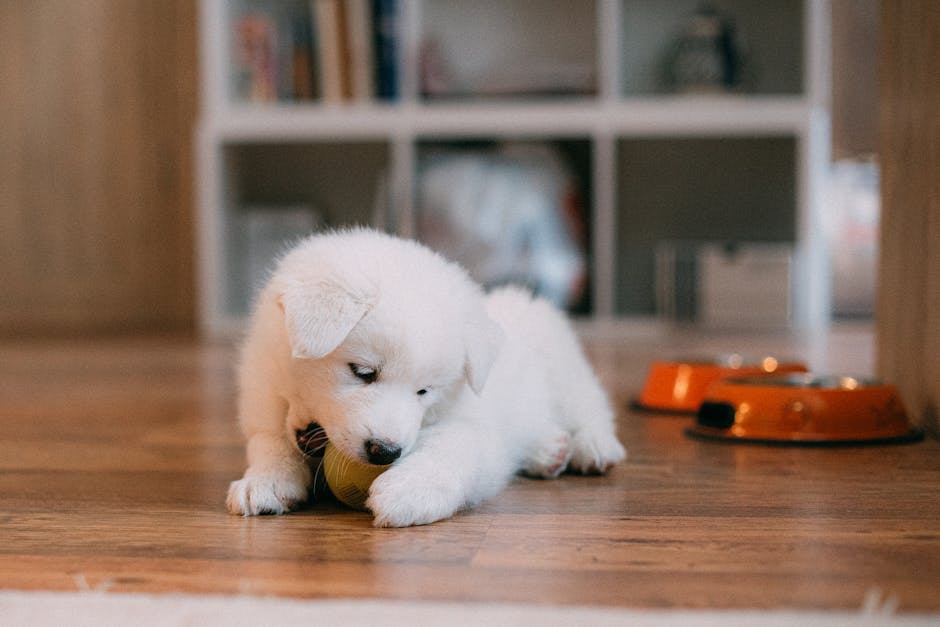
Puppies begin losing their baby teeth around 12 weeks of age, and the process continues until roughly six months. During this time, their gums are sore, itchy, and inflamed. Biting and chewing provides genuine relief from the discomfort — much like a human baby gnawing on a teething ring. If your puppy seems to chew on everything in sight between three and six months, teething is almost certainly a major factor.
Exploring the World
Dogs don’t have hands. They investigate their environment with their mouths. When your puppy mouths your fingers, picks up your shoes, or nibbles on the corner of the couch, they’re gathering information about texture, taste, and resistance. This oral exploration is a critical part of cognitive development, and it’s completely healthy — even when it’s annoying.
Play and Social Learning
In a litter, puppies spend hours wrestling, chasing, and biting each other. This rough play teaches them a crucial skill called bite inhibition — learning how hard they can bite before a playmate yelps and stops the game. When your puppy bites you during play, they’re attempting to engage you the same way they engaged their littermates. They haven’t yet learned that human skin is far more sensitive than a sibling’s fur-covered scruff.
Breed-Specific Instincts
Some breeds are simply more mouthy than others. Herding breeds like Border Collies, Australian Shepherds, and Corgis may nip at heels and ankles because they’ve been selectively bred for generations to control livestock movement with their mouths. Retrieving breeds like Labradors and Golden Retrievers tend to carry and mouth everything because that’s what they were designed to do. Recognizing your puppy’s breed tendencies helps you set realistic expectations and choose the right training strategies.
When Puppy Biting Is Normal vs. When It’s Concerning
The vast majority of puppy biting is perfectly normal developmental behavior. However, there are specific warning signs that distinguish typical puppy mouthing from something that warrants immediate professional attention.
Normal Puppy Biting Looks Like:
- Mouthing your hands, fingers, and toes during play
- Nipping at pant legs, shoelaces, and loose clothing
- Chewing on furniture, shoes, and household objects
- Playful biting that intensifies when the puppy is overtired or overstimulated
- Biting that happens mostly during interactive play sessions
- A relaxed body, wagging tail, and play bows accompanying the biting
Concerning Behavior That Needs Professional Help:
- Stiff body posture, hard stare, or growling that doesn’t sound playful
- Biting triggered by guarding food, toys, or resting spots
- Snapping or biting when touched in specific areas (which may indicate pain)
- Biting that breaks skin regularly despite consistent training efforts
- Aggression directed at specific family members, children, or other animals
- Biting that escalates in intensity over time rather than decreasing
If you’re unsure whether your puppy’s biting falls into the normal category, a quick consultation with a certified professional dog trainer or veterinary behaviorist can provide clarity and peace of mind.
7 Proven Techniques to Stop Puppy Biting
These are the methods I use with every puppy client, and they work across breeds, sizes, and temperaments. Consistency is the key ingredient — everyone in the household must use the same approach.
1. Redirect to an Appropriate Toy
This is your most powerful everyday tool. The moment your puppy puts their teeth on your skin or clothing, calmly remove your hand and immediately offer an appropriate chew toy or tug rope. When the puppy bites the toy instead of you, praise them enthusiastically. You’re teaching a simple lesson: biting toys gets attention and fun; biting people makes the fun stop.
Keep redirect toys within arm’s reach in every room where you interact with your puppy. Having to search for a toy in the moment means you’ll miss the critical teaching window.
2. The Yelp and Withdraw Method
When your puppy bites too hard, let out a short, high-pitched yelp — similar to what a littermate would do. Then immediately go still and withdraw your attention for five to ten seconds. This mimics the natural consequence puppies experience in the litter: bite too hard, and the fun stops.
Important caveats: This method works well for many puppies, but some get more excited by the yelp sound. If your puppy escalates their biting after you yelp, skip the vocalization and simply withdraw attention silently. Watch your puppy’s response and adjust accordingly.
3. Structured Time-Outs
For persistent biters or puppies who are clearly overstimulated, a brief time-out is highly effective. When biting begins and redirection doesn’t work, calmly stand up, cross your arms, turn away, and remove all engagement. If the puppy continues jumping and biting at you, step behind a baby gate or out of the room for thirty seconds.
The time-out should be short — just long enough for the puppy to reset. This isn’t punishment; it’s teaching the puppy that biting ends all social interaction. After the brief pause, return and re-engage. If the biting resumes immediately, repeat the time-out. Most puppies start connecting the dots within a few sessions.
4. Impulse Control Games
Teaching your puppy to control their impulses directly reduces biting. These games are simple and can be practiced daily:
- “It’s Your Choice” — Hold a treat in your closed fist. Let the puppy lick, paw, and nose at your hand. The moment they back away or stop trying, open your hand and give them the treat. This teaches them that patience, not grabbing, gets rewarded.
- “Wait” — Ask your puppy to sit before meals, before going through doorways, and before receiving toys. This builds a habit of pausing and thinking before acting.
- “Leave It” — Start with a treat on the floor covered by your hand. Reward the puppy for looking away from the covered treat. Gradually increase the difficulty until they can resist an uncovered treat on the floor.
These exercises build the neural pathways for self-control. A puppy who practices impulse control daily will naturally become less mouthy over time.
5. Calm Reinforcement Training
Most people only pay attention to their puppy when the puppy is doing something wrong. Flip that pattern. Actively catch your puppy being calm and reward it. When your puppy is lying quietly at your feet, chewing an appropriate toy, or sitting calmly beside you, offer quiet praise and a small treat.
Over time, your puppy learns that calm behavior earns rewards, while wild biting behavior earns the loss of your attention. This approach is transformative and often overlooked.
6. Manage the Environment
Prevention is just as important as training. Set your puppy up for success by managing their environment:
- Use baby gates to create puppy-safe zones and give yourself breaks
- Keep shoes, children’s toys, and tempting items out of reach
- Provide a crate or exercise pen where the puppy can settle with a safe chew
- Ensure your puppy is getting enough sleep — overtired puppies bite far more than rested ones
- Schedule nap times; puppies under six months need 16 to 20 hours of sleep per day
A huge percentage of biting problems are actually overtiredness problems. If your puppy turns into a tiny land shark every evening at 7 PM, they probably need an enforced nap, not more training.
7. Socialization with Other Puppies
Well-run puppy socialization classes provide something no human can replicate: the chance for your puppy to practice bite inhibition with other puppies. When your puppy bites a classmate too hard, the other puppy yelps and stops playing. This real-time feedback from a peer is incredibly effective at teaching mouth pressure control.
Look for classes run by certified trainers who supervise play carefully, match puppies by size and temperament, and intervene when play gets too rough. Avoid unstructured “puppy free-for-alls” at dog parks, which can create fear and bad habits rather than good social skills.
Age-by-Age Expectations: What’s Normal at Each Stage
Understanding the timeline of puppy biting helps you stay patient and recognize progress even when it feels slow.
8 to 10 Weeks
Your puppy has just left their littermates and is adjusting to a new world. Mouthing and biting will be frequent as they explore everything with their mouth. Bites may be surprisingly sharp because their baby teeth are like tiny needles, but they typically lack jaw strength. Focus on gentle redirection and building a positive bond. This is not the time for heavy-handed corrections.
10 to 12 Weeks
Biting often intensifies during this period as your puppy becomes more confident and playful. Begin consistent redirect training and the yelp-and-withdraw method. Start short impulse control exercises. Don’t be discouraged — increased biting at this stage doesn’t mean your training isn’t working.
12 to 16 Weeks
Teething begins in earnest. Expect a noticeable increase in chewing and mouthing as baby teeth start falling out and adult teeth push through. Provide plenty of appropriate chew outlets. You may find tiny teeth on the floor or notice a little blood on toys — this is normal. Frozen chews and cold toys can soothe sore gums.
4 to 5 Months
If you’ve been consistent with training, you should start seeing meaningful improvement. Biting during play should be becoming less frequent and less intense. Your puppy is learning that teeth on skin end the fun. Teething is still ongoing, so chewing on objects will continue, but intentional biting of people should be decreasing.
5 to 6 Months
Most puppies experience a significant reduction in biting as their adult teeth finish coming in and their bite inhibition skills mature. By six months, the majority of puppies have largely stopped biting people during play, though occasional mouthing may persist, especially during exciting moments. Continue reinforcing good behavior and redirecting any remaining mouthing.
If your puppy is still biting hard and frequently at six months despite consistent training, it’s time to consult a professional trainer. There may be underlying issues — anxiety, frustration, or insufficient exercise — that need to be addressed with a customized plan.
What NOT to Do: Methods That Make Biting Worse
Outdated training advice is still circulating widely on the internet and in casual conversations. These methods are not only ineffective — they actively make biting problems worse and damage your relationship with your puppy.
Never Hit, Slap, or Flick Your Puppy’s Nose
Physical punishment teaches your puppy to fear your hands. A puppy who learns that hands deliver pain becomes a dog who flinches, snaps, or bites defensively when hands approach. You’re not teaching bite inhibition — you’re teaching your puppy that humans are unpredictable and scary.
Never Hold Your Puppy’s Mouth Shut
Clamping your puppy’s muzzle closed when they bite is frightening and confusing for the puppy. It doesn’t teach them what to do instead, and it creates a negative association with being handled around the face. This can lead to serious problems during veterinary exams, grooming, and tooth brushing later in life.
Never Use Alpha Rolls or Forced Submission
Pinning your puppy on their back to assert “dominance” is based on thoroughly debunked wolf pack theory. Modern animal behavior science has conclusively shown that dominance-based training increases anxiety, fear, and aggression in dogs. Alpha rolls don’t teach your puppy anything useful — they teach your puppy that you’re someone to be afraid of.
Never Use Bitter Sprays on Your Skin
While bitter apple spray can be useful on furniture, spraying it on your hands or body to deter biting misses the point entirely. You want your puppy to choose not to bite because they’ve learned it ends the fun, not because your skin tastes bad. You also risk your puppy developing negative associations with your touch and scent.
Never Yell or Scream
Loud, angry reactions often escalate a puppy’s arousal level rather than calming them down. Many puppies interpret shouting as exciting engagement — you’re barking back at them! The more emotional your response, the more intense the biting often becomes. Stay calm, be boring, and let the withdrawal of attention do the teaching.
Best Teething Toys and Chews for Biting Puppies
Having the right chew options available is essential. Not all toys are created equal, and the best choices depend on your puppy’s age, size, and chewing style.
Top Recommendations
- KONG Puppy (classic pink or blue) — Stuff with peanut butter or wet food and freeze for an extra-soothing teething treat. The gold standard of puppy chew toys.
- Nylabone Puppy Chews — Designed specifically for the softer teeth and developing jaws of young puppies. Choose the appropriate size for your breed.
- Frozen washcloths — Soak a clean washcloth in water or low-sodium broth, wring it out, and freeze it. The cold soothes sore gums and the texture satisfies the urge to chew. Simple, cheap, and effective.
- Bully sticks and other natural chews — High-value, long-lasting, and satisfying. Always supervise your puppy with natural chews and discard small pieces that could become choking hazards.
- Rubber tug toys — Perfect for interactive play that teaches your puppy to put their mouth on the toy instead of your hands. Choose a length that keeps your fingers safely away from the action.
- West Paw Zogoflex toys — Extremely durable, dishwasher-safe, and available in sizes for every breed. The Tux and Toppl models are excellent for stuffing and freezing.
Toy Rotation Tips
Puppies get bored with the same toys quickly. Keep three to four toys available at a time and rotate new ones in every few days. Toys that have been “resting” in the closet suddenly become novel and exciting again. Always have at least one frozen stuffable toy ready to go for teething emergencies.
Safety note: Inspect toys regularly for damage. Discard any toy with pieces breaking off, stuffing coming out, or chunks missing. Supervise your puppy with all new toys until you’re confident they chew safely.
When to Get Professional Help
Most puppy biting resolves with consistent training, patience, and time. But some situations benefit from — or genuinely require — expert guidance.
Consult a certified professional dog trainer (CPDT-KA) or veterinary behaviorist if:
- Your puppy is over six months old and still biting hard and frequently
- Biting is accompanied by stiff body language, hard staring, or deep growling
- Your puppy guards food, toys, or resting places with aggressive displays
- You have young children in the home and the biting creates safety concerns
- You feel overwhelmed, frustrated, or unsure whether the biting is normal
- Previous training approaches have not produced any improvement after three to four weeks of consistent application
- Your puppy shows fear-based reactivity alongside the biting behavior
There is absolutely no shame in seeking professional help. In fact, getting expert guidance early is one of the smartest things you can do. A qualified trainer can observe your puppy’s specific behavior, identify triggers you might be missing, and design a training plan tailored to your puppy’s individual needs. Early intervention prevents small problems from becoming deeply ingrained habits.
When choosing a trainer, look for positive reinforcement-based methods and recognized certifications like CPDT-KA, IAABC, or KPA-CTP. Avoid anyone who promises to “fix” your puppy using punishment, dominance theory, or shock collars.
Frequently Asked Questions
How long does the puppy biting phase last?
For most puppies, the worst of the biting phase lasts from about 8 weeks to 5 or 6 months of age, coinciding with the teething timeline. With consistent training, you’ll typically see significant improvement by 4 to 5 months, and most puppies have largely stopped biting people by the time they’re 6 to 7 months old. Some breeds — particularly herding and sporting breeds — may take a bit longer, and occasional mouthing during excitement can persist into adolescence. The key is steady progress, not perfection. If the biting is gradually decreasing in frequency and intensity, your training is working.
My puppy only bites me, not other family members. Why?
This is actually very common and usually means one of two things. First, you may be the person who plays most actively with the puppy, so they associate you with high-energy interaction and use biting as an invitation to play. Second, different family members may be responding to biting differently — someone who consistently withdraws attention will be bitten less than someone who inadvertently reinforces the biting by engaging, laughing, or pushing the puppy away (which puppies interpret as play). Make sure everyone in the household uses the same training approach. Also consider whether the puppy is overtired by the time you interact with them — timing matters enormously.
Is it okay to let my puppy mouth my hands gently?
This is a topic trainers debate, but here’s my practical advice: gentle mouthing with zero pressure is generally fine and can actually help your puppy learn bite inhibition. The goal isn’t a dog who never puts their mouth on a person — it’s a dog who understands how to control the pressure of their mouth. If you allow gentle mouthing but immediately withdraw when there’s any pressure, you’re teaching exactly the skill your puppy needs. That said, if you have young children, elderly family members, or anyone who could be hurt or frightened by mouthing of any kind, it’s safer to teach a complete no-mouth-on-skin rule.
Will getting a second dog help with my puppy’s biting?
While having another dog in the home can provide your puppy with an outlet for rough play and help teach bite inhibition, getting a second dog solely to solve a biting problem is not recommended. A second dog comes with its own significant financial, time, and training commitments. If you already have a well-socialized adult dog who tolerates puppies well, their presence can genuinely help. But a well-run puppy socialization class offers the same peer-learning benefits without the lifetime commitment of another pet. Address the biting with training first, and add a second dog to your family only when you’re ready for that decision on its own merits.
My puppy bites more when they’re tired. What should I do?
This is one of the most common patterns I see, and the solution is straightforward: enforce nap times before the biting starts. Puppies under four months need 18 to 20 hours of sleep per day. Puppies between four and six months need 16 to 18 hours. Most puppies won’t voluntarily settle down when they’re overtired — instead, they get increasingly wild, nippy, and impossible to redirect. Learn your puppy’s tired cues: glassy eyes, frantic energy, inability to focus, and escalating biting. When you see those signs, it’s crate or pen time with a calming chew. A well-rested puppy is dramatically easier to train and far less likely to bite. Think of enforced naps as one of your most important training tools — because they are.
Featured Image Source: Pexels