

How to Leash Train a Reactive Dog on Walks
I still remember the first time my friend’s Border Collie lost it on a walk. One second, totally calm. The next — lunging, barking, spinning at the end of the leash like a furry tornado because a Labrador appeared 50 feet away. My friend was mortified. And honestly? She thought her dog was aggressive.
He wasn’t. Not even close. But figuring out the difference between reactivity and aggression — and then actually knowing how to leash train a reactive dog — took months of trial, error, and a lot of cheese cubes.
If your dog lunges at other dogs on leash or barks at everything on walks, I want you to know something right now: this is fixable. Almost every reactive dog gets significantly better with the right approach. I’ve watched it happen over and over. But you need a plan, not just wishful thinking and a tighter grip on the leash.
What Leash Reactivity Actually Is (It’s Not Aggression)
Here’s the thing most people get wrong. A dog that barks and lunges on leash isn’t necessarily trying to hurt anyone. Reactivity is an overreaction to a stimulus — another dog, a person, a skateboard, whatever — that goes beyond what the situation calls for.
Aggression is about intent to harm. Reactivity is about big emotions spilling out because the dog doesn’t know what else to do. Think of it like the difference between someone throwing a punch versus someone screaming because a spider dropped on their shoulder. Both look dramatic. Very different motivations.
Most reactive dogs are perfectly fine off-leash in the right settings. That’s your first clue that the leash itself is part of the equation.
Frustration-Based Reactivity vs Fear-Based Reactivity
This distinction matters more than most training guides let on. The underlying emotion driving the behavior changes everything about how you address it.
Frustration-based reactivity is about access. Your dog desperately wants to greet that other dog, can’t because of the leash, and loses their mind about it. These dogs often do great at dog parks or daycare — they’re social butterflies who just can’t handle being restrained. The display is usually frantic and disorganized. Lots of whining mixed with the barking. Tail often wagging. Body pulling toward the trigger.
Fear-based reactivity is about escape. Your dog wants the scary thing to go away and can’t flee because they’re tethered to you. The behavior tends to be more “organized” — you’ll see a progression of warning signals. Tucked tail, attempts to hide behind you, avoiding eye contact, then escalating to barking and lunging when those subtle signals don’t work. The body is usually leaning away even while the mouth is going forward.
Why does this matter? Because a frustrated dog needs impulse control exercises and redirection. A fearful dog needs confidence-building and desensitization. Using the wrong approach won’t just fail — it can make things worse. I’ve seen well-meaning owners try to “socialize” a fear-reactive dog by forcing closer proximity to triggers. That’s like treating someone’s spider phobia by dumping spiders on them.
How Tight Leashes Make Reactivity Worse
This is the cruel irony of leash reactivity. Your dog reacts, so you tighten the leash. The tight leash restricts their movement and removes their ability to create distance naturally. That trapped feeling amplifies the emotional response. More barking. More lunging. So you grip tighter. And the cycle spirals.
Dogs communicate with their whole bodies. A loose leash lets them do that. They can curve their approach, sniff the ground as a calming signal, or simply move to a comfortable distance. A tight leash turns every encounter into a head-on confrontation with zero escape route.
Start paying attention to your leash hand. Most people don’t realize they’re tensing up and shortening the leash the moment they spot another dog — before their own dog has even noticed. Your dog reads that tension instantly. You’re essentially broadcasting “DANGER AHEAD” through the leash before anything has happened.
Finding Your Dog’s Threshold Distance
Threshold is the single most important concept in leash reactive dog training. It’s the distance at which your dog notices a trigger but can still think clearly. Cross that line, and you’ve lost them — they’re reacting on pure emotion, and no amount of “sit” or “look at me” will reach them.
How to Measure and Record Threshold
Grab your phone and start logging. Seriously. Every walk for one week, note:
- What the trigger was (dog, person, bike, etc.)
- Approximate distance when your dog first noticed it
- Approximate distance when the reaction started
- How intense the reaction was (1-5 scale)
- Time of day and location
You’ll start seeing patterns fast. Maybe your dog’s threshold for other dogs is about 30 feet, but for skateboards it’s 50 feet. Maybe mornings are better than evenings. Maybe certain routes are consistently worse.
This data is gold. It tells you exactly where to start training — and it gives you an objective way to track progress when you’re in the thick of it and everything feels hopeless.
What ‘Under Threshold’ Looks Like in Real Life
A dog who’s under threshold is aware of the trigger but still has their brain online. Here’s what that actually looks like:
- Ears perk toward the trigger but the dog can look away
- Body is alert but not stiff
- Dog can still take treats (this is your best indicator — a dog who refuses food is over threshold)
- Can respond to cues like “watch me” or their name
- May glance at the trigger and then choose to look back at you
Over threshold? That’s when the dog lunges at other dogs on leash, barks uncontrollably, can’t eat, can’t hear you, and essentially checks out of rational thought. Once you’re there, training is impossible. You’re just surviving.
The space between “noticed it” and “lost it” — that’s where all your training happens. Stay in that zone.
The BAT 2.0 Protocol for Leash Reactivity
BAT stands for Behavior Adjustment Training, developed by Grisha Stewart. The original version was good. Version 2.0 is significantly better. The core idea is elegant: give your dog safe opportunities to learn about their triggers while always having the option to move away.
Most reactive dogs have never had the chance to just… observe a trigger calmly. Every encounter has been an overwhelming, too-close, too-fast ambush. BAT 2.0 changes that.
Setting Up Controlled Exposure Sessions
You need a helper with a calm, neutral dog (the “decoy”). Here’s the setup:
- Find a large open space — a parking lot, field, or quiet park works well
- Have the decoy dog stationed at a distance well beyond your dog’s threshold
- Let your dog explore on a long leash (15-20 feet). Don’t direct them. Don’t lure them.
- Allow your dog to notice the decoy dog at their own pace
- Watch for natural calming behaviors — sniffing the ground, looking away, shaking off, turning their body
The critical difference from older approaches: you’re not telling your dog what to do. You’re letting them figure it out in an environment where they feel safe enough to think. This builds genuine confidence, not just obedience.
Using Retreat as Reinforcement
Here’s the part that feels counterintuitive. When your dog notices the trigger and shows any sign of calm behavior — even just a head turn away — you move away from the trigger together. Calmly. No fuss.
The distance you create is the reward. Your dog just learned: “When I stay cool, I get space.” That’s incredibly powerful for a fear-reactive dog. And for a frustrated dog, it teaches that calm behavior — not explosive lunging — is what moves them through the environment.
Over sessions, most dogs start choosing retreat-worthy behaviors more quickly. They’ll glance at the other dog, look away, and start walking off on their own. That’s when you know it’s working.
Expect to need 8-15 sessions before you see consistent changes. And keep these separate from regular walks at first. Training sessions are controlled. Walks are real life. Don’t confuse the two early on.
The ‘Engage-Disengage’ Game for Walks
If BAT 2.0 is your structured homework, the engage-disengage game — developed by clinical animal behaviorist Chirag Patel — is what you bring on everyday walks. It’s simpler to execute in the moment and works beautifully alongside BAT work.
Phase 1: Mark and Treat for Noticing the Trigger
This phase is pure classical conditioning. You’re changing your dog’s emotional response to the trigger itself.
When your dog notices a trigger (while still under threshold):
- The instant they look at the trigger — mark it with a clicker or “yes”
- Deliver a high-value treat immediately
- Repeat every time they look at the trigger
That’s it. You’re not asking for any behavior. You’re just pairing “other dog exists” with “cheese appears.” Over time, your dog’s emotional response shifts. Instead of “other dog = panic,” it becomes “other dog = where’s my treat?”
Stay in Phase 1 for at least 2-3 weeks. People rush this. Don’t.
Phase 2: Dog Chooses to Look Away
Once your dog has a solid Phase 1 foundation — they see the trigger and immediately look to you expectantly — you shift the criteria.
Now you wait. Dog sees trigger. You don’t mark. You wait for the dog to choose to disengage and look back at you on their own. The moment they do — mark and reward generously.
This is the magic moment. Your dog is now making a conscious decision: “I see that dog, but I’m going to look at my person instead.” That voluntary choice is worth more than a hundred forced “leave it” commands.
| Phase | What You Mark | What Dog Learns | Duration |
|---|---|---|---|
| Phase 1 | Dog looks at trigger | Trigger = good things happen | 2-3 weeks minimum |
| Phase 2 | Dog looks away from trigger | Choosing to disengage = reward | Ongoing |
Equipment That Helps (And What to Avoid)
The right gear won’t fix reactivity, but it makes training safer and more manageable. The wrong gear actively makes things worse.
Front-Clip Harness vs Head Halter
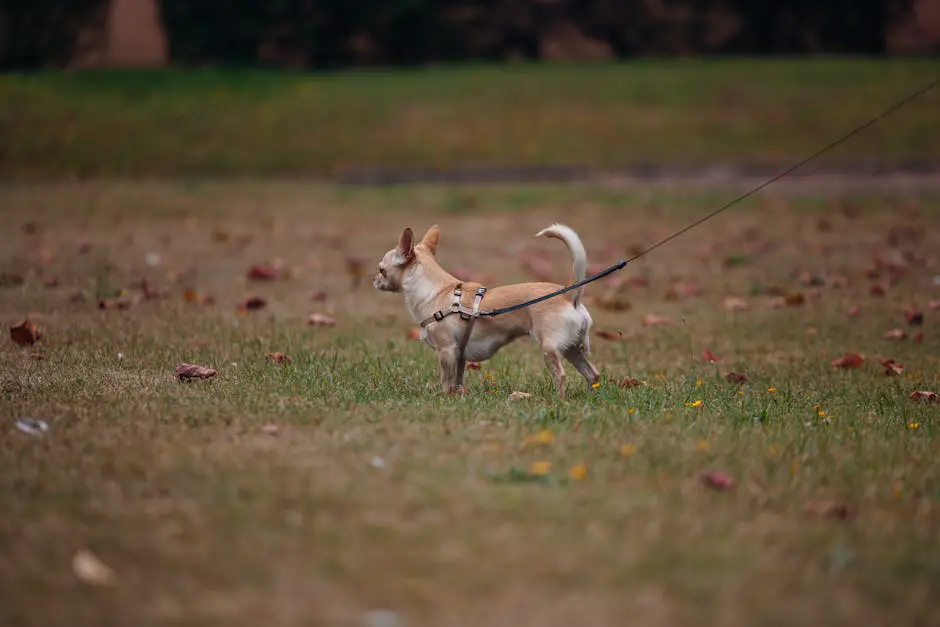
Front-clip harnesses are my recommendation for about 90% of reactive dogs. When the dog pulls, the front attachment point redirects their body to the side rather than letting them power forward. It gives you steering without pain or intimidation.
Good options include the Ruffwear Front Range and the Freedom No-Pull Harness (which has both front and back attachment points). Look for something with padded straps that doesn’t restrict shoulder movement — your dog needs full range of motion for body language.
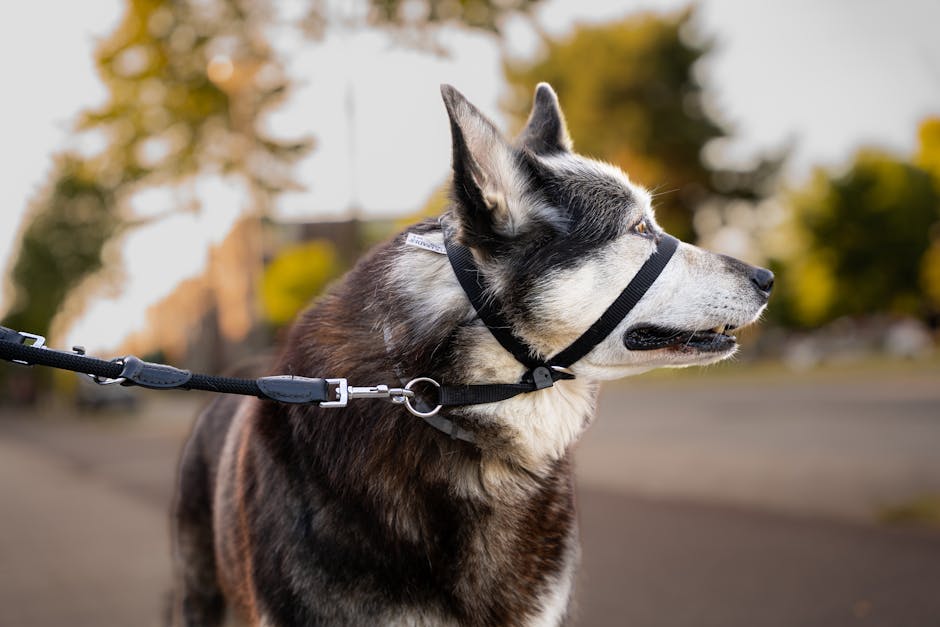
Head halters (like the Gentle Leader or Halti) loop around the muzzle and clip under the chin. They give you more directional control because where the head goes, the body follows. Some trainers love them for large, strong reactive dogs.
But — and this is a real “but” — head halters require their own conditioning period. Slapping one on and heading out is a recipe for a dog who now hates the equipment and is still reactive. They can also cause neck injuries if the dog lunges suddenly against them. And some dogs find the muzzle sensation so stressful it actually increases their anxiety.
| Feature | Front-Clip Harness | Head Halter |
|---|---|---|
| Ease of introduction | Easy — most dogs accept immediately | Requires 1-2 weeks of conditioning |
| Pulling reduction | Moderate | High |
| Risk of injury | Very low | Moderate (neck strain on lunges) |
| Dog comfort level | Generally high | Varies — some dogs find it stressful |
| Best for | Most reactive dogs | Very strong dogs who need extra steering |
Why Prong Collars and Choke Chains Increase Reactivity
I’m going to be direct about this. Prong collars, choke chains, and e-collars make leash reactivity worse. Not sometimes. Consistently.
Here’s why. Your dog sees another dog and feels anxious or excited. They pull. The collar pinches or chokes them. Pain happens. But your dog doesn’t think “I shouldn’t pull.” They think “that other dog caused this pain.” Now the trigger is associated with pain on top of whatever emotion was already driving the reaction.
You might see a temporary suppression of behavior — the dog stops barking because the correction hurts enough to override their emotional response. But you haven’t changed the underlying emotion. You’ve just bottled it up. And bottled emotions in dogs eventually explode. I’ve seen dogs who seemed “cured” by prong collars suddenly escalate to actual biting because all the warning signals got punished out of them.
Every major veterinary behavior organization — AVSAB, IAABC, Fear Free — recommends against aversive tools for reactive dogs. This isn’t a debate. The science is settled.
Managing the Environment While You Train
Training takes time. You still need to walk your dog tomorrow. These management strategies keep you sane while the behavior modification does its work.
Time-of-Day Walking Strategies
Most reactive dogs do better during off-peak hours. That’s not a coincidence — fewer triggers means fewer rehearsals of the reactive behavior. Every time your dog practices barking and lunging, that neural pathway gets a little stronger.
- Early morning (6-7 AM): Usually the quietest. Most dog owners haven’t hit the streets yet.
- Midday (11 AM – 1 PM): Surprisingly quiet in residential areas on weekdays.
- Late evening (after 8 PM in summer): Darkness actually helps — dogs often have higher thresholds when they can’t see triggers as clearly from a distance.
- Avoid: The after-work rush (4-6 PM) and weekend mornings at popular parks. That’s trigger city.
I walked my friend’s reactive Border Collie exclusively at 6:15 AM for the first three weeks of training. Was it fun? No. Did it give him the space to actually learn? Absolutely.
U-Turn and Emergency Exit Techniques
The U-turn is your best friend. Practice it at home first until it’s muscle memory.
The smooth U-turn: Say your cue word (I use “this way”), turn 180 degrees, and walk briskly in the opposite direction. Keep it cheerful. Reward your dog the second they turn with you. This isn’t punishment — it’s a strategic retreat.
The emergency scatter: For those moments when a trigger appears out of nowhere and you’re way too close. Toss a handful of treats on the ground behind you, let your dog scoop them up, and use that time to gain distance. It’s messy but effective.
The parked car duck: Sometimes the best move is stepping behind a parked car, dumpster, or bush to break line of sight. Out of sight, out of mind works surprisingly well for most dogs.
Pre-plan your routes with escape options in mind. Dead-end streets with no side exits are a nightmare for reactive dog walks. I always choose routes with multiple turn-off points.
What to Say to Other Dog Owners
Oh, this one. The most socially awkward part of having a reactive dog.
When someone with an off-leash dog calls out “Don’t worry, he’s friendly!” while their dog charges toward you — and your dog barks at everything on walks — you need a script ready. Because you won’t think clearly in that moment.
Keep it simple and assertive: “My dog needs space, please call yours back.” Don’t explain. Don’t apologize. Don’t say “he’s reactive” or “she’s in training” because most people don’t know what that means and won’t care.
If their dog is already too close: “PLEASE GET YOUR DOG” — loud and urgent. Being polite is less important than protecting your training progress.
And here’s one that’s saved me more than once — a bright yellow leash sleeve or bandana that says “NEEDS SPACE.” It won’t stop everyone, but it gives aware dog owners a heads-up before things get complicated.
Realistic Timelines and When to Hire a Behaviorist
I’m not going to lie to you. Leash reactivity doesn’t disappear in a weekend. But the timeline is shorter than most people fear.
Weeks 1-3: You’re learning your dog’s patterns, building foundation skills, and managing the environment. You might not see obvious behavior changes yet. That’s normal.
Weeks 3-6: If you’re consistent with the engage-disengage game and managing triggers, you should notice your dog recovering faster after seeing triggers. Their threshold distance may start shrinking. Some walks will feel great. Others will feel like you’re back to square one. The inconsistency is actually progress — it means things are shifting.
Weeks 6-12: This is where the real changes become visible. Your dog starts making choices — looking at triggers and choosing to disengage without your help. Walks feel less stressful. You might catch yourself actually enjoying them again.
Month 3-6: Continued improvement. Your dog’s “bad days” become rare rather than constant. You can handle surprise encounters more smoothly. The skills become more reliable in varied environments.
When to call in a professional: If you’ve been consistent for 4-6 weeks and see zero improvement — or if your dog’s reactivity includes hard staring, stiff body, and genuine attempts to bite — it’s time for a certified behavior consultant. Not just any trainer. Look for credentials: CDBC (Certified Dog Behavior Consultant through IAABC), CBCC-KA (through CCPDT), or a veterinary behaviorist (DACVB). These professionals have specific education in behavior modification, not just obedience training.
The IAABC and CCPDT both maintain searchable directories on their websites. Budget roughly $150-300 for an initial consultation. It’s worth every penny if you’re stuck.
And honestly? Even if you’re making progress on your own, one session with a qualified behaviorist can accelerate your timeline significantly. They’ll spot things you’re missing and fine-tune your mechanical skills.
Frequently Asked Questions
Can a reactive dog ever be fully “cured”?
Most reactive dogs improve dramatically — to the point where walks are enjoyable and manageable. But “cured” implies zero reaction ever, and that’s not realistic for many dogs. Think of it like managing rather than eliminating. Your dog may always notice triggers. The goal is that they notice, make a good choice, and move on. For many dogs, that’s exactly what happens with consistent training.
How long should I train each day for leash reactivity?
Quality beats quantity every time. Two or three short training sessions (10-15 minutes) are far more productive than one long exhausting walk. Your dog’s brain gets tired from this work. If you push past their mental capacity, you’ll actually see worse behavior, not better. On regular walks, just use management strategies and practice the engage-disengage game when natural opportunities arise at safe distances.
My dog is fine with dogs across the street but loses it within 10 feet. Is that normal?
Completely normal. That 10-foot mark is your dog’s current threshold. Your training starts at whatever distance your dog can handle — even if that’s 40 feet or more. Gradually closing that gap is literally the whole process. Some dogs start with a threshold of 50+ feet. Others can handle 15 feet. Neither is wrong. You just meet your dog where they are and work from there.
Should I avoid other dogs completely during training?
No — but you should avoid uncontrolled encounters. Complete avoidance doesn’t teach your dog anything. You need sub-threshold exposure to actually change the emotional response. The key is controlling the distance and duration. Structured training sessions with helper dogs, practicing the engage-disengage game during walks at safe distances, and avoiding ambush situations like tight sidewalks and blind corners — that’s the balance.
Is it okay to comfort my reactive dog when they’re scared?
Yes. The old advice about “reinforcing fear” by comforting your dog has been thoroughly debunked. Fear is an emotion, not a behavior, and you can’t reinforce an emotion by providing comfort. If your dog seeks you out during a scary moment, being calm and reassuring is exactly the right response. What you want to avoid is forcing your dog closer to the trigger while soothing them — that sends mixed signals.
Learning how to leash train a reactive dog takes patience, consistency, and a willingness to change your own habits as much as your dog’s. But the payoff — walking your dog without dreading every corner — is one of the most rewarding transformations in dog training. Start where your dog is, not where you wish they were. Celebrate the small wins. And remember that every calm pass of another dog is one more deposit in your dog’s “I can handle this” bank account.
Featured Image Source: Pexels