
If you’ve ever watched a dog sail over a six-foot wall, track a scent trail through a field, then take down a padded “bad guy” on command — and then sit calmly at their handler’s side like nothing happened — you’ve probably seen Schutzhund in action. And honestly? It’s one of the most impressive things I’ve ever witnessed a dog do.
I first saw Schutzhund training at a regional competition about eight years ago. A friend dragged me along, and I expected something like a glorified obedience class. What I got was a German Shepherd launching through the air with laser precision, then heeling so tight you could barely fit a finger between dog and handler. I was hooked. I didn’t end up competing myself — my Labrador mix would’ve been more interested in the lunch coolers than the bite sleeve — but I dove deep into understanding the sport.
There’s a lot of misunderstanding around Schutzhund. People hear “protection dog sport” and picture aggressive dogs being trained to attack. That couldn’t be further from the truth. This is a sport that tests a dog’s intelligence, nerve, athleticism, and — above all — their ability to think clearly under pressure. Let me break it all down.
What Schutzhund Actually Is
Schutzhund is a German word that literally translates to “protection dog.” The sport was developed in Germany in the early 1900s as a breed suitability test for German Shepherds. The idea was simple: before a dog could be bred, it had to prove it had the drives, temperament, and trainability that the breed standard demanded.
Today, the sport goes by IPO (Internationale Prüfungsordnung) or, more recently, IGP (Internationaler Gebrauchshund Prüfungsordnung). The name changes confuse everyone, so don’t worry if you see all three used interchangeably. Same sport, different governing body politics.
Here’s what makes Schutzhund unique: it tests dogs across three completely different disciplines in a single trial. A dog doesn’t just need to be good at one thing. It needs to excel at tracking, obedience, AND protection — all on the same day, judged by the same standard. That’s a tall order.
There are three title levels: IGP 1, IGP 2, and IGP 3, with difficulty increasing at each stage. A dog must pass all three phases with a minimum score to earn its title. No shortcuts.
The Three Phases of Schutzhund
Tracking
This is where the dog works its nose. A tracklayer walks a predetermined path across a field, leaving small articles (usually leather or fabric pads) along the track. The dog then follows the scent trail, indicating each article by lying down on it.
At IGP 1, the track is about 300 paces with two articles and has aged for 20 minutes. By IGP 3, you’re looking at 600 paces, three articles, and a 60-minute-old track with multiple turns. The dog works on a 33-foot line, head down, methodically following every footstep.
What most people don’t realize is how mentally draining tracking is for dogs. A 15-minute tracking phase can tire a dog out more than an hour of fetch. It’s intense concentration work.
Obedience
Think of competition obedience cranked up to eleven. The dog performs heeling patterns (off-leash, with a crowd and gunshots as distractions), retrieves a dumbbell on flat ground and over a meter-high jump, and does a send-out where it runs full speed away from the handler and drops on command.
The precision expected is borderline obsessive. The dog should be so focused on its handler that distractions don’t register. I’ve watched dogs heel through a group of strangers without a single ear flick sideways. That level of engagement takes hundreds of hours to build.
| Phase | IGP 1 | IGP 2 | IGP 3 |
|---|---|---|---|
| Tracking | 300 paces, 20 min aged, 2 articles | 400 paces, 30 min aged, 2 articles | 600 paces, 60 min aged, 3 articles |
| Obedience | On-leash and off-leash heeling, retrieves, send-out | All off-leash, added wall jump retrieve | Higher precision, longer send-outs |
| Protection | Hold & bark, escape bite, courage test | Added back transport, re-attack | Full scenario with handler search, multiple blinds |
| Max Score | 100 per phase (300 total) | 100 per phase (300 total) | 100 per phase (300 total) |
Protection
Okay, this is the phase everyone wants to talk about. And yes, it’s spectacular to watch. But it’s also the most misunderstood part of Schutzhund training.
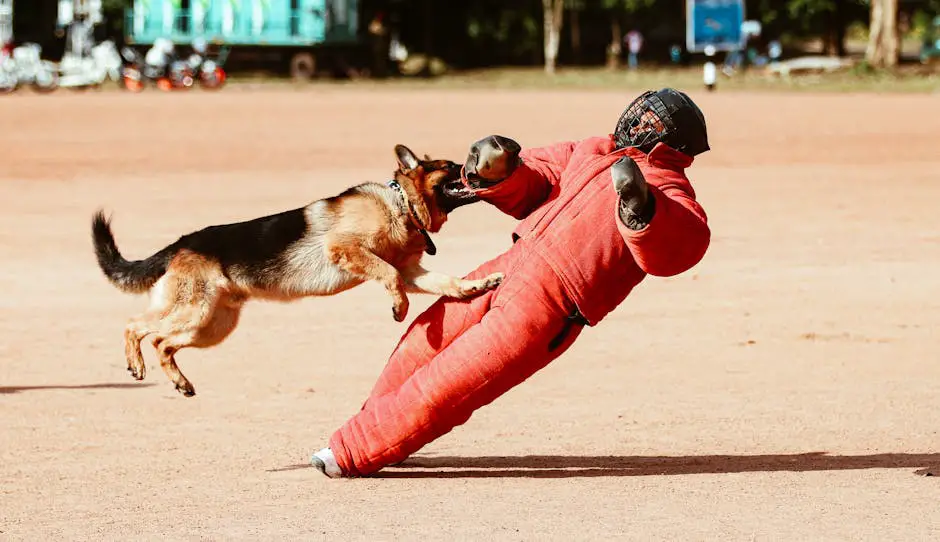
The protection phase tests the dog’s courage, nerve stability, and — critically — its ability to stop on command. A helper (the person in the padded suit) hides in one of six blinds. The dog searches the blinds, finds the helper, and performs a “hold and bark” — barking at the helper without biting until the handler arrives.
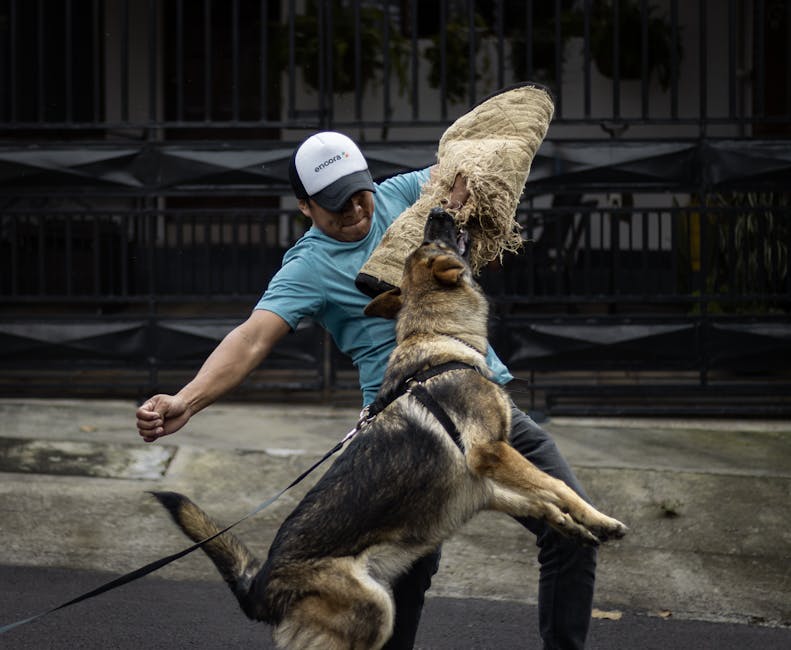
Then things escalate. The helper attempts to escape. The dog bites the padded sleeve. The handler calls the dog off. The dog must release immediately. There are courage tests where the helper runs directly at the dog, and the dog must engage without hesitation.
The single most important skill in the protection phase is the out. A dog that bites but won’t let go fails. Period. This isn’t about creating an aggressive dog — it’s about creating a dog with an incredible on/off switch. The best protection dogs I’ve seen can go from full-intensity bite work to calmly heeling beside their handler in seconds.
Which Breeds Excel at Schutzhund
While the sport was created for German Shepherds, several breeds compete today. Here’s the reality of what works:
German Shepherds still dominate. They were literally bred for this. A well-bred working-line GSD has the tracking nose, the obedience biddability, and the protection drive to handle all three phases.
Belgian Malinois have become incredibly popular in the sport over the last 15-20 years. They’re fast, intense, and often outscore GSDs in obedience and protection. But — and I say this as someone who admires the breed — Malinois are a LOT of dog. They’re not a “step up” from a GSD. They’re a different animal entirely in terms of drive and energy.
Rottweilers, Dobermans, Giant Schnauzers, and Boxers also compete. Dutch Shepherds and Bouvier des Flandres show up occasionally too. Some breeds struggle more with specific phases — Rottweilers, for example, can find the precision heeling in obedience challenging compared to the herding breeds.
I’ll be blunt: if you’re considering getting into Schutzhund, your dog’s breeding matters enormously. A pet-line German Shepherd from a backyard breeder and a working-line GSD from proven Schutzhund stock are almost different breeds in terms of drive and nerve. If you’re serious about competing, start with a puppy from titled, health-tested working parents.
Getting Started in Schutzhund Training
You can’t do this in your backyard. Well, you can practice obedience and some tracking fundamentals, but protection training absolutely requires a qualified helper, proper equipment, and — ideally — a club.
Find a local Schutzhund club. This is step one, and it’s non-negotiable. In the US, look for clubs affiliated with the United Schutzhund Clubs of America (USCA) or the DVG America. Most clubs train on weekends and welcome newcomers to watch before committing.
What to expect at your first visit:
- You’ll watch, not participate. Good clubs want to evaluate your dog’s temperament before allowing it on the field.
- Training typically runs 3-4 hours. You’ll see tracking in the morning (when the ground is still damp and holds scent better), then obedience and protection.
- Membership dues vary — I’ve seen anywhere from $30 to $75 per month, plus there’s equipment costs.
- Most clubs have experienced helpers and training directors who can work with green dogs.
Start young but don’t rush. Puppies can begin foundational work — prey drive games, basic obedience, short tracking exercises — as early as 8-10 weeks. But formal bite work shouldn’t start until a dog is mentally and physically mature enough, usually around 12-18 months depending on the individual dog and breed.
Common Myths About Schutzhund Dogs
“Schutzhund makes dogs aggressive.” No. A well-trained Schutzhund dog is one of the most stable, controllable dogs you’ll meet. The training builds confidence and impulse control, not aggression. Dogs with genuine aggression issues wash out of Schutzhund fast — they can’t handle the structure and the outs.
“These dogs are dangerous around kids.” Most titled Schutzhund dogs I know live as family pets. They play with kids, snooze on couches, and go to farmers’ markets. The protection work is channeled through specific triggers and cues that don’t occur in everyday life. A dog trained in Schutzhund knows the difference between a padded sleeve on a training field and a kid running through the backyard.
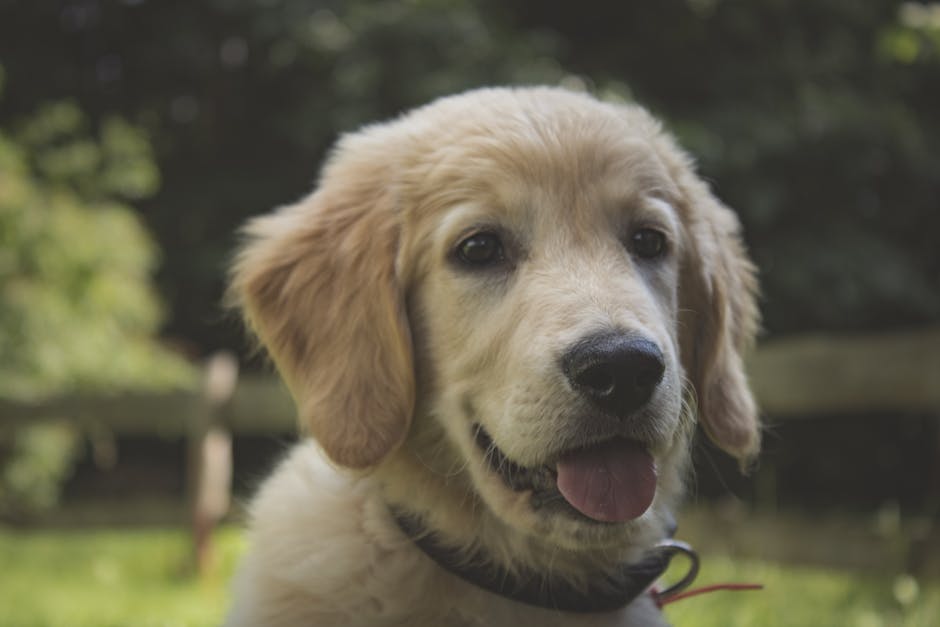
“Any dog can do Schutzhund.” Technically, any dog can try. Realistically, most dogs don’t have the combination of drives needed. Your Golden Retriever might track beautifully but have zero interest in biting a sleeve. Your terrier might have insane prey drive but can’t focus long enough for obedience. The breeds that excel in this sport were specifically developed to have balanced drives across all three areas.
“It’s just about biting.” This one really gets me. Protection is one-third of the sport. And within that third, the dog spends more time demonstrating control than actually biting. The tracking and obedience phases require just as much — if not more — training time.
The Time and Financial Commitment
I’m not going to sugarcoat this. Schutzhund is a serious commitment.
Time: Plan on training 3-5 days per week once you’re into it. Club training days are typically 3-4 hours. Then there’s solo practice for obedience and tracking in between. Most handlers spend 1-2 years working toward an IGP 1 title with a talented, well-bred dog. Longer if the dog needs more time to mature or if life gets in the way.
Money: Between club dues ($30-75/month), equipment (tracking lines, harnesses, training collars — budget $200-500 to start), trial entry fees ($75-150 per trial), travel to trials, and the dog itself (a well-bred working puppy runs $2,000-4,000+), you’re looking at a meaningful financial commitment. And that’s before vet bills, premium food for an athletic working dog, and the inevitable equipment replacements.
Emotional investment: Your dog will have bad days. You’ll have bad days. You’ll bomb a trial you trained six months for because your dog decided that particular rabbit trail was more interesting than the track. It happens. The people who stick with this sport do it because they genuinely love the training process, not just the titles.
But here’s what you get in return: a partnership with your dog that’s unlike anything else. The communication between a handler and a well-trained Schutzhund dog is almost telepathic. You learn to read your dog’s body language at a level most pet owners never reach. And your dog gets to use its brain and body the way it was designed to — which, for working breeds, is one of the greatest gifts you can give them.
Frequently Asked Questions
Is Schutzhund legal in all states?
Yes, Schutzhund training and competition is legal throughout the United States. It’s a recognized sport governed by international organizations. Some homeowner’s insurance policies may have breed-specific exclusions that could affect you indirectly, but the sport itself faces no legal restrictions. That said, always train under proper supervision at a legitimate club — someone doing DIY bite work in a public park is going to attract the wrong kind of attention.
How old does my dog need to be to start Schutzhund?
Foundational work — building prey drive, basic obedience, short scent games — can start as early as 8-10 weeks. Formal tracking training typically begins around 6-8 months. Protection foundation (prey-based tug games, not actual bite work) can start around the same age. Full sleeve work usually doesn’t begin until 12-18 months, depending on the dog’s physical and mental maturity. The BH (companion dog test) is a prerequisite for competing and can be attempted at 15 months of age.
Can rescue dogs do Schutzhund?
Technically, yes — any dog can attempt it. Practically, it’s rare for rescue dogs to have the specific combination of drives needed to title. That doesn’t mean a rescue can’t benefit from Schutzhund-style training, though. Tracking and obedience fundamentals are great enrichment for any dog. I’d encourage visiting a club with your rescue and letting the training director evaluate the dog honestly. Some rescue dogs surprise everyone. Most don’t make it past the protection phase requirements, and that’s perfectly fine.
What’s the difference between Schutzhund and personal protection training?
Big difference. Schutzhund is a sport. The dog works in a structured, predictable environment with specific rules and a padded helper. Personal protection training teaches a dog to respond to real-world threats — different scenarios, different environments, unpadded people. The skill sets overlap, but a Schutzhund-titled dog isn’t automatically a personal protection dog, and vice versa. If you want actual personal protection, you need a trainer who specializes in that specifically, and it’s significantly more expensive.
Do female dogs perform as well as males in Schutzhund?
Absolutely. Some of the highest-scoring dogs I’ve seen at trials have been females. Males tend to have more physical presence in the protection phase, which can look more impressive, but females often compensate with speed, agility, and sharper obedience. In tracking, there’s no meaningful difference. The best dog is the one with the right temperament and drives — gender is way down the list of factors that matter.
Featured Image Source: Pexels