
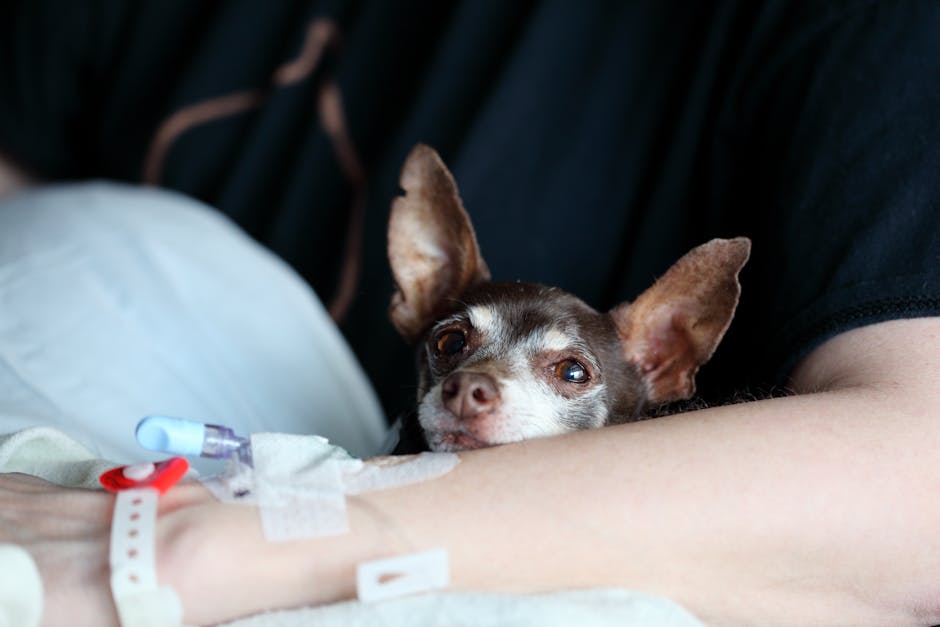

I’ll never forget watching my Golden Retriever, Biscuit, sit perfectly still while a trembling four-year-old buried her face in his fur at a children’s hospital. That moment — a scared kid finding comfort in a dog who somehow knew to be gentle — is what therapy dog work is all about. And honestly, it changed how I think about what our dogs are capable of.
But here’s the thing most people don’t tell you: not every dog is cut out for this work. I’ve seen well-meaning owners drag anxious, overstimulated dogs into nursing homes thinking good intentions are enough. They’re not. Therapy dog training and certification exists for a reason, and it protects everyone — the dog, the handler, and the people you’re there to help.
So let’s break down what this actually involves, because there’s a lot of bad information floating around online.
What a Therapy Dog Actually Does (And Doesn’t Do)
First, let’s clear up the biggest confusion I see constantly. A therapy dog is not a service dog. Not even close.
Service dogs perform specific tasks for their disabled handler — guiding someone who’s blind, alerting to seizures, that kind of thing. They have legal access rights under the ADA. Therapy dogs? They provide comfort and affection to people in facilities like hospitals, schools, nursing homes, and disaster relief sites. They have zero public access rights beyond what the facility grants them.
There’s also emotional support animals (ESAs), which are different again. An ESA provides comfort to their owner through companionship. No special training required, no public access rights.
| Type | Purpose | Public Access Rights | Training Required |
|---|---|---|---|
| Service Dog | Performs tasks for disabled handler | Yes (ADA protected) | Extensive, task-specific |
| Therapy Dog | Provides comfort to others in facilities | Facility permission only | Moderate, temperament-based |
| Emotional Support Animal | Supports owner’s emotional health | No (housing exceptions only) | None required |
Why does this matter? Because slapping a vest on your dog and calling it a therapy dog isn’t just wrong — it undermines the legitimate therapy dog teams doing real work. I’ve had facility coordinators tell me they’ve tightened their requirements because of people trying to sneak untrained pets in.
Does Your Dog Have What It Takes?
This is where I’m going to be honest, even if it stings a little.
Your dog might be the sweetest creature alive at home and still be completely wrong for therapy work. Biscuit was a natural — calm in crowds, unbothered by loud noises, gentle with strangers. My Border Collie, Fern? Brilliant dog. Loves me more than anything. But she gets overstimulated in new environments and wants to herd small children. Not exactly therapeutic.
The traits that matter most:
- Rock-solid temperament. Your dog can’t flinch at wheelchairs, walkers, or sudden movements. Period.
- Genuine enjoyment of strangers. Not tolerance — actual happiness when meeting new people. A dog who merely puts up with petting is a dog who’ll eventually snap.
- Ability to settle. Therapy visits often mean sitting or lying calmly for 30-60 minutes. High-energy dogs struggle here.
- Recovery from surprises. Someone drops a tray, a door slams, a child screams. Your dog needs to bounce back in seconds, not minutes.
- Comfort with handling. Ears pulled, tail grabbed, clumsy petting. It happens, especially with kids or elderly people with limited motor control.
Breed matters less than individual temperament, but I’ll say this: there’s a reason you see so many Golden Retrievers, Labs, and Standard Poodles in therapy work. They were literally bred to be people-oriented. That said, I’ve met a Pit Bull who was the best therapy dog I’ve ever seen and a Golden who was too nervous for it. Judge the dog, not the breed.
A Simple Home Test
Before you invest time and money in therapy dog training and certification, try this. Take your dog to a busy outdoor area — a farmer’s market, a park on a Saturday. Watch them closely. Are they pulling toward every person excitedly? Cowering behind your legs? Or are they walking calmly, interested but not frantic, happy to be petted by strangers but not jumping on them?
That calm-but-friendly middle ground is what you’re looking for.
Training: What You Actually Need to Cover
Most therapy dog organizations require your dog to pass the AKC Canine Good Citizen (CGC) test or equivalent as a minimum. And honestly, if your dog can’t pass the CGC, they’re not ready for therapy work. Full stop.
The CGC covers 10 skills:
- Accepting a friendly stranger
- Sitting politely for petting
- Appearance and grooming (letting someone handle them)
- Walking on a loose lead
- Walking through a crowd
- Sit, down, and stay on command
- Coming when called
- Reaction to another dog
- Reaction to distractions
- Supervised separation (being left with someone else for 3 minutes)
But passing the CGC is just the starting line. Therapy-specific training goes further. You’ll need to work on:
Medical equipment desensitization. Wheelchairs, crutches, IV poles, beeping monitors. I spent two weeks rolling a wheelchair around my house before Biscuit stopped giving it side-eye.
Unusual surfaces and sounds. Elevator rides, automatic doors, slippery hospital floors. My trainer had us practice on a sheet of plexiglass on the ground — dogs hate transparent surfaces.
Gentle mouth work. Your dog needs to take treats from fragile hands without any pressure. I taught Biscuit a “gentle” command using a flat palm and gradually worked up to taking treats from between someone’s fingertips.
The “leave it” of all leave its. Dropped medication on a hospital floor. Food trays. Other people’s belongings. Your “leave it” command needs to be bulletproof.
You can do a lot of this training yourself if you’re experienced, but I’d strongly recommend finding a therapy dog preparation class. Organizations like Pet Partners and Therapy Dogs International often have affiliated trainers. Expect to spend 3-6 months on focused preparation, assuming your dog already has solid basic obedience.
Certification: Choosing an Organization
There’s no single governing body for therapy dog certification in the US, which is both a blessing and a headache. Several reputable organizations offer evaluation and registration, and the one you choose depends on where you want to volunteer.
The Big Three
Pet Partners — This is the gold standard, in my opinion. They require a handler education course (online, about 4 hours), then an in-person evaluation of both you and your dog by a licensed evaluator. Registration costs around $95 for the first year, $60 for renewal. They also provide liability insurance for registered teams, which is huge. One thing I appreciate: they re-evaluate every two years. Your dog’s temperament can change, and they take that seriously.
Alliance of Therapy Dogs (ATD) — Formerly Therapy Dogs Inc. Their process involves three observed visits with an experienced therapy dog team before you’re registered. It’s more mentor-based, which works well for people who learn by doing. Registration is about $50/year.
Therapy Dog International (TDI) — They require passing their own test, which is similar to the CGC with additional therapy-specific elements. Registration runs around $40/year.
What to Consider
| Organization | Cost (Year 1) | Liability Insurance | Re-evaluation | Best For |
|---|---|---|---|---|
| Pet Partners | ~$95 | Included | Every 2 years | Hospitals, professional settings |
| Alliance of Therapy Dogs | ~$50 | Included | Not required | Community-based visiting |
| Therapy Dog International | ~$40 | Optional add-on | Not required | Schools, libraries |
Some facilities only accept teams from specific organizations. The children’s hospital where Biscuit and I volunteered required Pet Partners registration — no exceptions. So before you pick, call the places where you want to visit and ask what they accept.
The Evaluation Day: What to Expect
I’m not going to sugarcoat it — evaluation day is nerve-wracking. Not for your dog, really. For you.
The evaluator will watch your team in simulated therapy scenarios. Expect things like:
- A person in a wheelchair approaching suddenly
- Someone using a walker shuffling past
- Loud, unexpected noises (clapping, dropping metal objects)
- Multiple people petting your dog simultaneously
- A “clumsy” greeter who stumbles or waves their arms
- Your dog being crowded into a tight space
- Food on the ground that must be ignored
The evaluator isn’t just watching your dog. They’re watching you too. Can you read your dog’s stress signals? Do you know when to end an interaction? Are you managing the lead and positioning your dog well?
Biscuit passed on our first try, but barely. He got a little too interested in a plate of treats on a side table. The evaluator noted it but said his recovery — looking at me when I said “leave it” — saved him. Not every team passes on the first attempt, and that’s absolutely fine. I know a handler who failed twice before passing with the same dog who went on to become a reading program superstar at a local library.
Your First Visits: Real Talk
You passed. You’re registered. Now what?
Your first few therapy visits will probably be awkward. That’s normal. Here’s what I wish someone had told me:
You’ll be more nervous than your dog. Seriously. I was sweating through my shirt at our first nursing home visit while Biscuit trotted in like he owned the place.
Keep visits short at first. 30 minutes maximum. Watch your dog for stress signals — lip licking, yawning, turning away from people, whale eye. Even well-trained therapy dogs get mentally exhausted. I limit Biscuit to one visit per week and never longer than an hour.
Not everyone wants to see your dog. Some residents, patients, or students will say no. Don’t push it. Don’t take it personally. Move on.
Bring a cleanup kit. Accidents happen. A small bag with paper towels, enzyme cleaner, and poop bags is non-negotiable.
Debrief after every visit. Ask yourself: Did my dog enjoy that? Were there any moments where they seemed uncomfortable? Was I paying attention the whole time? If the answer to any of these is concerning, adjust before your next visit.
The most rewarding therapy dog work I’ve done was at a memory care facility. There was a woman named Dorothy who hadn’t spoken in weeks according to the staff. When Biscuit put his head on her lap, she said “good boy” and started stroking his ears. The nurse cried. I cried. Biscuit just wagged his tail.
That’s why you do this.
Frequently Asked Questions
How old does my dog need to be for therapy dog certification?
Most organizations require dogs to be at least one year old. Pet Partners requires a minimum of one year. And frankly, I’d wait until 18-24 months for most breeds. Young dogs are still developing their temperament, and what seems like confidence at 10 months might turn into reactivity at 14 months. Let your dog’s brain finish cooking before you sign up.
How much does the entire process cost?
Budget roughly $200-$500 total. That breaks down to CGC test ($20-$30), therapy-specific training class ($100-$250 depending on your area), evaluation fee (sometimes included in registration), and first-year registration ($40-$95). Plus whatever you spend on treats during training, which in my case was embarrassingly large.
Can any breed be a therapy dog?
Technically yes, but some facilities restrict certain breeds. Pit Bulls, Rottweilers, and other breeds targeted by breed-specific legislation may face barriers even with perfect temperament and full certification. It’s unfair, but it’s reality. Check with your target facilities before investing in therapy dog training and certification for a breed that might be restricted where you want to visit.
Do therapy dogs have to wear a vest?
Your registering organization will typically provide an ID tag or bandana. Vests aren’t always required, but they help people identify your dog as a working therapy animal rather than a random pet. Pet Partners provides official team gear. I always use a clearly marked vest because it cuts down on the “why is there a dog in here?” questions by about 90%.
What if my dog fails the evaluation?
It’s not the end of the world, and it doesn’t mean your dog is bad. It means they need more preparation — or, sometimes, that therapy work isn’t their thing. Talk to the evaluator about what went wrong. Often it’s something fixable with targeted training. If the issue is fundamental temperament (fear, aggression, extreme excitability), therapy work might not be the right fit, and that’s okay. Your dog has plenty of other wonderful qualities.
Wrapping Up
Therapy dog training and certification takes genuine commitment — we’re talking months of preparation, ongoing visits, and constant attention to your dog’s wellbeing. But the impact is hard to overstate. Biscuit and I have visited nursing homes, hospitals, schools, and disaster relief centers over the past four years, and every single visit reminds me why we did the work.
Start by honestly assessing your dog. Take a CGC class. Connect with a local therapy dog organization. And if your dog isn’t the right fit? That’s valuable information too. Not every dog needs a job to be a great companion.
But if your dog lights up around strangers, stays calm in chaos, and has that rare ability to make people feel better just by being there — you might have a therapy dog on your hands. And trust me, the world could use more of them.
Featured Image Source: Pexels