
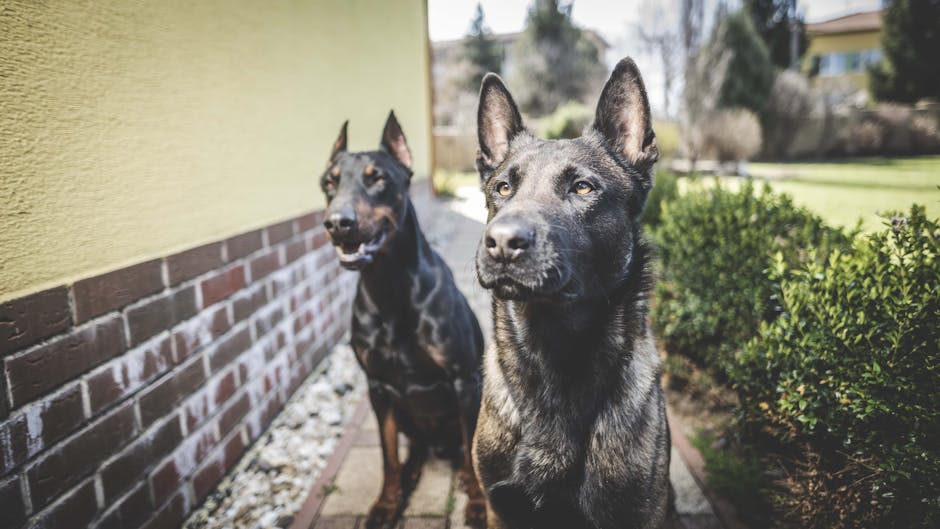

If you’ve ever tried to teach your dog to sit while your other dog is body-slamming them from the side, you already know the problem. Training one dog takes patience. Training two dogs in the same household? That takes a whole different strategy.
I’ve been running a multi-dog home for over a decade. My Golden Retriever Maple and my Border Collie Finn could not be more different — in energy, drive, and how they learn. And the biggest lesson I picked up the hard way is this: training two dogs together from the start is almost always a mistake. You end up with two half-trained dogs instead of two well-trained ones.
The good news is that learning how to train two dogs at the same time isn’t actually about training them at the same time. Not at first, anyway. There’s a system for it. Professional trainers like Jean Donaldson and Pat Miller have been using split-and-merge methods for years, and once I adopted that approach, everything clicked. Here’s what actually works.
Why Training Two Dogs Together Rarely Works
Before we get into solutions, let’s be honest about the problem. Because most people jump straight into group training sessions and then wonder why nothing sticks.
The Distraction Factor — Dogs Are More Exciting Than You
Sorry to break it to you, but you are not as interesting as another dog. Not even close.
When you’re working with one dog and another dog is right there — sniffing, whining, playing, even just existing — you’ve lost at least half your dog’s attention. And attention is everything in training. A dog that’s splitting focus between you and their housemate isn’t actually learning. They’re just going through the motions when they happen to glance your way.
I tested this with Finn once. Solo sessions in the kitchen? He’d nail a new trick in 3-4 repetitions. Same trick with Maple in the room? Took 15+ repetitions and he still wasn’t solid on it the next day. That’s not a small difference. That’s the difference between training that works and training that wastes your time.
Think about it from their perspective. You’re asking them to focus on hand signals and verbal cues while their best friend is right there. It’s like asking a kid to do homework at a birthday party.
Mirroring Bad Behaviors vs Good Behaviors
Here’s what drives me crazy about the “they’ll learn from each other” advice you see online. Dogs absolutely mirror each other’s behavior. But they mirror excitement and bad habits far more readily than calm, trained responses.
If one dog starts barking at the doorbell, the other joins in. If one dog pulls on leash, the other feeds off that energy. If one dog counter-surfs and scores a chicken breast, guess who’s suddenly very interested in kitchen counters?
But a calm, well-executed “down-stay”? That rarely transfers through observation alone. The good stuff needs to be taught individually. The bad stuff spreads like wildfire.
I’ve seen it in my own house and in dozens of homes I’ve helped with. Two dogs that were individually decent on leash became absolute nightmares walked together because they amplified each other’s pulling. You have to build the foundation solo.
The Split-and-Merge Training System
This is the approach that actually works for training multiple dogs at home. Professional trainers call it different things, but the concept is the same: start separate, earn togetherness. Each phase builds on the last, and you don’t move forward until both dogs are solid.
Phase 1: Individual Training Sessions (Separate Rooms)
This is where real training happens. Each dog gets their own solo session — completely out of sight and earshot of the other dog when possible.
Here’s what this looks like practically:
- Dog A trains with you in the living room
- Dog B is in another room, in their crate, or with another family member
- Sessions are 10-15 minutes max
- Swap dogs and repeat
You’re building each dog’s relationship with you, not with you-as-part-of-a-pack. This matters more than people realize. Each dog needs to understand that your cues mean something regardless of what the other dog is doing — or whether the other dog is even present.
For Maple and Finn, I’d do Finn first because Border Collies are wired to work and he’d get restless waiting. Maple was happy to nap in her crate. Then I’d swap. This order made everything smoother.
Stay in Phase 1 for at least 2-3 weeks. I know that feels long. Do it anyway. You’re building the entire foundation here. Rush it and you’ll be backtracking later.
Phase 2: Training One Dog While the Other Watches (Crated)
Once both dogs can reliably respond to basic cues solo, you introduce the distraction of the other dog — but in a controlled way.
Put Dog B in a crate or behind a baby gate in the same room. Train Dog A. Dog B is learning to be calm while training happens nearby. Dog A is learning to focus on you even with their housemate visible.
This stage is harder than it sounds. Here’s what to expect:
| Behavior | What to Do |
|---|---|
| Crated dog whines or barks | Ignore it. Only release them when they’re quiet. This is impulse control training for them too. |
| Working dog keeps looking at crated dog | Use higher-value treats. Move to a position where eye contact with you is easier than looking at the crate. |
| Both dogs are calm and focused | Jackpot. Reward heavily and note what you did right. |
Swap roles every session. Both dogs need practice being the worker and the watcher.
This phase usually takes 1-2 weeks. You’ll know they’re ready for Phase 3 when the crated dog lies down quietly and the working dog barely glances at the crate.
Phase 3: Joint Sessions With Simple Commands
Now — finally — you train them together. But start way simpler than you think you need to.
Go back to basics. Sit. Down. Stay. Even if both dogs can do these perfectly solo, doing them side by side is a completely different skill. I’m not exaggerating. Dogs that have a rock-solid sit in isolation will suddenly act like they’ve never heard the word before when the other dog is right next to them.
Ground rules for joint sessions:
- Both dogs on leash, even indoors. You need physical control if things get chaotic.
- Use each dog’s name before any cue. “Maple, sit.” Not just “sit.” This is teaching selective listening, and it starts here.
- Keep sessions to 5 minutes. That’s not a typo. Joint sessions are mentally exhausting for dogs that are used to solo work.
- End on success. If things are falling apart, ask for one simple thing each dog can do, reward, and stop.
This phase taught me patience I didn’t know I had. Finn would be laser-focused on me while Maple wandered to the end of her leash to sniff something. Then I’d get Maple’s attention and Finn would decide to lie down uninvited. Two steps forward, one step sideways. That’s normal.
Phase 4: Real-World Scenarios Together
This is the payoff. Joint walks. Greeting visitors together. Riding in the car. Going to the vet waiting room.
But here’s the key — you’ve earned this stage. Your dogs can listen to their individual names. They can respond to cues with the other dog present. They’ve practiced impulse control while the other dog works.
Start with low-distraction real-world situations and build up. A quiet walk on a familiar route before a busy park. A calm friend visiting before a holiday party.
I still remember the first time I walked Maple and Finn together after going through this whole process. Night and day compared to before. Finn walked on my left, Maple on my right, and when a squirrel bolted across the path, I said “leave it” and both of them actually listened. That moment made every separate training session worth it.
Managing Multi-Dog Dynamics During Training
Even with the split-and-merge system, you’ll run into dynamics that are unique to multi-dog household training tips territory. These are the things single-dog owners never have to think about.
Resource Guarding Around Treats
Training involves treats. Treats can trigger resource guarding. This is where things get dicey.
Space is your best friend here. During joint sessions, keep dogs at least 4-5 feet apart. Deliver treats directly to each dog’s mouth rather than tossing them on the ground where dogs might compete.
Watch for these early warning signs:
- Hard stares at the other dog when treats come out
- A dog positioning their body between you and the other dog
- Gobbling treats faster than normal
- Freezing or stiffening when the other dog gets rewarded
If you’re seeing any of this, you’re not ready for joint sessions yet. Go back to Phase 2 and work on calm coexistence around food rewards. Jean Donaldson’s book Mine! is the gold standard resource if guarding becomes a real issue.
I had a mild guarding situation with Maple early on. She’d tense up whenever Finn got a treat near her. The fix was simple but required consistency — I always treated them in the same order (Maple first since she was the guarder) and kept enough distance that neither dog felt threatened. Took about three weeks to resolve completely.
One Dog Is More Advanced Than the Other
This is probably the most common frustration in multi-dog homes. One dog “gets it” quickly. The other doesn’t. And it’s really, really tempting to get frustrated with the slower learner.
Different dogs learn at different speeds. That’s not a character flaw. My Finn learned new behaviors in minutes. Maple needed days for the same skill. But you know what? Maple retained things better long-term. Different brains, different strengths.
Practical solutions:
Keep individual sessions going even after you’ve started joint training. The slower dog needs more solo reps without the pressure of the faster dog making them look bad. During joint sessions, give the advanced dog harder variations while the other dog works on basics. “Finn, down-stay” while “Maple, sit” keeps both dogs challenged at their level.
And whatever you do, keep your tone neutral. Dogs pick up on frustration instantly, and the “slow learner” will start shutting down if they sense you’re annoyed.
Using an Older Dog as a Model (When It Works)
You’ll hear people say “just let the older dog teach the puppy.” Sometimes this works beautifully. Sometimes it’s a disaster.
It works when your older dog has genuinely solid training and a calm temperament. A well-trained older dog can model behaviors like settling on a mat, waiting at the door, and walking politely. The younger dog does pick up on calm energy.
It doesn’t work when your older dog has their own issues — even minor ones. If your older dog is reactive on leash, pulls toward other dogs, or has any resource guarding tendencies, the younger dog will absorb those habits faster than any good ones.
Be honest about your older dog’s training level before using them as a model. A dog that’s “good enough” for daily life might not be a good training example for an impressionable puppy.
Specific Skills for Multi-Dog Households
Some training skills become non-negotiable when you have two or more dogs. These aren’t fancy tricks — they’re management tools that keep daily life functional.
Teaching Individual Names and Selective Recall
This is the single most important multi-dog skill. Each dog must respond to their own name and only their own name.
Start in solo sessions. Say the dog’s name, mark and reward when they look at you. Simple. Then in joint sessions, say one dog’s name. The dog who responds gets the treat. The other dog gets nothing — but also no correction. They just learn that the other dog’s name isn’t their cue.
Add recall next. “Maple, come!” should result in only Maple coming to you. If both dogs come, only reward Maple. Finn learns that “Maple, come” means nothing for him.
This takes time. Weeks. But once it’s solid, you can manage two dogs in almost any situation. You can recall one dog from a distance while leaving the other in a stay. You can send one dog to their crate while the other stays with you. It’s the foundation for everything.
Door Manners — Who Goes First
Doorways create bottlenecks and that creates conflict. Two dogs shoving through a door is how someone gets knocked over or how a fight starts over a tight space.
Assign a door order and stick to it. Dog A sits and waits, goes through the door. Dog B sits and waits, then follows. Every single time. It doesn’t matter which dog goes first — what matters is that there’s a consistent pattern.
I use alphabetical order. Finn goes, then Maple. Arbitrary? Absolutely. But consistency is the point. Both dogs know what to expect, there’s no jockeying for position, and doorways stop being a source of tension.
Train this by:
- Both dogs sit at the door
- Name Dog A, open the door, release Dog A with “okay”
- Dog B holds their sit (reward if needed)
- Name Dog B, release Dog B
- Repeat 50 million times until it’s automatic
Separate Place Commands (Each Dog, Own Mat)
“Go to your place” is useful for one dog. For two dogs, you need each dog to go to their specific place. Different beds, different mats, different corners of the room.
Get two distinct mats or beds. Different colors, different textures if possible — anything that helps the dogs distinguish between them. Train each dog individually on their mat first. Then practice sending them to their specific places from across the room.
This skill is a lifesaver for:
- Dinner prep time (both dogs on mats, out of the kitchen)
- Greeting guests (both dogs on mats until released)
- Settling in the evening (each dog in their spot)
Finn’s mat is a blue pad by the bookshelf. Maple’s is a green pad by the window. “Finn, place” and “Maple, place” send them to their respective spots. When company comes over, this is the command I use the most. Easily.
Common Multi-Dog Training Mistakes
I’ve made these. Friends I’ve helped have made these. If you’re figuring out how to train two dogs at the same time, watch out for these traps.
Always Training Together and Never Separately
This is mistake number one and I’ve already talked about it, but it’s worth hammering home. When you only train two dogs together, neither dog truly learns to listen to you. They’re reacting to each other’s cues, feeding off each other’s energy, and half-processing your instructions.
Every dog in a multi-dog home needs regular solo training time. Even after you’ve graduated through all four phases of the split-and-merge system. I still do one solo session per dog per week, and it’s been years. It maintains the individual relationship and keeps each dog sharp on their own.
Think of it like this — if you only ever studied in a group, you’d never know which concepts you actually understood versus which ones you were just copying from the person next to you. Same principle.
Comparing Dogs and Getting Frustrated With the ‘Slow Learner’
I touched on this earlier, but let me be blunt: comparing your dogs will sabotage your training faster than almost anything else.
When Finn learned “roll over” in one afternoon and Maple couldn’t get it after a week, I caught myself sighing during her sessions. She noticed. Her tail would drop. She’d offer random behaviors desperately. The whole session would spiral.
Here’s what I had to learn: Maple wasn’t slow. She was a different dog with a different brain. She eventually learned roll over just fine. She also learned a calm, steady recall that Finn — for all his speed — couldn’t match for months because he’d get too excited and overshoot.
Dogs have different strengths. Celebrate what each one brings to the table instead of measuring them against each other. Train them as individuals who happen to live in the same house, because that’s exactly what they are.
Frequently Asked Questions
How long does it take to train two dogs to listen at the same time?
Expect the full split-and-merge process to take 6-8 weeks before your dogs are reliably responding to cues together. The individual training phases (Phase 1 and 2) typically take 3-4 weeks combined, with joint training adding another 2-4 weeks. Every dog pair is different though. Two calm adult dogs might progress faster. A puppy paired with an adult dog will usually take longer because the puppy’s attention span is shorter.
Should I train my dogs at the same time of day or different times?
Different times work best during Phase 1 and 2. This way each dog gets your full energy and the other dog doesn’t get restless waiting. Once you’re in Phase 3 and beyond, train at the same time since that’s the whole point — learning to work together. Stick to a consistent daily schedule regardless, because dogs thrive on routine.
My second dog won’t listen with my first dog around. What should I do?
This is incredibly common and it’s exactly why the split-and-merge approach exists. Your second dog isn’t being stubborn — they’re overstimulated or distracted. Go back to Phase 1. Train the second dog completely solo until their responses are fast and reliable. Then slowly reintroduce the first dog using Phase 2 (crated observation). Don’t skip steps just because the second dog “knows” the commands. Knowing a command in one context doesn’t mean they can perform it in another.
Can I use the same cues for both dogs or should they be different?
Use the same cues but always precede them with the individual dog’s name. “Finn, sit” and “Maple, sit” use the same cue word. The dog’s name acts as the selector. Using completely different cue words for each dog gets confusing for both you and the dogs. The name-first method is cleaner and scales better if you add a third dog later.
Is it harder to train two puppies at the same time than an adult and a puppy?
Yes — significantly harder. Two puppies of similar age can develop what trainers call “littermate syndrome,” where they bond more to each other than to you. This makes training exponentially more difficult. If you have two puppies, individual training sessions aren’t just recommended — they’re essential. Each puppy needs separate socialization outings, separate training, and separate bonding time with you. An adult-puppy combo is more manageable because the adult already has a foundation to build on.
Training two dogs in the same household isn’t twice as hard as training one — but it does require a different approach. The split-and-merge system works because it respects how dogs actually learn: individually first, then together. Keep your solo sessions going, teach those individual names, and resist the urge to compare your dogs to each other. The payoff is a home where both dogs are responsive, calm, and actually enjoyable to be around. And honestly? That’s worth every minute of separate training.
Featured Image Source: Pexels