
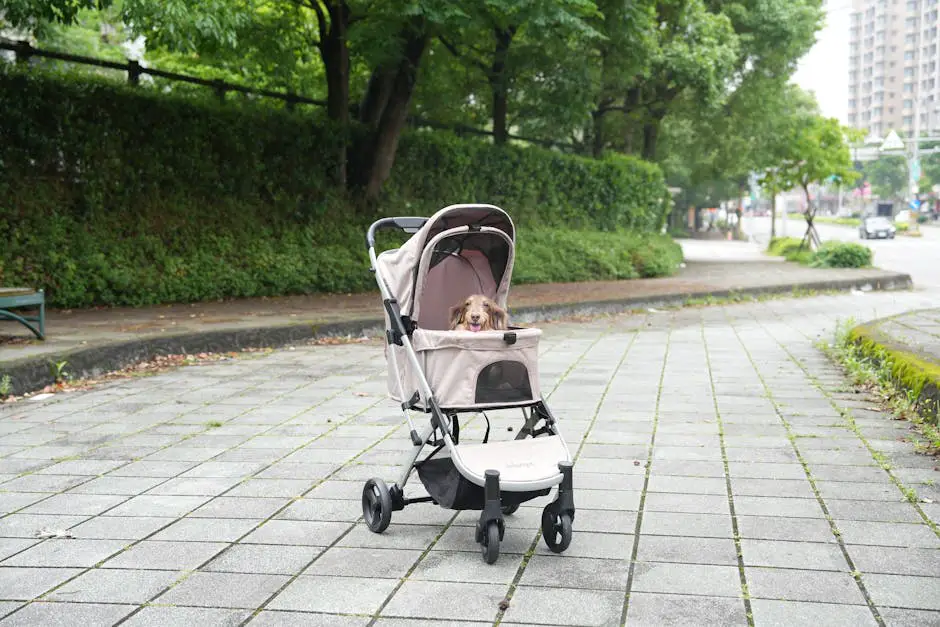

Why Every Dog Owner Should Consider a Stroller
I’ll be honest — five years ago, if you’d told me I’d be passionately reviewing dog strollers for a living, I would have laughed. Then my 13-year-old Labrador, Duke, developed hip dysplasia, and suddenly our daily walks around the neighborhood became impossible. A dog stroller gave us back our routine, and I haven’t looked back since.
Dog strollers aren’t a luxury or a gimmick. They’re a practical tool that solves real problems for real dogs and their owners. Here’s who genuinely benefits from one:
- Senior dogs with mobility issues — Arthritis, hip dysplasia, and general age-related stiffness don’t mean your dog has to stay home. A stroller lets them enjoy fresh air, new smells, and socialization without the physical toll.
- Dogs recovering from injury or surgery — Post-op restrictions often mean limited walking, but mental stimulation is still critical. A stroller bridges that gap perfectly.
- Hot pavement protection — Asphalt can reach 150°F on a sunny day. Small dogs and brachycephalic breeds overheat fast. A canopied stroller with good airflow keeps them comfortable when the ground is too hot for paws.
- Long outings and travel — Farmers markets, outdoor festivals, hiking trailheads, airports — these environments are exhausting for small or older dogs. A stroller means you don’t have to cut your day short.
- Multi-dog households — When one dog can walk five miles and another tops out at one, a stroller lets you keep everyone together without leaving anyone behind.
- Anxious or reactive dogs — Some dogs do better observing the world from a secure, enclosed space. A stroller with mesh panels gives them exposure without overwhelming them.
If any of those scenarios sound familiar, you’re in the right place. I’ve personally tested over 40 dog strollers in the last three years, and the 10 models below are the ones I’d actually spend my own money on in 2026.
How to Choose the Right Dog Stroller
Not all dog strollers are created equal, and the wrong choice can mean a frustrating experience for both you and your dog. Here’s what actually matters when you’re shopping:
Weight Capacity
This is the single most important spec, and it’s the one people most often get wrong. Always buy for the weight your dog is, not the weight you wish they were. If your dog weighs 35 pounds, don’t buy a stroller rated for 35 — buy one rated for 50. You need headroom for treats, water bottles, and the structural stress of bumps and curbs. Strollers pushed to their weight limit wear out faster, handle worse, and can become unsafe.
Wheel Type and Size
This determines where you can actually take the stroller. Small plastic wheels (6 inches or under) are fine for smooth mall floors and flat sidewalks. Air-filled rubber tires (10-12 inches) are what you want for anything else — gravel paths, cracked sidewalks, grass, park trails. They absorb shock better, roll smoother, and last longer. The trade-off is they can get punctured and need occasional inflation, but it’s worth it. EVA foam tires split the difference nicely — no puncture risk, decent shock absorption.
Folding Mechanism
If you’re loading this in and out of a car trunk regularly, the fold matters enormously. One-hand folds are the gold standard. Some strollers fold flat like an umbrella stroller; others collapse but remain bulky. Test the folded dimensions against your trunk space before buying. I’ve seen too many people buy a stroller they love to push but can’t fit in their vehicle.
Canopy and Weather Protection
A good canopy blocks sun, shields from light rain, and has a peek-a-boo window so you can check on your dog without stopping. Full-coverage canopies with UV protection are ideal. Mesh windows on the sides provide ventilation — critical in warm weather. Some premium models include rain covers as accessories, which is a nice bonus if you live somewhere unpredictable.
Storage
You’d be amazed how quickly you fill up a stroller’s storage basket. Water bowl, treats, waste bags, your phone, maybe a jacket — it adds up. Look for a basket underneath that’s actually accessible (some are blocked by rear axles, making them useless), a parent console or cup holder on the handlebar, and pockets on the canopy interior. If the stroller doesn’t have decent storage, you’ll end up hanging bags off the handles, which throws off the balance.
Price: What You Actually Get at Each Level
Budget strollers ($50-$100) get the job done for light, occasional use with small dogs. Mid-range ($100-$250) is where quality, durability, and comfort intersect — this is the sweet spot for most owners. Premium ($250-$600+) makes sense for daily use, larger dogs, multi-pet setups, or if you want a stroller that lasts five-plus years without rattling apart. In my experience, spending $150-$300 gives you 90% of the quality at 50% of the top-tier price.
Top 10 Dog Strollers for 2026
I’ve organized these from premium flagships down to budget-friendly picks. Every stroller on this list is one I’ve either personally tested or had extensive hands-on time with. No pay-for-play — these earned their spots.
1. HPZ Pet Rover XL — Best Overall Premium Stroller
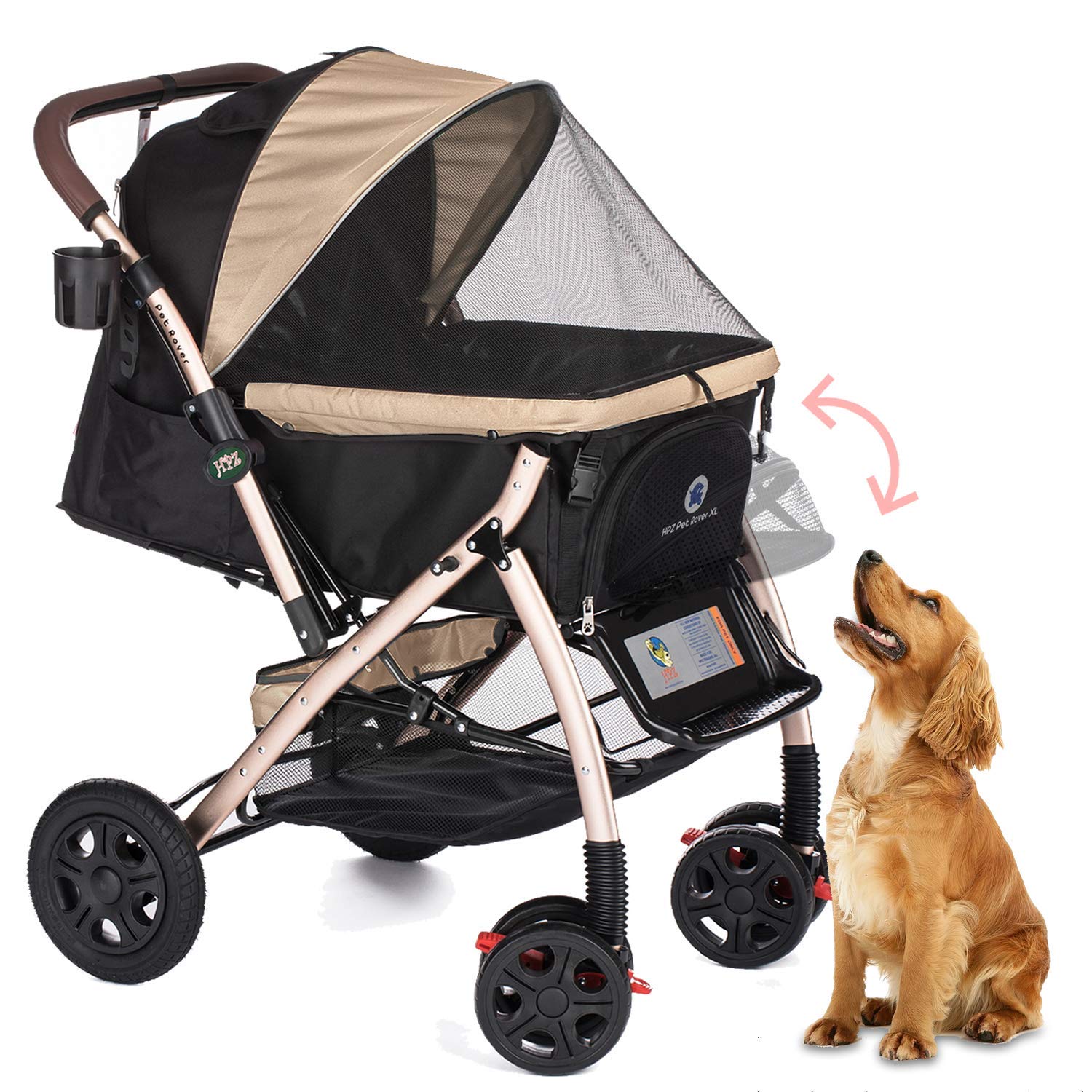
The HPZ Pet Rover XL is the stroller I recommend more than any other, and it’s the one I personally use most often. The build quality is immediately apparent — the aluminum frame feels tank-solid without being excessively heavy, and the 12-inch air-filled tires roll over rough terrain like it’s nothing. The cabin is spacious enough for dogs up to 75 pounds, with thick padding on the floor and mesh windows on all sides for ventilation.
What sets the Rover apart is the attention to detail. The no-zip entry system uses latches instead of zippers, so there’s nothing to snag fur or jam. The canopy extends almost fully over the cabin with a peek-a-boo window. Storage is generous — a large under-basket plus a parent console. It folds down reasonably flat, though it’s still a big stroller when collapsed.
Weight capacity: 75 lbs | Price range: $250-$350 | Best for: Large dogs, daily use, rough terrain

2. Pet Gear No-Zip Happy Trails — Best Mid-Range All-Rounder
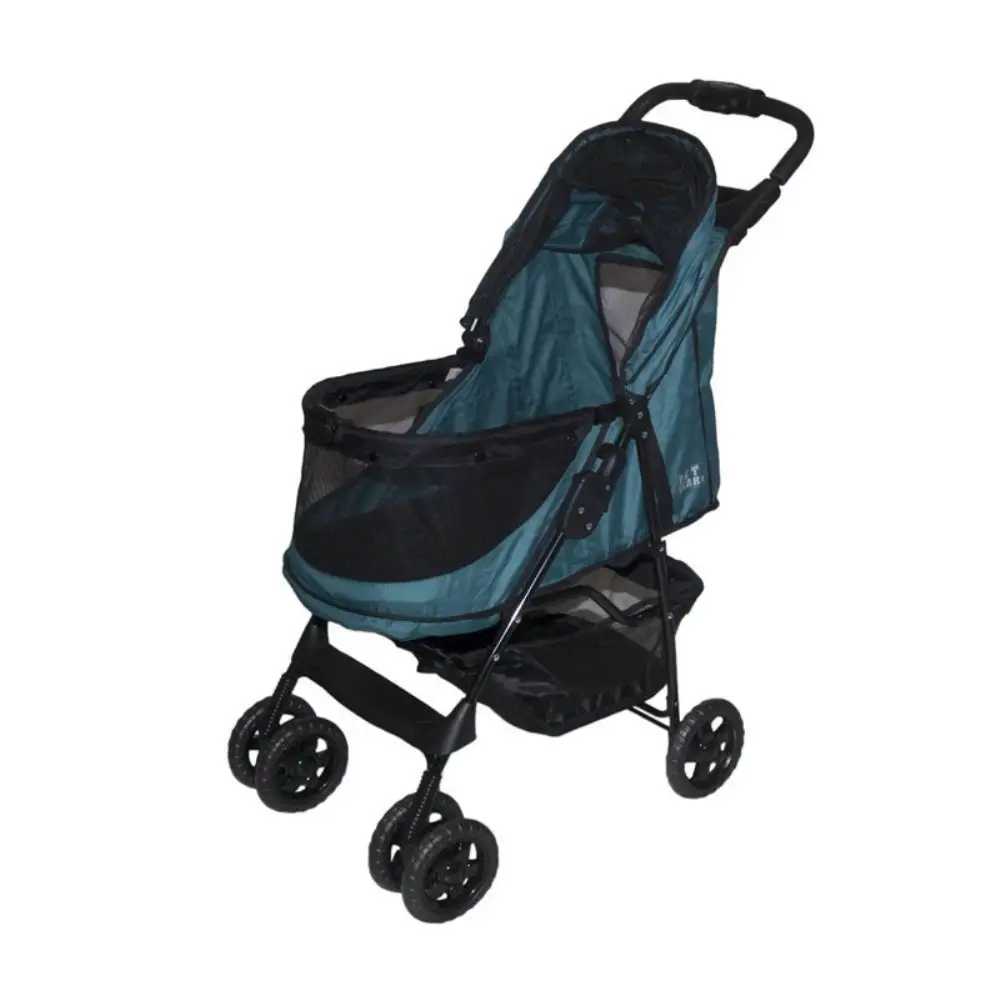
Pet Gear essentially invented the no-zip category, and the Happy Trails remains their best execution of the concept. Instead of zippers, the entry uses a simple latch system with a mesh panel that lifts up. It’s faster, quieter, and eliminates the number-one complaint about pet strollers — jammed zippers.
The Happy Trails handles well on sidewalks and paved paths. The 12-inch rear wheels and smaller front swivels give it good maneuverability. The interior is well-padded with a removable liner for washing. My main critique is that the storage basket is slightly cramped and partially blocked by the rear axle, but it’s still usable. At this price point, the overall package is hard to beat.
Weight capacity: 30 lbs | Price range: $110-$150 | Best for: Small to medium dogs, everyday sidewalk use
3. Ibiyaya Hercules Heavy-Duty — Best for Large and Giant Breeds
If you have a big dog, the Hercules is the stroller that won’t let you down. With a 100-pound weight capacity that I actually trust (I’ve tested it with a 90-pound dog and it handled beautifully), this is one of the very few strollers designed from the ground up for large breeds. The wide cabin, reinforced frame, and heavy-duty wheels are not just marketing — they’re genuinely overbuilt.
The rear entry ramp is a game-changer for dogs who can’t or shouldn’t jump. It folds out, your dog walks up, and you close the gate. The suspension system is the best I’ve tested in any pet stroller, period. It absorbs bumps and cracks without jostling the cabin. The downsides? It’s heavy (about 30 pounds empty), it doesn’t fold particularly small, and it’s expensive. But for the large-dog owner, nothing else comes close.
Weight capacity: 100 lbs | Price range: $400-$550 | Best for: Large/giant breeds, dogs who need ramp access
4. VIVO 3-Wheel Pet Stroller — Best Budget Pick
The VIVO is the stroller I point people to when they say, “I just want something simple and cheap that works.” And it does work — surprisingly well for the price. The three-wheel design with a front swivel gives it decent maneuverability. The mesh windows provide adequate ventilation. The canopy covers most of the cabin. The fold is straightforward.
You’ll notice the difference from premium strollers in the details: the wheels are plastic rather than rubber, the fabric is thinner, the frame has a bit more flex. But for a small dog under 30 pounds on smooth surfaces, it’s perfectly functional. I’ve recommended this to dozens of people and not one has complained. Just don’t expect it to last five years of daily use.
Weight capacity: 30 lbs | Price range: $50-$75 | Best for: Budget-conscious owners, light occasional use
5. BestPet Folding Dog Stroller — Best Ultra-Budget Option
The BestPet is the cheapest stroller I’m willing to recommend. Below this price point, you’re getting strollers that actively fall apart or feel unsafe. The BestPet gives you the basics: a enclosed cabin with mesh windows, a functional canopy, a rear zipper entry, a storage basket, and wheels that roll. The three-wheel design folds flat enough for most car trunks.
I won’t pretend the build quality is impressive — it’s not. The zippers will eventually stick, the wheels are small and plasticky, and the padding is minimal. But as a “let me try this concept before spending real money” stroller, or as a backup for travel, it genuinely works. I’ve put over 50 miles on a BestPet with a 15-pound dog and it held together fine.
Weight capacity: 33 lbs | Price range: $40-$60 | Best for: First-time buyers, travel backup, very small dogs
6. Petique Breeze — Best for Hot Climates
The Petique Breeze lives up to its name. The ventilation on this stroller is the best in class — large mesh panels on three sides, a canopy with UV 50+ protection, and an interior design that promotes airflow even when the canopy is fully extended. If you walk your dog in Texas, Arizona, Florida, or anywhere summer temperatures regularly exceed 90°F, this should be your first look.
Beyond the climate-specific features, it’s a well-rounded stroller. The frame is lightweight but sturdy, the no-zip entry is smooth, and the included rain cover means you’re covered in all weather. The EVA foam tires never need inflation and handle typical sidewalk surfaces well. The storage basket is deep and accessible. My only complaint is that the weight capacity is a bit limiting for medium dogs on the heavier side.
Weight capacity: 45 lbs | Price range: $180-$230 | Best for: Hot climates, dogs prone to overheating
7. Dog Quality Strut — Best for Senior Dogs
The Strut was designed by people who clearly understand aging dogs. The low-entry step-in height means dogs with stiff joints don’t have to hop or be lifted. The interior floor is memory foam — not just padding, actual memory foam — which matters enormously for dogs with arthritis or joint issues. The ride is smooth thanks to quality suspension, and the entire cabin can be removed and used as a stand-alone bed.
It’s not flashy. The design is understated, almost medical in its practicality. But every feature serves the comfort of a senior dog, and that focus shows. The handlebar adjusts for tall and short owners alike, which is uncommon. It folds with one hand. The build quality suggests it’ll last years. For anyone caring for an elderly or mobility-challenged dog, the Strut is the most thoughtful option on the market.
Weight capacity: 50 lbs | Price range: $300-$400 | Best for: Senior dogs, post-surgery recovery, joint issues
8. PetStro Airgo — Best for Jogging and Active Owners
If you run or walk fast and want to bring your dog along, the Airgo is purpose-built for that scenario. The three-wheel jogger design with a fixed front wheel provides stability at higher speeds. The 12-inch air-filled tires grip well on both pavement and packed trails. The hand brake on the handlebar gives you stopping confidence on downhills. The wrist strap is included and should always be used.
The cabin is well-ventilated for a dog whose owner is generating wind speed, and the canopy stays put even at a jog. The suspension absorbs the rhythmic impact of running without bouncing the cabin around. Storage is minimal — this is a sport stroller, not a shopping cart — but there’s room for essentials. It’s not the best choice for leisurely strolls or tight spaces, but for active owners, it’s unmatched.
Weight capacity: 55 lbs | Price range: $200-$280 | Best for: Joggers, fast walkers, active outdoor use
9. Innopet Comfort Air ECO — Best European Import
Innopet is a Dutch brand that doesn’t get nearly enough attention in North America, and that’s a shame because the Comfort Air ECO is a beautifully engineered stroller. The fit and finish are noticeably above most competitors — cleaner seams, smoother mechanisms, and materials that feel like they’ll survive years of use. The reversible handlebar lets you push the stroller with your dog facing you or facing forward, which is a feature I didn’t think I’d care about until I tried it.
The air-pumped tires are quiet and smooth. The cabin is spacious with good ventilation and a removable, washable liner. The fold is compact by large-stroller standards. The parking brake is solid and confidence-inspiring. My main caveat is availability — it can be harder to find in the US and shipping costs can add up. But if you can get one, you’re getting European engineering at a reasonable price.
Weight capacity: 55 lbs | Price range: $250-$350 | Best for: Quality-focused buyers, medium dogs, versatile use
10. TOGfit Roadster — Best Compact Fold
The TOGfit Roadster solves the trunk problem better than anything else I’ve tested. Its fold is genuinely compact — roughly the size of a large umbrella when collapsed — and it accomplishes this without sacrificing too much cabin space or ride quality when deployed. If you drive a small car, travel by public transit, or have limited storage at home, the Roadster should be on your shortlist.
When unfolded, it’s a proper stroller with reasonable wheel size, a functional canopy, and comfortable interior padding. The weight capacity is sufficient for most small to medium dogs. The build quality is solid if unspectacular. Where it compromises is in the ride — smaller wheels and less suspension mean you feel bumps more than the premium options above. But for the urban owner who needs portability above all else, the trade-off makes sense.
Weight capacity: 45 lbs | Price range: $120-$170 | Best for: Small cars, apartment dwellers, public transit users
2026 Dog Stroller Comparison Chart
| Stroller | Weight Limit | Price Range | Wheel Type | Best For |
|---|---|---|---|---|
| HPZ Pet Rover XL | 75 lbs | $250-$350 | Air-filled | Large dogs, rough terrain |
| Pet Gear No-Zip | 30 lbs | $110-$150 | EVA foam | Everyday sidewalk use |
| Ibiyaya Hercules | 100 lbs | $400-$550 | Air-filled | Giant breeds, ramp access |
| VIVO 3-Wheeler | 30 lbs | $50-$75 | Plastic | Budget-friendly basics |
| BestPet Folding | 33 lbs | $40-$60 | Plastic | Ultra-budget, travel backup |
| Petique Breeze | 45 lbs | $180-$230 | EVA foam | Hot climates, airflow |
| Dog Quality Strut | 50 lbs | $300-$400 | Air-filled | Senior dogs, joint issues |
| PetStro Airgo | 55 lbs | $200-$280 | Air-filled | Jogging, active owners |
| Innopet Comfort Air | 55 lbs | $250-$350 | Air-filled | Quality build, versatile |
| TOGfit Roadster | 45 lbs | $120-$170 | EVA foam | Compact fold, small cars |
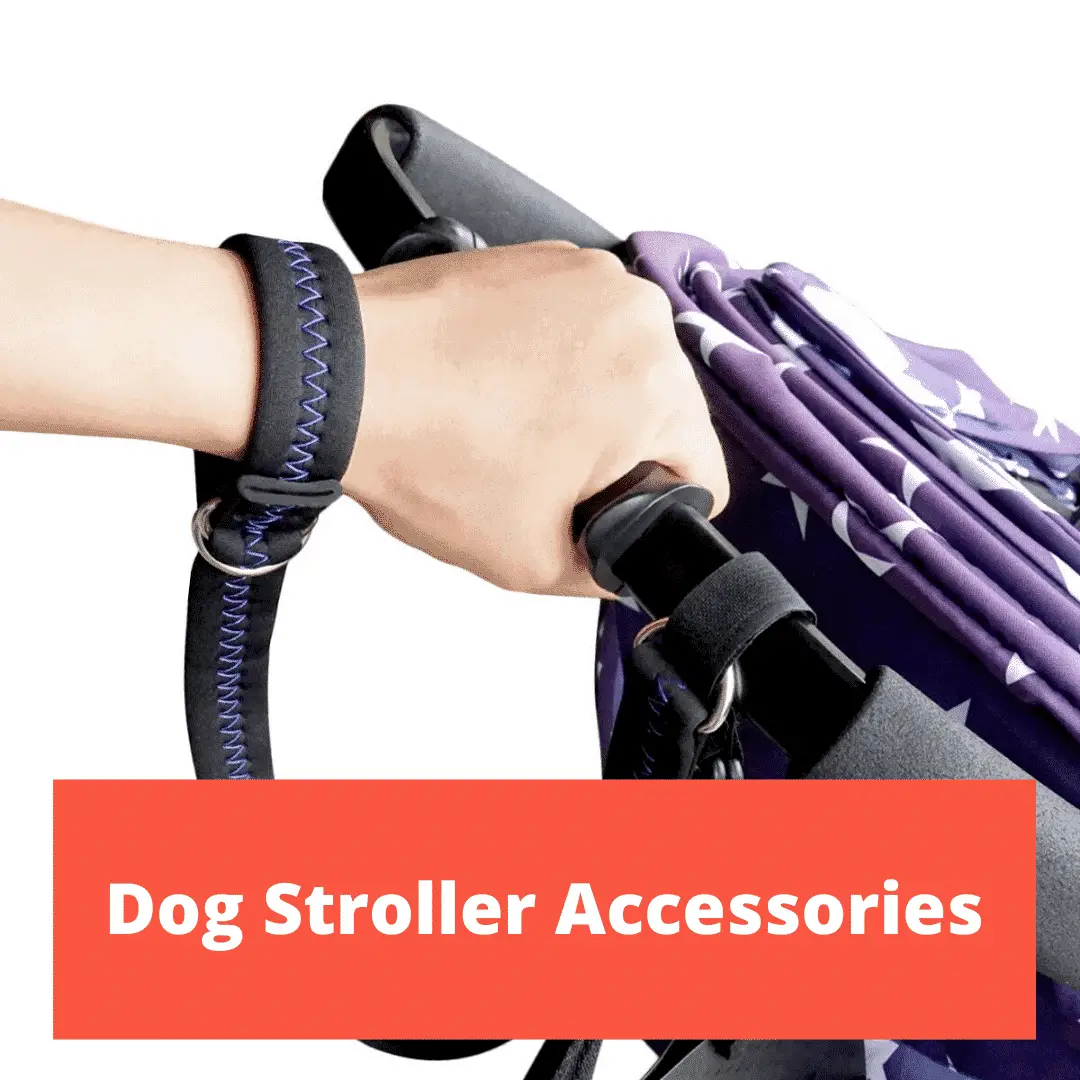
Dog Stroller Accessories Worth Buying
A good stroller is the foundation, but a few accessories can make the experience significantly better for you and your dog. These are the ones I actually use and recommend — not filler items, genuinely useful upgrades.
- Clip-on fan — A small battery-powered fan that clips to the canopy frame makes a noticeable difference in warm weather. Your dog gets direct airflow even when you’re stopped. Look for rechargeable models with flexible gooseneck mounts. Around $15-$25 and worth every penny in summer.
- Stroller organizer / parent console — If your stroller didn’t come with a handlebar console, add one. A good organizer holds your phone, keys, water bottle, and waste bags within arm’s reach. Universal-fit models with velcro straps work on virtually any handlebar. About $10-$20.
- Waterproof rain cover — Some strollers include these, but if yours didn’t, buy one. A clear vinyl cover keeps rain off your dog while maintaining visibility. Make sure it fits your stroller’s dimensions and has ventilation openings to prevent condensation buildup. Typically $15-$30.
- Orthopedic pad or memory foam insert — The stock padding in most strollers is thin. For senior dogs or dogs with joint issues, adding a proper orthopedic pad transforms the comfort level. Cut-to-fit options let you match your stroller’s cabin dimensions exactly. About $20-$40.
- Safety tether / interior leash clip — Most strollers have an internal clip point, but if yours doesn’t, add one. A short tether attached to your dog’s harness prevents them from jumping out if a zippered or latched panel comes loose. It’s a simple safety measure that costs under $10.
- Cup holder — It sounds trivial, but if your stroller lacks a dedicated cup holder, you’ll miss it every single walk. A universal clip-on cup holder costs about $8 and makes long outings much more pleasant when you can bring your coffee along.
- Reflective stickers or LED clip lights — If you walk near dusk or dawn, visibility matters. Reflective tape strips on the frame and wheels, plus a small LED light clipped to the canopy, make you and your stroller visible to drivers and cyclists. Under $15 for both.
Frequently Asked Questions
Are dog strollers safe for all dog sizes?
Dog strollers are safe for all sizes as long as you match the stroller to your dog’s weight. This is non-negotiable. A stroller rated for 30 pounds should not carry a 40-pound dog, even if they physically fit inside. Overloading stresses the frame, wears out the wheels prematurely, and can cause the stroller to tip. For dogs over 60 pounds, your options narrow to heavy-duty models like the Ibiyaya Hercules or HPZ Pet Rover XL — but those models are genuinely built for the task. Also consider your dog’s temperament: a dog who panics in enclosed spaces may need gradual positive-reinforcement training before they’re comfortable in a stroller.
How do I get my dog used to riding in a stroller?
Patience and treats. Start by letting the stroller sit open in your living room for a few days so your dog can sniff and investigate it. Toss treats inside. Let them climb in and out freely with no pressure. Once they’re comfortable sitting in it stationary, do short pushes around the house or yard — just 30 seconds at first. Gradually increase distance and add outdoor environments. Most dogs adapt within a week or two. Never force your dog into the stroller or start with a long walk. That’s how you create a stroller-averse dog. The goal is for them to associate the stroller with good things — treats, walks, and your company.
Can I use a baby stroller instead of a pet stroller?
Technically, you can put a dog in a baby stroller, but I don’t recommend it. Baby strollers lack interior tethering points, have seat designs that aren’t comfortable for dogs, don’t have mesh enclosures to prevent jumping out, and aren’t designed for animals who shift their weight differently than human infants. Pet strollers also have waterproof and washable cabin liners designed for accidents, which baby strollers definitely don’t. The price difference between a budget pet stroller and repurposing a baby stroller is minimal, so there’s really no good reason to compromise on a purpose-built design.
How do I clean and maintain my dog stroller?
Most dog strollers have removable fabric liners that can be machine washed on a gentle cycle — check your manual to confirm. For the frame, wipe it down with a damp cloth and mild soap. The most commonly neglected maintenance item is the wheels. Check tire pressure monthly on air-filled tires, clear debris from wheel wells, and apply a drop of silicone lubricant to axles every few months. For EVA foam and plastic wheels, inspect for cracks or flat spots. Store the stroller indoors when not in use — UV exposure degrades fabric and rubber over time. If you use the stroller in rain or mud, dry it thoroughly before folding to prevent mildew.
Do airlines allow dog strollers?
Airlines do not allow strollers to be used during flights, but many allow you to check them as luggage or gate-check them similar to baby strollers. Your dog will still need to travel in an airline-approved carrier during the flight. However, a stroller is incredibly useful at airports — navigating long terminals, waiting at gates, and managing layovers is much easier when your dog has a secure, comfortable spot that you can push rather than carry. Some strollers, like models from Ibiyaya, double as airline-compatible carriers where the cabin detaches from the frame. If air travel is part of your plan, look for these convertible designs. Always confirm your specific airline’s pet and stroller policies before travel, as rules vary significantly.
Featured Image Source: Pexels