

If you’re reading this, you’re probably stuck in the same spot I was about twelve years ago — standing in a breeder’s living room, surrounded by golden fluff on one side and a pile of wriggling yellow Labs on the other, trying to figure out which one was coming home with me.
Spoiler: I eventually got both. Biscuit, my Golden, came first. Tank, my chocolate Lab, joined the family three years later. And living with both breeds taught me things no breed comparison chart ever could.
So let’s get into the real differences between these two dogs. Not the sanitized version you’ll find on every other site, but the stuff that actually matters when you’re deciding whether a golden retriever or lab is a better family dog.
Breed Origins and Why They’re So Often Compared
Golden Retrievers and Labrador Retrievers get lumped together constantly, and honestly, it makes sense. Both are sporting breeds developed in the 1800s to retrieve game for hunters. Both are medium-to-large dogs with friendly dispositions and soft mouths. Both will absolutely destroy your house if you don’t exercise them enough.
But their origins are different. Goldens were bred in the Scottish Highlands by Lord Tweedmouth (yes, real name) who crossed a Yellow Retriever with a now-extinct Tweed Water Spaniel. The goal was a dog that could handle the rugged Scottish terrain and cold water while being gentle enough to carry game without damaging it.
Labs came from Newfoundland, Canada — not Labrador, confusingly. They descended from the St. John’s Water Dog and were originally used by fishermen to haul nets and catch escaping fish. The Earl of Malmesbury brought them to England in the early 1800s, and the breed as we know it developed from there.
This heritage matters more than people think. Labs were bred for cold Atlantic waters and intense physical work. Goldens were bred for long days in the field but with a bit more refinement. You can still see these differences in their energy levels, coat types, and how they approach problems. A Lab tends to barrel through. A Golden tends to think first — then barrel through.
Temperament and Personality Side by Side
Here’s where the golden retriever vs labrador for families debate gets interesting. On paper, both breeds score high on friendliness, trainability, and compatibility with kids. In practice, they feel like different dogs.
Energy Levels
Labs are more intense. Full stop.
Tank at two years old was like a furry tornado with a tail. He needed a solid 90 minutes of exercise daily or he’d find creative ways to entertain himself — and by “creative” I mean he once ate through a door frame. Not the door. The frame.
Biscuit was active too, but she had an off switch. After a good 45-minute walk and some fetch, she’d settle into a dignified nap on the couch. Labs, especially young ones, seem to have a smaller gap between “exercised enough” and “I’m going to vibrate through the floor.”
| Trait | Golden Retriever | Labrador Retriever |
|---|---|---|
| Daily exercise needed | 60-90 minutes | 90-120 minutes |
| Calm indoors | Usually by age 2-3 | Often not until 3-4 |
| Intensity level | Moderate-high | High |
| Tendency to mouth/chew | Moderate | Very high |
If you’ve got young kids and a busy schedule, this difference is significant. A Golden will more readily adapt to a slightly lower-key day. A Lab who doesn’t get enough exercise becomes a problem.
Trainability
Both breeds rank in the top 10 for intelligence, and both are eager to please. But they learn differently.
Goldens are sensitive. Biscuit would practically melt if I raised my voice during training. She wanted desperately to get it right and responded best to gentle, consistent reinforcement. She’d master a new command in maybe 5-10 repetitions.
Tank? He was smart but easily distracted. Training sessions needed to be short, high-energy, and involve food. Always food. He’d learn a command and then conveniently “forget” it when a squirrel appeared. Labs have this joyful stubbornness that’s endearing but occasionally maddening.
For first-time dog owners, Goldens are generally easier to train. Not because Labs are dumb — they absolutely aren’t — but because Goldens are more attuned to your emotions and less likely to blow you off when something more exciting comes along.
Behavior with Children
Both breeds are excellent with kids, but in different ways.
Goldens tend to be gentle and patient. Biscuit would let my niece (who was three at the time) drape scarves on her, put stickers on her nose, and use her as a pillow. She’d just lie there with this long-suffering expression, tail doing a slow wag.
Labs are more boisterous. Tank loved kids but his version of love involved knocking them over with enthusiasm. He didn’t mean to — a 75-pound Lab coming at you full speed just has physics working against him. We had to do a lot of work on “gentle greetings” with Tank, especially around toddlers.
If your kids are under five, a Golden’s calmer disposition around small children gives them a slight edge. With older kids who can handle — and enjoy — a more physical, rowdy playmate, Labs are fantastic.
Grooming and Shedding Differences
I’m going to be honest with you: both breeds shed like it’s their job. But there are meaningful differences in what that looks like day to day.
Coat Types
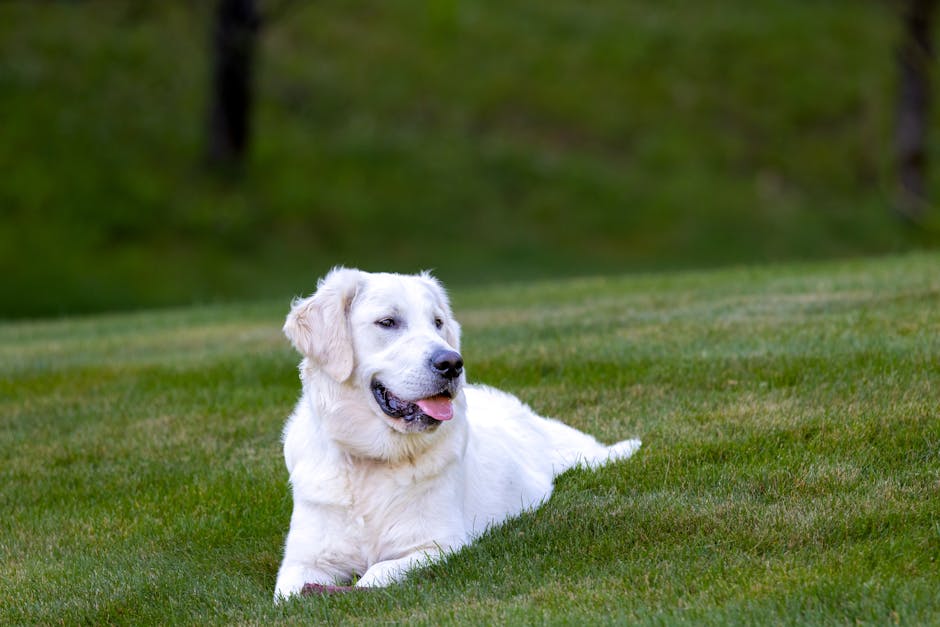
Golden Retrievers have a long, flowing double coat with feathering on the legs, chest, and tail. It’s beautiful. It’s also a magnet for burrs, mud, and every leaf within a three-mile radius.
Labs have a short, dense double coat with a water-resistant outer layer. No feathering, no flowing locks. It’s practical and low-maintenance by comparison.
Goldens range from light cream to deep reddish gold. Labs come in three recognized colors: black, yellow, and chocolate.
Grooming Routine
Here’s what my weekly grooming schedule looked like with each:
Biscuit (Golden): Brushed 4-5 times per week to prevent matting. Full grooming session every 6-8 weeks including trimming the feathering. Regular ear cleaning because those floppy, furry ears trap moisture. Bath every 4-6 weeks.
Tank (Lab): Brushed 2-3 times per week. No trimming needed ever. Same ear cleaning routine. Bath every 6-8 weeks (though honestly he found mud puddles on his own schedule).
During shedding season — spring and fall — both breeds basically explode. I’m talking tumbleweeds of fur rolling across your hardwood floors. But Golden hair is longer and more noticeable on furniture and clothing. Lab hair is shorter but somehow embeds itself into fabric at a molecular level.
If grooming time matters to you, Labs require meaningfully less maintenance. I’d estimate Biscuit took twice the grooming effort of Tank over her lifetime.
Health Issues Unique to Each Breed
This section is hard to write, but it’s the most important one.
Golden Retriever Cancer Rates
The Morris Animal Foundation’s Golden Retriever Lifetime Study found that approximately 60% of Golden Retrievers will develop cancer in their lifetime. That’s not a typo. Six out of ten.
Hemangiosarcoma and lymphoma are the most common types. Biscuit was diagnosed with hemangiosarcoma at age 10. We had eight more months with her after that.
This is something every potential Golden owner needs to sit with. It doesn’t mean you shouldn’t get one — Biscuit gave us ten incredible years. But you need to factor in the emotional and financial weight of this reality. Cancer treatment for dogs can run $5,000-$15,000 depending on the type and approach.
Average Golden lifespan: 10-12 years.
Lab Joint Problems and Obesity
Labs have their own health challenges. Hip and elbow dysplasia are common — Tank had mild hip dysplasia diagnosed at age four. We managed it with weight control, joint supplements, and moderate exercise, and he did well.
The bigger issue with Labs is obesity. Labs carry a gene mutation (POMC) that essentially means they never feel full. A 2016 Cambridge University study found this mutation in about 25% of Labs. Tank would eat until he was physically ill if we let him. Portion control isn’t optional with this breed — it’s critical.
| Health Concern | Golden Retriever | Labrador Retriever |
|---|---|---|
| Cancer risk | ~60% lifetime | ~30-35% lifetime |
| Hip dysplasia | Common | Common |
| Obesity tendency | Moderate | Very high |
| Average lifespan | 10-12 years | 11-13 years |
| Skin allergies | Common | Common |
| Eye conditions | Progressive retinal atrophy | Progressive retinal atrophy |
Labs tend to live slightly longer on average, partly because of the lower cancer rates.
Living Space and Lifestyle Requirements
Neither breed belongs in a studio apartment. Let’s just get that out of the way.
Both Goldens and Labs are medium-to-large dogs (55-80 pounds) that need space to move. A house with a yard is ideal. That said, I’ve known people who’ve made it work in larger apartments — but only with a serious commitment to daily exercise.
Goldens are better suited to homes where they’ll have companionship for most of the day. They bond deeply and can develop separation anxiety. Biscuit hated being alone for more than 4-5 hours. She wasn’t destructive about it, just heartbreakingly sad — you’d come home to find her lying by the door with her chin on your shoes.
Labs handle alone time slightly better in my experience, but “better” is relative. Tank would still protest being left by rearranging the recycling bin across the kitchen floor. Both breeds thrive when someone is home most of the day or when they have a canine companion.
If you’re an active family — hiking, swimming, camping — either breed will be ecstatic. Labs have a slight edge in water activities thanks to their otter-like tail and water-resistant coat. But Biscuit was no slouch in the lake either.
Cost of Ownership Breakdown
People always ask about the purchase price and forget about the next 10-13 years. Here’s a realistic breakdown:
| Expense | Golden Retriever | Labrador Retriever |
|---|---|---|
| Purchase price (reputable breeder) | $1,500-$3,500 | $1,200-$3,000 |
| Annual food costs | $500-$800 | $500-$900 |
| Annual grooming | $400-$800 | $100-$300 |
| Annual vet (routine) | $400-$600 | $400-$600 |
| Lifetime medical (estimated) | $15,000-$25,000 | $10,000-$18,000 |
Goldens typically cost more over a lifetime due to higher grooming needs and the elevated cancer risk. That cancer statistic isn’t just emotionally devastating — it’s financially significant. Pet insurance is worth serious consideration for either breed, but especially for Goldens. Get it early, before any pre-existing conditions.
Which Breed Suits Which Type of Family
After living with both breeds and talking to dozens of owners over the years, here’s my honest take on who each breed is best for.
Choose a Golden Retriever if you:
– Have young children (under 6) and want a gentler, calmer companion
– Are first-time dog owners who want an easier training experience
– Want a dog that’s happy with moderate exercise
– Work from home or have someone home most of the day
– Don’t mind the grooming commitment
Choose a Labrador if you:
– Have older kids who want a rough-and-tumble play buddy
– Lead a very active lifestyle (running, hiking, swimming regularly)
– Want a lower-maintenance coat
– Can commit to strict portion control and lots of exercise
– Have some dog experience — especially with high-energy breeds
Choose either if you:
– Want one of the most loyal, family-oriented breeds on the planet
– Have a house with a yard
– Are willing to deal with epic amounts of shedding
– Want a dog that genuinely loves every person they meet
And honestly? When people ask me which is better as a golden retriever vs labrador for families, I tell them they can’t really go wrong. These are the two most popular family dogs in America for good reason. The differences are real but the similarities are bigger.
The best advice I can give: visit breeders or rescues for both breeds. Spend time with adult dogs, not just puppies. Every puppy is adorable — it’s the adult personality that you’ll live with for a decade.
Frequently Asked Questions
Are Golden Retrievers calmer than Labradors?
Generally, yes. Goldens tend to settle down faster and have a more moderate energy level, especially after age two or three. Labs often maintain that puppy-like intensity well into their third or fourth year. But individual variation is huge — I’ve met mellow Labs and hyper Goldens. Breeding lines matter too. Show-line dogs of either breed tend to be calmer than field or working lines.
Which breed sheds more — Goldens or Labs?
They shed roughly the same volume, but it looks different. Golden hair is longer and more visible on clothing and furniture. Lab hair is shorter but gets embedded in upholstery and is harder to remove. During spring and fall coat blows, both breeds will cover your entire house. Invest in a good vacuum either way — I’ve been through three.
Is a Goldador (Golden-Lab mix) a good compromise?
Goldadors have become popular, and I understand the appeal — you’re hoping to get the best of both. In practice, mixed breeds are unpredictable. You might get a calm, easy-to-groom dog. Or you might get a high-energy dog with a high-maintenance coat. If you go this route, meet the parents and understand you’re rolling the dice on which traits come through.
Can Golden Retrievers and Labs live together?
Absolutely. They’re both social breeds that generally get along well with other dogs. Biscuit and Tank were best friends — they’d sleep in a pile, share toys (mostly), and play together daily. The main thing to watch is making sure each dog gets individual attention and training time so you don’t end up with two untrained dogs feeding off each other’s energy.
Which breed is better for people with allergies?
Neither. Both are heavy shedders with double coats, and neither is hypoallergenic. If allergies are a concern, you’re looking at a different category of dog entirely — Poodles, Portuguese Water Dogs, or similar breeds. Some people find Labs slightly more tolerable because the shorter coat produces less dander spread, but don’t count on it.
Whatever you decide, you’re getting a dog that will follow you from room to room, greet you at the door like you’ve been gone for years (even if it was just the mailbox), and make your family’s life immeasurably better. Both Biscuit and Tank did that for us. I wouldn’t trade a single fur-covered minute.
Featured Image Source: Pexels