

When I found out I was pregnant with my first, the very first thing I worried about wasn’t the nursery or the car seat. It was my dog.
I had a two-year-old German Shepherd named Duke at the time — 85 pounds of pure energy who thought he was a lapdog. Everyone had opinions. My mother-in-law suggested we “rehome” him. A coworker told me dogs and babies “just figure it out.” Both were wrong. Introducing your dog to a new baby takes real preparation, and skipping it is how people end up in scary situations that weren’t the dog’s fault.
Here’s what actually worked for me, and what I’ve since helped dozens of friends navigate. It’s not complicated, but you do need to start early.
Start Preparing Months Before the Baby Arrives
Don’t wait until you’re in the hospital to think about this. Three to four months before your due date is the sweet spot for starting behavioral prep.
The biggest thing? Get your dog solid on basic obedience. I’m talking sit, stay, down, leave it, and — this one’s non-negotiable — a reliable “go to your place” command. If your dog doesn’t have a designated spot (a bed, a crate, a mat), pick one now and start training it.
Duke had decent obedience but zero impulse control around new things. So I spent eight weeks working on “leave it” with increasingly tempting distractions. Treats on the floor. Squeaky toys. A stuffed animal that made baby sounds. By month eight of my pregnancy, he could hold a stay while I dropped a bag of training treats two feet from his nose.
If your dog has any behavioral issues — jumping on people, resource guarding, leash reactivity — address them now. Not next month. Now. A trainer who specializes in positive reinforcement is worth every penny. I spent $400 on six sessions with a certified trainer, and it was the best money I spent during my entire pregnancy. Including the fancy stroller.
Gradually Change the Routine
Babies destroy routines. Your dog’s 7 AM walk might become a 9 AM walk. Or a 6 AM walk because that’s when the baby finally fell asleep and you need air.
Start shifting your dog’s schedule gradually. If walks are always at the same time, vary them by 30 minutes in either direction. Feed a little earlier some days, a little later on others. The goal is a dog who’s adaptable, not one who loses it because dinner is 20 minutes late.
Also — and this is one people forget — start reducing attention gradually. I know that sounds harsh. But if your dog is used to getting three hours of couch cuddles every evening, that’s going to evaporate when you’re up at 2 AM with a newborn. Scaling back slowly prevents your dog from associating the baby with suddenly losing your attention.
Get Your Dog Used to Baby Stuff
This sounds silly until you realize your dog has never seen a stroller, heard a baby cry, or smelled diaper cream.
About two months out, I started bringing baby gear into the house. The stroller first. Duke was suspicious of it for about three days — circled it, barked at it once, then decided it was boring. Perfect.
Then the swing. The bouncer. The play mat with the dangling toys. Each one got a few days of just existing in the living room before I turned anything on. The first time that swing started moving on its own, Duke lost his mind. Better he does that now than when there’s an actual infant in it.
Play baby sounds on YouTube. Start at low volume while your dog is relaxed. Gradually increase over a couple of weeks. The sounds of babies crying, cooing, and shrieking are genuinely weird to dogs who’ve never heard them. I played them during Duke’s dinner so he’d associate baby noises with something positive.
The smell thing matters too. Start using the baby’s lotion and shampoo on your own hands a few weeks before the birth. Put baby powder on a blanket and let your dog sniff it. These scents will be all over your house soon — no reason they should be brand new on the big day.
Set Up Physical Boundaries Early
Baby gates are your best friend. Full stop.
Before the baby arrived, I installed gates at the nursery door and at the top of the stairs. Duke learned that the nursery was off-limits unless I specifically invited him in. This wasn’t punishment — he had the entire rest of the house. But that one room was a boundary.
Some things to set up:
- Baby gates at the nursery and any room where the baby will sleep or play unsupervised
- A dog-free zone around the changing table and feeding area
- Your dog’s own safe space — a crate, a bed in a quiet corner, somewhere they can retreat when things get overwhelming
That last one is important. Dogs need an escape route from chaos just like we do. Duke’s crate was in our bedroom with the door always open. When things got loud or hectic, he’d take himself there. Smart dog.
Don’t suddenly ban your dog from rooms they’ve always had access to on the day the baby comes home. That creates a direct negative association. Start the boundaries weeks or months before. By the time the baby shows up, the gates are just… normal.
The Hospital: Send Home a Blanket First
This is the classic advice because it genuinely works.
Before you bring the baby home from the hospital, have someone bring home a blanket or onesie that the baby has worn. Let your dog sniff it thoroughly. Don’t make a big production out of it — just set it on the couch or floor and let them investigate.
When my husband brought home our daughter’s hospital blanket, Duke sniffed it for about four minutes straight, then carried it to his bed. I took that as a good sign.
A few tips for this step:
- Let the dog approach the item on their own. Don’t shove it in their face.
- Reward calm, gentle sniffing with a treat.
- If your dog gets too excited or tries to play with it, calmly redirect. No yelling.
- Do this for a day or two before the actual homecoming if possible.
The Big Introduction
The day you bring your baby home is emotional for everyone, including your dog. Here’s how to handle it without drama.
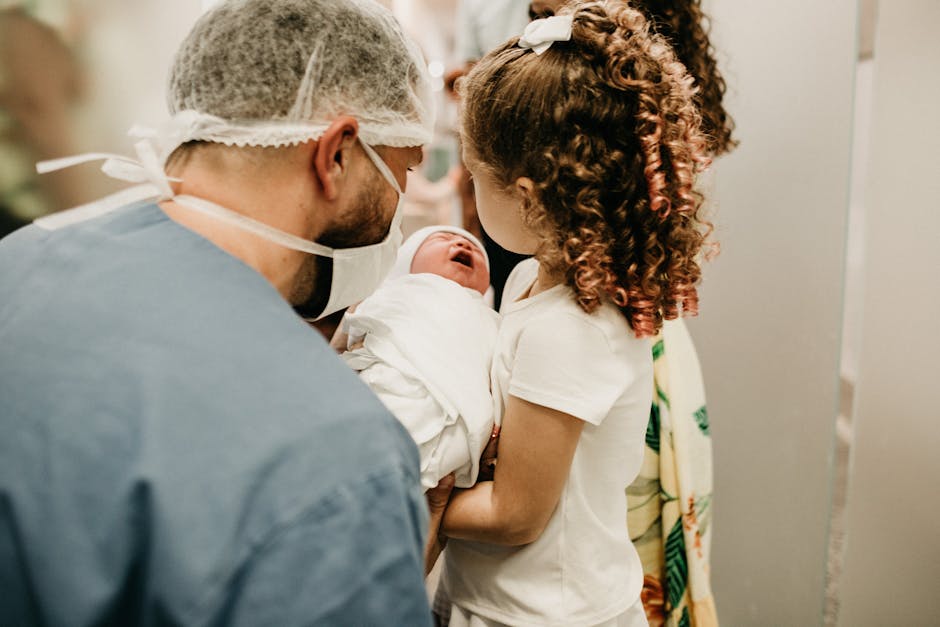
Have someone else carry the baby inside. You walk in first and greet your dog. You’ve been gone — maybe a day, maybe three. Your dog missed you. Give them a few minutes of normal hello before adding the biggest curveball of their life.
Once your dog is calm (not just less excited — actually calm), sit down with the baby. Keep the baby at your level, not up high where the dog has to jump to investigate. Let your dog approach on their own terms.
Duke crept toward our daughter like she might explode. He sniffed her feet, then her head, then looked at me like “what is this?” I gave him a treat. He lay down next to us. That was it. Anticlimactic. Exactly what you want.
What to Watch For
During that first meeting and in the days after, pay attention to:
| Signal | What It Means | What to Do |
|---|---|---|
| Sniffing gently, relaxed body | Curiosity — totally normal | Reward with calm praise |
| Whale eye (showing whites) | Stress or discomfort | Increase distance, give dog space |
| Stiff body, hard stare | High alert — not relaxed | Remove dog calmly, try again later |
| Lip licking, yawning | Anxiety signals | The dog needs a break |
| Tail tucked, retreating | Fear | Don’t force interaction |
| Playful bowing | Wants to play with “new toy” | Redirect, keep things calm |
Never leave your dog and baby alone together. Not for a second. Not even the gentlest, most trustworthy dog. I don’t care if your Golden Retriever has never so much as growled in eight years. Babies make sudden movements and high-pitched sounds. Dogs are animals. Be in the room. Always.
The First Few Weeks at Home
The honeymoon period is real — and so is the regression period that sometimes follows it.
For the first week, Duke was a perfect angel. Gentle near the baby. Calm. Then week two hit, and suddenly he was stealing socks, chewing a shoe (he hadn’t chewed anything since puppyhood), and barking at nothing. He wasn’t being bad. He was stressed. His whole world had changed and he was processing it the only way he knew how.
Keep your dog’s routine as stable as possible. I know — I just told you to make it flexible. But within that flexible framework, keep walks happening, keep meals consistent, keep playtime on the calendar. The temptation is to let everything slide because you’re exhausted. Don’t. Even a quick 15-minute walk makes a difference.
Here’s what helped us:
- My husband took over morning walks so Duke still got out even when I was up all night
- We gave Duke a frozen Kong every time we started a feeding session — it became his special thing
- I made a point to spend 10 minutes a day doing something with just Duke. Training, tug, belly rubs. Just us.
- We praised him constantly for calm behavior around the baby
That last point matters more than anything. Every time Duke chose to lie quietly near the baby instead of investigating, he got a treat or praise. Positive association is the whole game here.
When to Call a Professional
Some reactions go beyond normal adjustment. Contact a certified animal behaviorist (not just a trainer — a behaviorist, like someone with CAAB or DACVB credentials) if your dog:
- Growls, snaps, or lunges toward the baby
- Shows escalating anxiety that doesn’t improve after two weeks
- Becomes aggressive around baby items or the nursery
- Stops eating or shows signs of severe depression
- Guards you aggressively from other family members approaching the baby
These aren’t training problems you can YouTube your way through. They need professional help, and there’s zero shame in getting it.
Building a Long-Term Bond
The first introduction is just the beginning. The real work — and the real magic — happens over months.
As your baby grows, your dog will need to adjust to every new phase. The rolling phase. The crawling phase. The grabbing-everything phase. That last one is when things get interesting, because babies grab ears, tails, and fur with zero understanding of gentle.
Teach your dog that retreating is always an option. They should never feel trapped with a mobile baby. Gates, open crates, elevated dog beds — give them escape routes.
And as your kid grows, teach them too. My daughter learned “gentle hands” before she could say the word. We modeled it constantly. Slow, flat-palm petting. No pulling. No climbing on Duke.
By the time she was 18 months, they were inseparable. He slept outside her door every night. She’d toddle over with a treat in her fist and he’d take it so gently you’d think he was handling glass.
That doesn’t happen by accident. It happens because you put in the work before the baby comes, you manage those first weeks carefully, and you keep reinforcing good behavior on both sides.
Frequently Asked Questions
How long does it take for a dog to adjust to a new baby?
Most dogs settle into the new normal within two to four weeks, but every dog is different. Duke took about 10 days before he stopped being hyper-vigilant. A friend’s Labrador needed over a month. Senior dogs and naturally laid-back breeds tend to adjust faster. High-energy or anxious dogs may take longer. The key is consistency — don’t rush it, and keep rewarding calm behavior.
Should I let my dog lick the baby?
I’m going to give you an unpopular opinion: occasional face licks aren’t the end of the world, but I’d avoid it with newborns. Their immune systems are still developing, and dog mouths carry bacteria like Pasteurella and Capnocytophaga that can cause infections in very young babies. Licking hands or feet? Probably fine after the first couple of months. Face? I’d redirect. We taught Duke “no kisses” and he learned it in about a week.
What dog breeds are best with babies?
Breed matters less than individual temperament, honestly. I’ve seen Pit Bulls who were absolute angels with infants and Golden Retrievers who couldn’t handle the chaos. That said, breeds known for patience and gentleness — Labs, Goldens, Cavalier King Charles Spaniels, Beagles, Collies — tend to have an easier time. But any well-socialized, well-trained dog can do great. Focus on your specific dog’s behavior, not their breed label.
Can I introduce my dog to the baby if the dog has never been around children?
Yes, but go slower. Dogs with zero kid experience need extra time to process the strange sounds, smells, and movements. Start the baby sound desensitization earlier — like four months before the due date. Consider arranging supervised visits with friends’ older babies or toddlers before your own baby arrives, so your dog gets some exposure in a lower-stakes setting.
What if my dog seems jealous of the baby?
Dogs don’t experience jealousy the same way we do, but they absolutely notice when their resources — your attention, their space, their routine — get disrupted. The fix is making sure the baby’s presence predicts good things for the dog, not just lost privileges. Treats when the baby is nearby. Walks that include the stroller. One-on-one time that stays sacred. If your dog only gets attention when the baby is asleep, they learn that baby awake = being ignored. Flip that script.
Wrapping Up
Introducing your dog to a new baby isn’t something you wing. But it’s also not something to panic about. The vast majority of dogs — with proper preparation and management — adapt beautifully.
Start early. Set boundaries before they’re needed. Control that first meeting. And then put in the daily work of building positive associations. Duke and my daughter ended up being the best of friends, and every bit of preparation was worth it for that.
If you’re reading this while pregnant and slightly terrified — take a breath. You’re already doing the right thing by thinking about it now. Your dog and your baby are going to be fine.
Featured Image Source: Pexels