
My Border Collie, Maisie, once growled at me over a pig’s ear. She was two years old, had never shown a flicker of aggression, and suddenly there it was — a low rumble from deep in her chest, eyes fixed on mine, body gone rigid. I froze. Not because I was scared of her, but because I had absolutely no idea what I’d just triggered.
That moment sent me down a rabbit hole of books, behaviourists, and frankly embarrassing trial-and-error. What I learned changed how I live with dogs entirely. Resource guarding isn’t a character flaw or a sign your dog is “dominant.” It’s a completely normal canine behaviour that’s gone a bit sideways — and with the right approach, it’s fixable.
But here’s what most guides won’t tell you upfront: some resource guarding requires professional help, full stop. I’ll help you figure out which camp you’re in.
What Is Resource Guarding in Dogs?
Resource guarding is when a dog uses body language or aggression to protect something they value. That “something” could be food, a toy, a sleeping spot, or even a person. The dog perceives a threat — usually someone approaching — and communicates “back off” in increasingly unsubtle ways.
It’s not personal. Your dog isn’t plotting against you. They’re running ancient survival software that says “if I let go of this food, I might starve.” The problem is that software doesn’t update for the fact that there’s a full bag of kibble in your cupboard.
Common Triggers: Food, Toys, Beds, and People
Food’s the obvious one — the dog growls when you walk past their bowl or approach while they’re gnawing a chew. But I’ve seen dogs guard the weirdest things: a manky sock, a specific corner of the sofa, the space under the bed, even their owner.
That last one catches people off guard. Your dog sits on your lap and growls when your partner approaches? That’s resource guarding. You’re the resource. Flattering in a weird way, but problematic.
Warning Signs (Freezing, Hard Stare, Lip Curl, Growl, Snap)
Dogs don’t go from zero to bite. There’s a ladder of warning signals, and learning to read them will save you a lot of grief:
- Freezing — eating stops, body goes still
- Hard stare — direct eye contact, often with a visible white of the eye (whale eye)
- Lip curl — showing teeth without a sound
- Growl — the verbal warning
- Air snap — a bite that deliberately misses
- Contact bite — teeth on skin
Here’s the thing: every rung on that ladder is communication. A dog that growls is giving you valuable information. Punishing the growl doesn’t remove the feeling behind it — it just removes your warning system. Now you’ve got a dog who goes straight from stiff to snap.
Resource Guarding vs General Aggression: How to Tell the Difference
Resource guarding is contextual. The dog is fine — even lovely — until a specific trigger appears. Remove the trigger, and the behaviour disappears.
General aggression looks different. It’s less predictable, happens across multiple contexts, and often comes with other concerning behaviours like barrier frustration or leash reactivity. If your dog is tense and snappy about lots of things, not just their food bowl, you need a professional assessment. This guide won’t cut it.
Why Dogs Resource Guard
Genetic and Breed Predispositions
Some lines carry it more than others. Working breeds with high drive — think Collies, Spaniels, Terriers — sometimes show it more intensely. But I’ve seen resource guarding in Golden Retrievers (yes, really), Cavaliers, and Pugs. Genetics load the gun; environment pulls the trigger.
Early Life Experiences and Scarcity
Puppies who competed hard for food, came from large litters with limited teats, or spent time as strays often develop guarding behaviour. Makes sense, doesn’t it? If food was unpredictable early on, holding onto what you’ve got becomes a survival strategy.
Rescue dogs are overrepresented here. We rarely know their full history.
Insecurity and Learned Behaviour
Sometimes there’s no obvious backstory. A dog might develop resource guarding because their humans accidentally trained it in — chasing them when they stole a sock, repeatedly taking away their chews “to show who’s boss,” or allowing children to pester them while eating.
One client’s dog started guarding after a single incident where the family Labrador stole his dinner. One moment of food insecurity, and the behaviour stuck. Dogs are quick studies.
When to Call a Behaviourist Before Trying DIY Training
I need you to be honest with yourself here. Not every case of resource guarding is a DIY project.
Bite History or Children in the Home
If your dog has broken skin — genuinely bitten, not just mouthed — you need professional help. Not a trainer from Facebook, a properly qualified behaviourist. In the UK, look for CCAB (Certified Clinical Animal Behaviourist) or DipECAWBM credentials. This isn’t gatekeeping; it’s acknowledging that behaviour modification involving aggression carries real risk.
Same goes if you’ve got children under about ten in the house. Kids are unpredictable, move quickly, and can’t reliably read canine body language. The margin for error is too slim.
Severity Scale: Stiffening to Air Snaps to Contact Bites
Think of it as a traffic light:
Green — freezing, hard eye, maybe a lip curl. The dog’s warning but maintaining control. This is workable at home with the right approach.
Amber — regular growling, occasional air snaps when pushed too far. Proceed carefully. Consider at least one session with a behaviourist to get a proper plan.
Red — air snaps that are getting closer, any history of teeth making contact, or behaviour that’s escalating despite your best efforts. Stop reading training guides and book a professional.
Step 1: Manage the Environment to Prevent Rehearsal
Before you train anything, you manage. Every time your dog successfully guards something — growls and you back off, or snaps and you drop the lead — the behaviour gets reinforced. Prevention isn’t defeat; it’s setting the stage for success.
Feeding in a Quiet, Separate Space
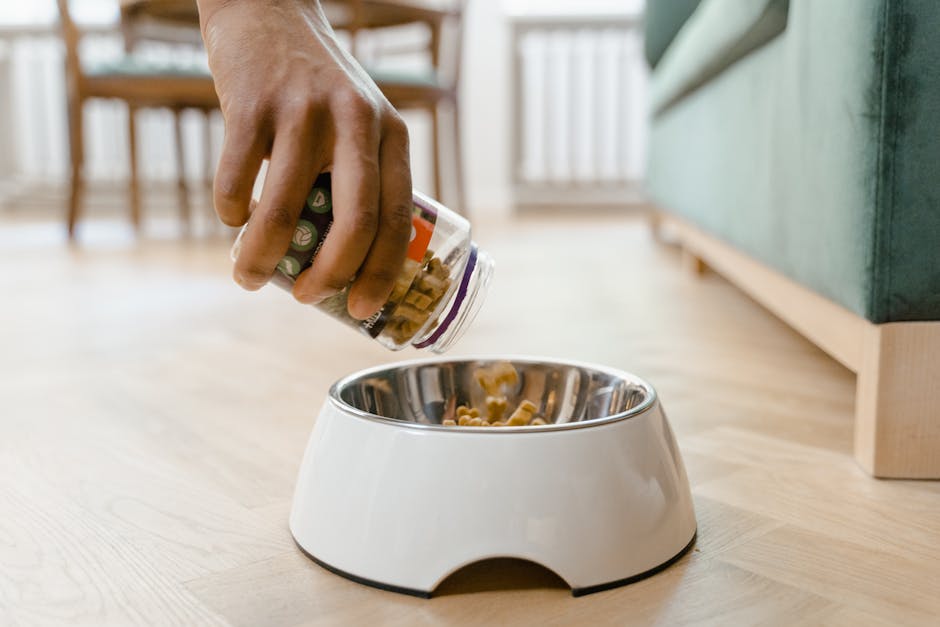
Feed your dog somewhere they won’t be disturbed. A crate, a separate room, behind a baby gate. The goal is zero interruptions while they’re eating. This isn’t permanent; it’s buying you time to train without daily rehearsals of the problem.
With Maisie, I fed her in the utility room with the door closed. Simple. She could eat in peace, and I wasn’t setting us both up for conflict.
Removing High-Value Triggers Until Training Takes
If your dog guards pig’s ears, stop giving pig’s ears. If they guard their bed when they’re on it, block access to the bed when you’re not training. I know this feels like you’re “letting them win,” but you’re not. You’re preventing practice of the problem behaviour while you build new associations.
This drives some people mad. They want to teach the dog to “cope with the real world.” But you wouldn’t throw someone who’s terrified of heights onto a rollercoaster as therapy. Start where the dog can succeed.
Step 2: Counter-Conditioning the Approach
This is the heart of fixing resource guarding. You’re going to change your dog’s emotional response to people approaching their stuff. Instead of “incoming threat, must protect,” you want “incoming human, good things happen.”
Pairing Your Approach With Better Food Than What’s in the Bowl
Here’s the basic protocol. Your dog has their normal kibble in their bowl. You walk toward them — not all the way, just close enough that they notice but haven’t started to stiffen — and toss a piece of chicken near the bowl. Then you walk away.
That’s it. Approach predicts chicken. Approach is now good news.
The “better food” part matters. If you’re trying to counter-condition with more kibble, you’re doing nothing. The approaching human needs to predict something spectacular. Chicken, cheese, hot dog, whatever makes your dog lose their mind.
Reading the Body Language Threshold
You need to work below threshold — that means before any stiffening, hard eye, or freezing appears. If your dog is showing warning signs, you’re too close. Back up and work at a greater distance.
This requires you to actually watch your dog rather than just going through the motions. You’re looking for relaxed eating: soft body, waggy tail (if they’re a tail-wagger), maybe even glancing up at you happily because “oh good, the chicken lady’s coming.”
A common mistake: pushing distance too quickly because “he was fine yesterday.” Progress isn’t linear. Some days will be harder. If your dog regresses, back up to an easier distance. It’s not failure; it’s information.
Step 3: The Trade-Up Technique for Stolen Items
Different scenario: your dog has grabbed something they shouldn’t have — a sock, a shoe, your kid’s toy — and they’re not giving it up. What now?
Choosing a Reward That Outranks the Guarded Item
You need to offer something better than what they’ve got. If your dog has stolen a tissue, kibble might work. If they’ve got a stolen chicken carcass from the bin, you’ll need something spectacular. Know your dog’s hierarchy.
Walk toward them calmly, show them the trade item, and toss it a short distance away. The moment they move toward it, calmly pick up the stolen thing. No drama. No “bad dog.” Just a transaction.
Avoiding the Chase: Why Lunging at Your Dog Backfires
I’ve lost count of how many people have made things worse by chasing their dog around the house. From the dog’s perspective, you’ve just confirmed their suspicion: you want their treasure, and you’re willing to pursue aggressively.
Now the dog has two problems: the thing they’re guarding, and the fact that you’ve become unpredictable and scary. The next time they get something valuable, they’ll hide. Or swallow it whole. Or guard it even harder.
Never chase. Ever. Even if it’s something dangerous. Calmly get the trade item, make it the best thing in the room, and wait.
Step 4: Desensitisation Through Gradual Approach Drills
Once counter-conditioning has your dog happily anticipating your approach, you can start systematic desensitisation — gradually increasing what you ask of them.
Sample 14-Day Training Plan
This is based on Jean Donaldson’s protocol from “Mine!” Adjust based on your dog’s responses.
Days 1-3: Approach to 5 feet, toss chicken, retreat. Three meals a day, ten approaches per meal.
Days 4-6: Approach to 3 feet, toss chicken into the bowl, retreat.
Days 7-9: Approach to 2 feet, drop chicken directly into bowl while standing, retreat.
Days 10-12: Approach to 1 foot, bend slightly toward bowl, drop chicken in, retreat.
Days 13-14: Approach, reach toward bowl (not into it), drop chicken in, retreat.
After day 14, if all has gone well, you can progress to briefly touching the bowl, then picking it up briefly while adding food, then holding it for longer.
But here’s what matters more than the schedule: your dog’s body language. If they’re still stiff on day 7, stay at day 6 distances until they’re relaxed. The plan serves the dog, not the calendar.
How to Progress Distance, Duration, and Distraction
You’ve got three dials to turn: how close you get (distance), how long you’re there (duration), and how distracting the food is (distraction). Only turn one dial at a time.
If you’ve been working with kibble and want to move to wet food, go back to a greater distance. If you’re moving closer, keep duration short. This slow progression prevents setbacks and keeps your dog feeling safe throughout.
Step 5: Generalising to Bones, Beds, and Stolen Socks
Dogs don’t automatically transfer learning from one context to another. Your dog might be brilliant about their food bowl but still guard their chews. That’s normal, not a failure.
You’ll need to repeat the counter-conditioning process for each new resource category. The good news: it usually goes faster the second and third time. The dog has a template now — “when humans approach my stuff, good things happen” — they just need help applying it to new situations.
One thing I’ve noticed: location matters more than people expect. A dog who’s fine about their bed in the living room might guard it fiercely in the bedroom. Same bed, different room, different emotional response. If you’re seeing inconsistency, check whether location is a factor.
Resource Guarding Between Dogs in the Same Household
Multi-dog resource guarding is a different beast. You’re managing dog-dog dynamics, which are less predictable than human-dog ones.
Feeding Routines and Spatial Management
Separate feeding, full stop. Different rooms if possible, or at least opposite ends of the kitchen with barriers. Don’t let dogs finish and then harass the slower eater.
Same goes for high-value chews. I give long-lasting chews in crates, behind closed doors, or only when one dog is out of the house. It’s not worth the risk.
Reinforcing Calm Behaviour Around Shared Resources
You can counter-condition dogs to each other’s presence around resources, but it’s slower and requires more vigilance. The basic idea: when Dog A is eating, Dog B gets treats for lying calmly at a distance. Gradually decrease the distance. But honestly? Management is often simpler and safer long-term. Many multi-dog households never feed dogs in the same room, and that’s fine. You’re not failing if you don’t “fix” this one.
Mistakes That Make Resource Guarding Worse
Why Punishment, Alpha Rolls, and Bowl-Snatching Backfire
If you yell at a dog for growling, you haven’t made them less concerned about you approaching — you’ve added fear of punishment on top of their existing anxiety. The underlying emotion (that tight, protective feeling) is still there. You’ve just suppressed the warning signals.
Alpha rolls — pinning the dog on their back — are worse. You’re now confirming to the dog that you’re physically dangerous. That might suppress behaviour through intimidation, but it damages trust and often leads to escalation.
The Old Myth of Taking Food Away to Assert Dominance
This one still floats around, usually from well-meaning relatives who “had dogs back in the day.” The idea is that randomly taking food away proves you’re in charge and makes the dog defer to you.
What actually happens: the dog learns that you’re unpredictable and might steal their dinner at any moment. Their anxiety around mealtimes increases. They start eating faster, guarding earlier, escalating more quickly.
If you’re doing this, please stop. Today.
Preventing Resource Guarding in Puppies
Much easier to prevent than fix. If you’ve got a puppy, start now.
The Add, Don’t Take Approach During Meals
When your puppy is eating, approach and drop something better into the bowl. Then leave. That’s it. You’re teaching that humans approaching the bowl is fantastic news.
Never take the bowl away mid-meal “just to prove you can.” There’s no benefit, only risk.
Hand-Feeding and Bowl Approach Drills for Pups
Hand-feeding a portion of your puppy’s dinner builds positive associations with your hands near their food. You can also practice picking up the bowl, adding a handful of kibble, and putting it back down.
The goal is that your puppy never develops anxiety about mealtimes in the first place. Most puppies who grow up this way never show any guarding behaviour at all.
When Resource Guarding Doesn’t Improve: Vet and Behaviourist Referrals
Some cases don’t respond to home training. Maybe there’s an underlying pain issue making the dog defensive (sore teeth, for instance, can make dogs guard food bowls). Maybe there’s anxiety that needs medication support. Maybe the guarding is part of a bigger behavioural picture.
If you’ve been working consistently for a month with no improvement — or things are getting worse — get professional help. In the UK, ask your vet for a referral to a veterinary behaviourist (they’ll have CCAB or DipECAWBM credentials). Dogs Trust and the RSPCA also have behaviourist networks.
There’s no shame in this. Some problems are complex enough that expert eyes make the difference.
FAQ: Resource Guarding in Dogs
Will a dog grow out of resource guarding?
No. It almost always gets worse without intervention, not better. The dog learns that their warning behaviours work (people back off), so they use them more.
Should I stick my hand in my dog’s food bowl to show them who’s boss?
Absolutely not. This is outdated advice that creates exactly the problem it’s supposed to prevent. You’re teaching the dog that your hands near their food mean theft, not reward.
Is resource guarding a sign of aggression?
It’s a sign of anxiety, not aggression in the clinical sense. The dog is worried about losing something, so they protect it. That’s very different from a dog who seeks out conflict. The distinction matters because the treatment approach is completely different.
Can resource guarding be cured?
“Managed” is probably more accurate than “cured” for most cases. With good training, many dogs learn to feel relaxed about approaches and stop showing guarding behaviour entirely. But I’d still manage the environment carefully — I don’t randomly take things from Maisie even though she hasn’t growled in years. Why would I? There’s no benefit and plenty of risk.
My dog only guards from my partner, not from me. Why?
The dog has different associations with different people. Maybe your partner approached more quickly, or reached toward the bowl once, or is just a less familiar presence. You’ll need to run the counter-conditioning protocol specifically with your partner doing the approaches.
Resource guarding is fixable. Not instantly, not without effort, but genuinely fixable. If there’s one thing I’d want you to take away from all of this, it’s this: your dog isn’t being bad. They’re being a dog, and a worried one at that. Meet them with patience instead of frustration, and you’ll be amazed at how quickly things can shift.
Featured Image Source: Pexels