


Last month, my neighbour knocked on my door at 11pm, panicking because her Labrador had vomited three times in an hour. The dog had eaten grass earlier and she was convinced he’d been poisoned. He hadn’t — just an upset stomach from wolfing down his dinner too fast. But I’ve also been on the other side of that panic. Years ago, my German Shepherd threw up once, seemed fine, and I went to bed. By morning she was in emergency surgery for a bowel obstruction. That single episode of vomit contained a piece of rope I’d missed.
So when people ask me “why is my dog vomiting?”, I don’t give them a simple answer. Because there isn’t one. The same symptom can mean absolutely nothing or it can mean you’ve got about four hours before your dog is in serious trouble. The difference is in the details — what the vomit looks like, what else is going on, and how your dog is behaving.
This guide is the decision tree I wish I’d had years ago. Not a replacement for your vet, but a way to figure out whether you need one tonight, tomorrow, or not at all.
Vomiting vs Regurgitation — Why It Matters
Before anything else, figure out which one you’re actually dealing with. They look similar but come from completely different places.
Vomiting is active. Your dog’s stomach contracts, they retch, they might drool first, and there’s usually some warning — pacing, lip-licking, that hunched “something’s coming” posture. The stuff that comes up is partially digested. It smells like sick.
Regurgitation is passive. Food just… slides back up, often right after eating. No heaving, no warning. The food looks basically unchanged, might even be tube-shaped from the oesophagus, and doesn’t smell much worse than kibble.
Why does this matter? Because regurgitation usually points to problems in the oesophagus or throat — things like megaoesophagus, strictures, or a foreign body stuck higher up. Vomiting points to stomach or intestinal issues. Your vet will want to know which it is before they even start examining your dog.
Quick test: if your dog throws up and another dog (or the same dog) immediately tries to eat it, it’s probably regurgitation. Undigested food still reads as food. Vomit doesn’t.
Decoding What’s in the Vomit
I know it’s grim, but before you clean it up, look at it. Take a photo if you can stomach it — your vet will thank you.
Yellow Bile (Empty Stomach)
Yellow or greenish-yellow liquid, sometimes a bit foamy. This is bile, and it usually means your dog’s stomach was empty. It’s incredibly common first thing in the morning or if your dog skipped a meal.
Often called “bilious vomiting syndrome,” this isn’t really a disease — it’s more of a pattern. The stomach produces acid on schedule, food isn’t there to absorb it, and the acid irritates the stomach lining until your dog throws up.
The fix is usually simple: feed smaller meals more frequently, or give a small snack before bed. I’ve got a Beagle who used to do this religiously at 5am until I started leaving a handful of kibble in a slow feeder overnight. Problem solved.
That said, don’t assume every yellow vomit is harmless. If it’s happening repeatedly throughout the day, or if your dog seems unwell, that’s different.
White Foam (Reflux, Bloat Warning)
White foam is usually saliva mixed with gastric juices. By itself, especially as a one-off, it’s not particularly alarming. Might be acid reflux, might be mild nausea.
But here’s where I need you to pay attention. In large, deep-chested breeds — Great Danes, German Shepherds, Standard Poodles, Weimaraners, Setters — white foam combined with a swollen belly and unsuccessful attempts to vomit is a medical emergency. This is bloat (gastric dilatation-volvulus or GDV), and it will kill your dog within hours if untreated.
If your dog is retching and heaving but nothing’s coming up, and their abdomen looks distended or feels tight, stop reading this and go to the emergency vet. Now.
Blood (Hematemesis) — Always Urgent
Blood in vomit needs vet attention. Full stop.
It might look bright red (fresh blood, likely from the stomach or upper digestive tract) or dark brown and grainy, like coffee grounds (digested blood, been there a while). Both are concerning.
Causes range from ulcers to clotting disorders to ingesting something that’s torn up the stomach lining. Even if your dog seems perfectly fine otherwise, call your vet.
Undigested Food vs Digested Food
Undigested food that looks exactly like what went in — kibble still shaped like kibble, bits of chicken clearly recognisable — suggests regurgitation or vomiting very soon after eating. This might be eating too fast, stress, or acid reflux.
Digested food is mushier, sometimes unrecognisable, often smells considerably worse. This means it spent time in the stomach, which is more consistent with actual vomiting.
Neither is automatically worse than the other. It’s just useful information.
Worms or Foreign Material
If you see worms — white rice-like segments (tapeworm) or longer spaghetti-like strands (roundworms) — your dog needs deworming. This is treatable but definitely requires attention.
Foreign material is anything that shouldn’t be there. Grass is common and usually not concerning. Bits of toy, plastic, fabric, string? That’s potentially dangerous because there might be more still inside. If I see anything unusual, I’m calling the vet.
Common Non-Emergency Causes
Most vomiting is this. Something relatively minor that’ll pass on its own or with basic home care.
Dietary Indiscretion
The polite way of saying “ate something disgusting.” Dogs raid bins. They eat cat poo. They find long-dead things in the bushes and wolf them down before you can react.
A single vomit (sometimes followed by slightly loose stool) after a dietary indiscretion is your dog’s body doing exactly what it should — getting the offending item out. As long as they’re otherwise bright and alert, this usually resolves within 24 hours.
Eating Too Fast
Labradors, Beagles, and any food-obsessed breed are notorious for this. They inhale their food so fast that the stomach can’t cope, and up it comes.
Slow feeder bowls work for some dogs. Spreading food on a licking mat works for others. I’ve even put large smooth rocks in the bowl to make dogs eat around them. Whatever slows them down.
Mild Stomach Upset
Sometimes dogs just feel a bit off. Stress, change in routine, eating grass, minor infections — any of these can trigger a vomit or two. If it’s isolated and your dog perks up quickly, you’re probably fine to wait and watch.
Red-Flag Causes That Need Immediate Vet Care
These are the ones that scare me. Learn to recognise them because timing matters.
Bloat (GDV)
I mentioned this above but it bears repeating. Gastric dilatation-volvulus happens when the stomach fills with gas and then twists, cutting off blood supply. It’s excruciating and rapidly fatal.
Signs: Unsuccessful retching (trying to vomit but producing nothing or just foam), swollen/hard abdomen, restlessness, excessive drooling, rapid breathing, collapse.
High-risk dogs: Large breeds with deep chests. But I’ve seen it in medium-sized dogs too.
What to do: Emergency vet. Don’t wait until morning. Don’t call and ask for advice first. Go.
Pancreatitis
Inflammation of the pancreas, often triggered by eating fatty food. That’s why it spikes after Christmas when well-meaning relatives slip the dog roast trimmings.
Signs: Vomiting repeatedly, abdominal pain (won’t want their belly touched, might adopt a “prayer position” with front legs down and bum in the air), lethargy, loss of appetite, sometimes diarrhoea.
Mild cases can be managed with supportive care. Severe cases are life-threatening. Your vet needs to determine which you’re dealing with.
Foreign Body Obstruction
Dog swallowed something that’s now stuck. Socks are surprisingly common. So are corn cobs, stone fruit pits, and rubber toys.
Signs: Vomiting (especially if they can’t keep water down), abdominal pain, no faeces or only small amounts, lethargy, decreased appetite.
Partial obstructions can be sneaky — they might eat a bit, vomit some, seem okay for a while, then worsen. If you suspect your dog swallowed something that hasn’t passed within 48-72 hours, or if they’re vomiting persistently, they need imaging.
Poisoning
The list of things toxic to dogs is long. Chocolate, xylitol (in sugar-free products), grapes and raisins, certain plants, medications (ibuprofen is a big one), antifreeze, rodent poison…
Signs vary by toxin but vomiting is common across the board. Other signs might include tremors, seizures, excessive thirst, bleeding, lethargy, or just seeming “off.”
If you know or suspect your dog ate something toxic, call your vet or a poison helpline immediately. Time matters. Depending on what it is and how recently they ate it, inducing vomiting might be recommended — but don’t do this without professional guidance. Some toxins do more damage on the way back up.
Pyometra (Unspayed Females)
This catches people off guard because they don’t connect vomiting with a uterine infection.
Pyometra is a serious infection of the uterus that usually occurs a few weeks after a heat cycle. The uterus fills with pus. It’s life-threatening without treatment.
Signs: Vomiting, lethargy, increased thirst and urination, swollen abdomen, vaginal discharge (though “closed” pyometra has no discharge, making it harder to spot).
If your unspayed female dog is vomiting and seems unwell, especially if she’s recently been in heat, this needs ruling out urgently.
The 12-Hour Rule — Home Care Decision Tree
Right. You’ve looked at the vomit, assessed your dog, and none of the red flags above are present. What now?
Here’s my general approach:
Go to the vet immediately if:
- Your dog vomits more than three times in an hour
- There’s blood in the vomit
- Your dog is trying to vomit but can’t produce anything
- Their abdomen is swollen or hard
- They’re in obvious pain
- They’ve potentially eaten something toxic or a foreign body
- They have other severe symptoms (collapse, seizures, extreme lethargy)
- They’re very young, very old, or have existing health conditions
Go within 24 hours if:
- Vomiting continues for more than 12 hours
- Your dog can’t keep water down
- They won’t eat for more than 24 hours
- You see any blood, even small amounts
- They have a fever (over 39.2°C/102.5°F)
- They seem progressively worse rather than better
Wait and watch (home care) if:
- Single episode of vomiting, dog otherwise normal
- Mild vomiting (1-2 episodes), dog still interested in food and water
- You have a clear explanation (ate too fast, ate grass, minor dietary indiscretion)
- Dog is bright, alert, and behaving normally
The 12-hour rule is my personal benchmark. If a dog throws up once and then acts completely normal — wants to play, drinks water, all that — I’ll typically withhold food for a few hours, offer small amounts of water, and reassess. If after 12 hours they’re still vomiting, can’t keep water down, or seem worse in any way, we’re going to the vet.
Bland Diet Recipe and Reintroduction Plan
Once the vomiting stops and your dog seems to be feeling better, don’t go straight back to their normal food. You’ll likely trigger another episode.
The classic bland diet:
- Boiled chicken breast (no skin, no seasoning, no oil)
- Plain white rice, cooked until soft
Mix roughly 1 part chicken to 2 parts rice. Serve small portions — much smaller than a normal meal. You’re giving the digestive system time to recover, not a feast.
I know some people use boiled lean mince or cottage cheese instead of chicken. Both work. Avoid anything fatty, heavily processed, or with strong seasoning.
The reintroduction plan:
Day 1-2: Bland diet only, small frequent meals (4-5 small portions rather than 1-2 large ones)
Day 3-4: Start mixing in their regular food — roughly 25% regular food, 75% bland diet
Day 5-6: Move to 50/50
Day 7-8: 75% regular food, 25% bland diet
Day 9+: Back to normal
Go slower if you see any return of symptoms. And for goodness’ sake, resist the urge to give them treats during this time. I know those eyes are hard to resist. Stay strong.
When NOT to Use Anti-Emetics at Home
Here’s something that frustrates me about online advice: people recommending Pepto-Bismol for vomiting dogs. Don’t do it.
Pepto-Bismol contains bismuth subsalicylate — essentially related to aspirin. It can cause gastric ulceration in dogs, interfere with bleeding, and is genuinely dangerous for dogs on certain medications or with certain conditions. Plus, it turns their stool black, which makes it impossible to monitor for blood.
Same goes for human anti-nausea medications unless your vet has specifically prescribed them.
Why is suppressing vomiting sometimes a bad idea anyway? Because vomiting is often protective. If your dog ate something toxic, you want it coming back up, not sitting in their stomach longer. If there’s a foreign body causing a partial obstruction, masking symptoms with anti-emetics delays diagnosis.
The exception is when a vet prescribes an anti-emetic like maropitant (Cerenia) after they’ve examined your dog and determined it’s appropriate. That’s different from you raiding the medicine cabinet.
What the Vet Will Do (Diagnostics and Costs)
If you’re worried about what happens at the vet — or what it’ll cost — here’s roughly what to expect.
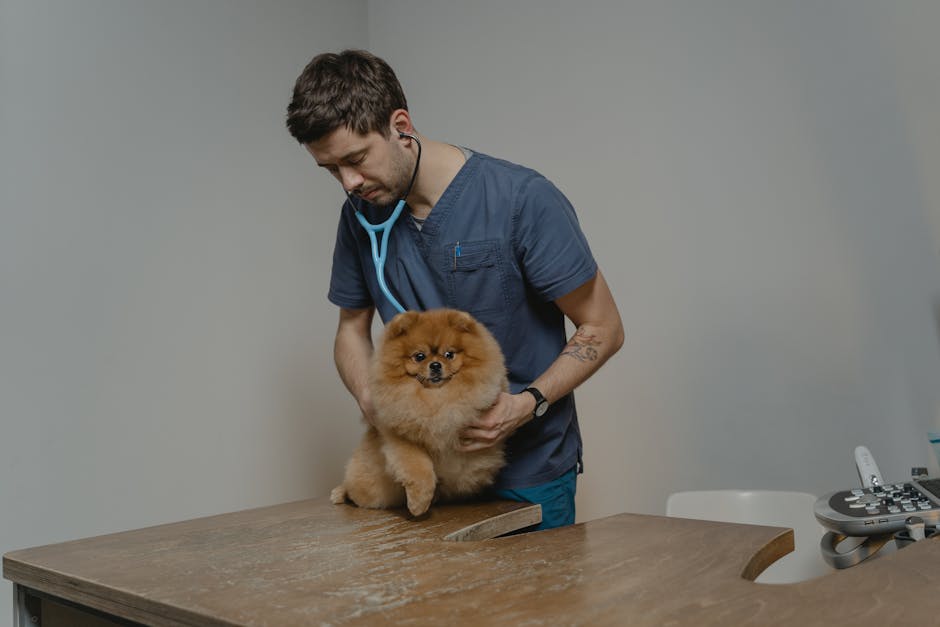
Physical examination: The vet will feel your dog’s abdomen, check their hydration, take temperature, listen to gut sounds. Sometimes this alone gives them a good idea what’s going on.
Blood tests: Often recommended to check for infection, assess organ function, look for signs of pancreatitis, check electrolyte levels. Basic blood panels run anywhere from £80-£150 depending on your location and what’s included.
X-rays: If they suspect an obstruction or foreign body, or want to look at the size of the stomach/intestines. Typically £100-£250 for abdominal X-rays.
Ultrasound: Better soft tissue detail than X-rays. More expensive — usually £150-£300 — but sometimes necessary.
IV fluids: If your dog is dehydrated or needs supportive care. Often given while awaiting test results or before surgery.
Hospitalisation: For monitoring and treatment. Costs add up quickly — £200-£500+ per day depending on level of care needed.
Emergency out-of-hours vet visits typically start around £150-£200 just for the consultation, before any tests or treatment. I’m not saying this to put you off going — your dog’s life is worth more than money — but I think it’s fair to be prepared.
Pet insurance is worth considering if you don’t have it. I didn’t bother until that German Shepherd surgery cost me nearly £4,000. Now I don’t question the monthly premium.
FAQ
My dog vomits every morning and seems fine otherwise. Do I need to see the vet?
If it’s clearly bilious vomiting syndrome (yellow bile, empty stomach, early morning), try feeding a small snack at bedtime first. That solves it for most dogs. But if it continues for more than a couple of weeks despite dietary changes, or if your dog isn’t otherwise acting normal, a vet check is wise to rule out underlying issues.
Should I starve my dog after they vomit?
Not starving exactly, but a brief fast makes sense. I usually withhold food for 4-6 hours after a single vomit, then offer a small bland meal. Water should stay available unless your dog is vomiting water back up too — then offer small amounts frequently rather than a full bowl. The old “24-hour fast” recommendation is falling out of favour; prolonged fasting isn’t great for the gut lining.
My dog ate grass and then threw up. Is that dangerous?
Almost never. Dogs eat grass for reasons we don’t entirely understand — some say it’s to induce vomiting when they feel off, others say it’s just… something dogs do. If it’s occasional and your dog seems fine after, I wouldn’t lose sleep over it.
Can dogs get motion sickness?
Absolutely. Some dogs vomit every car journey, especially as puppies. They often grow out of it. For persistent cases, your vet can prescribe medication before travel. I’ve had good results with a product called Cerenia, though some dogs do fine with just skipping breakfast before car trips.
How long should vomiting last before I worry?
Single episode, dog fine afterwards: don’t worry. Two or three episodes over 12 hours but improving: cautious monitoring. Multiple episodes, getting worse, can’t keep water down, or lasting more than 24 hours: vet time. And if any of those red flags from earlier appear, don’t wait at all.
Vomiting is messy, worrying, and usually nothing serious. But when it is serious, the dogs whose owners recognised the warning signs and acted fast are the ones that pull through. Trust your instincts — you know your dog better than anyone. If something feels wrong, it probably is.
Featured Image Source: Pexels