

Why I Started Taking Summer Gear Seriously
I’ll be honest — three years ago, I thought dog cooling vests were gimmicky. My black Lab mix, Cooper, had survived eight summers without one. Then we moved to Arizona.
The first time I had to cut a hike short because Cooper was panting so hard he couldn’t walk straight, I felt terrible. He was stumbling, his tongue was practically dragging on the ground, and I genuinely didn’t know if he was going to be okay. We sat in the shade for twenty minutes before he could even stand properly. That scared me enough to actually research this stuff.
Since then, I’ve tested probably a dozen cooling products across three dogs — Cooper, my parents’ French Bulldog, and my neighbor’s elderly Golden who I watch every summer. Some worked brilliantly. Others were basically expensive wet t-shirts. Here’s what I’ve learned.
The Quick Science (I Promise This Matters)
Before you spend money, you need to understand why some products work and others don’t.
Evaporative cooling vests use the same principle as sweating. You soak the vest, wring it out, and as the water evaporates, it pulls heat away from your dog’s body. Simple enough. But here’s the catch: evaporation requires dry air. If you live somewhere humid — Florida, the Gulf Coast, anywhere with 70%+ humidity — these vests become marginally useful at best. They might actually trap heat against your dog’s body instead of releasing it.
Pressure-activated gel mats work differently. The gel inside absorbs body heat when compressed. No water needed, no batteries, no freezer. They’re less effective than a good evaporative vest, but they work in any climate and don’t require any prep.
Phase-change materials (the fancy stuff in some premium vests) absorb heat until they reach a certain temperature, then release it. They stay cooler longer but cost more and often need refrigeration.
Coverage matters too. Your dog’s chest is where the magic happens — that’s where blood vessels are closest to the skin. A vest that only covers the back is mostly just blocking sun.
The Vest That Actually Impressed Me: Ruffwear Swamp Cooler
I’ll cut straight to it. The Ruffwear Swamp Cooler is the one I reach for whenever we’re doing anything more strenuous than a backyard hangout.
I wore out my first one over two summers of desert hiking. When the replacement showed up, I was actually excited to test it properly. On a 90°F day last June, I soaked it, wrung it out, and took Cooper on our usual 4-mile loop. The difference was obvious — he trotted the whole way instead of his usual slow plod through the last mile. His belly fur was damp but not soaked when we got home, which meant the mesh lining was doing its job.
The three-layer construction actually makes sense once you understand it. The outer layer is a tight weave with UPF 50+ sun protection that reflects radiant heat. The middle layer holds water like a sponge. The inner mesh keeps your dog’s fur from getting waterlogged. In field tests, the Swamp Cooler dropped surface temperatures by over 80 degrees in three minutes — from 172°F down to about 91°F.
I can usually get 2-3 hours of cooling before needing to re-wet it. On really hot days, I carry a collapsible bowl and dump water on it at the halfway point. Machine washable is a big deal after it’s been soaked in lake water and rolled through dirt.
The downsides: It’s not cheap (around $65-80 depending on size), and it’s genuinely useless on humid days. If you live somewhere sticky, keep reading.
Sizing runs pretty true. I’d recommend measuring your dog’s girth (widest part of the chest, behind the front legs) and checking Ruffwear’s chart. The XS-to-XL range covers most dogs from 13 to 42 inches.
For Dogs Who Actually Move: Ruffwear Jet Stream
The Jet Stream is what I use when we’re actually exercising together — trail runs, fetch sessions, that kind of thing.
Where the Swamp Cooler feels like a proper jacket, the Jet Stream is more like compression gear. It’s tight to the body (think athletic wear, not a sweater), which means it doesn’t flop around or catch on brush. The top is a stretchy, breathable spandex that provides shade without adding insulation. The chest and belly use the same evaporative fabric as the Swamp Cooler.
My neighbor’s Golden wears this for her morning runs and it’s been solid. The zippered design is actually easier to get on than the Swamp Cooler’s buckles — no wrestling with clips while your dog is impatient to go.
One thing: there’s no leash portal on top, so you’ll need to wear it under a harness or clip to a collar. Some people hate this, but for active dogs it actually keeps the vest more secure.
It’s also about $15-20 cheaper than the Swamp Cooler, which makes it the better value if you’re not doing all-day adventures.
Other Vests Worth Knowing About
| Vest | Best For | Price Range | My Take |
|---|---|---|---|
| SGODA Dog Cooling Vest | Budget option | ~$20-30 | Does the job. Gets dirty fast (light colors plus wet fabric equals mud magnet). The velcro straps work fine but feel cheap compared to buckles. Solid choice if you’re not sure you’ll use it enough to justify Ruffwear prices. |
| Canada Pooch Chill Seeker | Cute patterns, lighter dogs | ~$35-50 | My parents’ Frenchie wears this. Lightweight, easy on/off, and actually stayed cool during a brutally hot afternoon at an outdoor brewery. Not as robust for heavy use but fine for walks. |
Skip the Hurtta Cooling Vest
I’ve seen this recommended a lot and don’t get it. It’s pricey, the fit is weird on barrel-chested dogs, and the cooling performance was mediocre in my testing. The reflective trim is nice, I guess? But not worth the premium.
Cooling Mats: What Actually Works for Indoor Use
If your dog is more of a “lie on the kitchen floor and sigh dramatically” type during summer, a cooling mat makes more sense than a vest.
Pecute Dog Cooling Mat is what I keep in Cooper’s crate. It uses pressure-activated gel that cools for about 3-4 hours, then recharges in 15-20 minutes of non-use. The 300D Oxford outer material has survived his nails and some enthusiastic digging without puncturing. I’ve had mine almost two years with no leaks.
Available in sizes from tiny (40x30cm) all the way up to XX-large (140x90cm), so even Great Danes can stretch out. Just wipe it down with a damp cloth when it gets gross.
Green Pet Shop Cool Pet Pad is the other reliable option. CNN Underscored rated it their top pick for balancing cooling power with portability. Same basic technology as the Pecute — no freezing, no water, just lay it down and let the gel do its thing.
A warning about the Arf Pets mat: I’ve seen too many reviews about leaking gel and mats that stopped working after a few months. One customer reported it actually got hot after extended use. Maybe you’ll get a good one, but the inconsistency isn’t worth the gamble when other options exist.
Vest or Mat? Here’s How to Decide
Get a vest if:
- You take your dog on walks, hikes, or runs during warm weather
- You need cooling while moving
- Your dog spends time outdoors in direct sun
Get a mat if:
- Your dog mostly needs to cool down inside
- You have an older or less mobile dog
- You want something for the car or crate
Get both if:
- You have a brachycephalic breed (vest for brief outings, mat for recovery)
- Your dog is elderly or has joint issues (gentle cooling all day)
- You live somewhere genuinely hot and have an active dog
Breeds That Really Need This Stuff
This isn’t just marketing. Some dogs physiologically cannot cool themselves well.
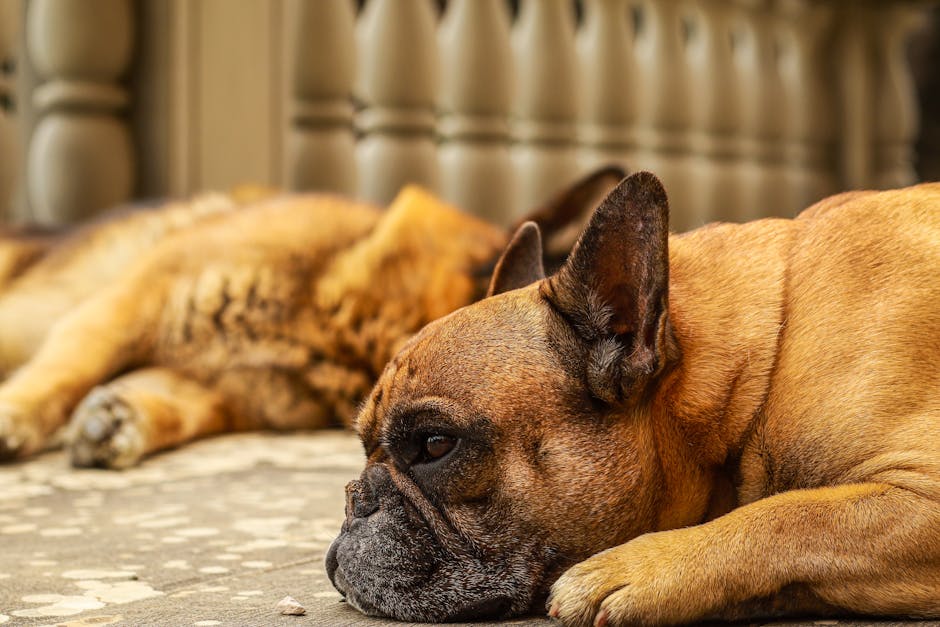
Brachycephalic breeds — Bulldogs, French Bulldogs, Pugs, Boston Terriers, Boxers — have up to 2x the risk of heat-related illness compared to dogs with normal muzzles. Research from the Royal Veterinary College found that compared to Labrador Retrievers, Bulldogs have 14 times the risk of heatstroke. French Bulldogs have 6 times the risk. Their shortened skulls and narrow airways mean panting just doesn’t work properly.
My parents learned this the hard way with their Frenchie, Hugo. He can’t even do a 15-minute walk in 80°F weather without a cooling vest. It’s not optional for him — it’s medical necessity.
Double-coated breeds like Huskies, Malamutes, Samoyeds, and Akitas evolved for cold climates. Yes, their coats provide some insulation from heat too, but they still struggle when it’s genuinely hot. Don’t shave them (it makes things worse), but do invest in cooling gear.
Also watch:
- Senior dogs (decreased ability to regulate temperature)
- Overweight dogs (extra insulation, less efficient cooling)
- Dark-colored coats (absorb more heat)
- Giant breeds (more body mass to cool)
This Part Could Save Your Dog’s Life
I debated putting this section first because it’s that important.
Never put an ice-cold vest on a dog who’s already overheating. I know it seems logical, but rapid cooling causes blood vessels to constrict, which traps heat inside the body and can trigger shock. The same principle applies to dumping ice water on them. Cool water, not cold. Never ice.
Cooling gear is supplemental. It doesn’t replace shade, water, and common sense. A vest won’t save a dog locked in a hot car. It won’t let you take a Bulldog on a midday summer hike. It extends what’s safe — it doesn’t eliminate risk.
Know These Signs of Heat Exhaustion:
- Heavy, rapid panting that doesn’t slow down with rest
- Excessive drooling, especially thick or sticky saliva
- Bright red or purple gums (normal is salmon pink)
- Disorientation or stumbling
- Vomiting or diarrhea
- Collapse
A body temperature above 104°F is a veterinary emergency. Above 106°F is life-threatening. If you see disorientation, collapse, or seizing, get to a vet immediately — cooling your dog on the way to the hospital increases survival rates from 50% to 80%.
Getting the Right Fit
This is simpler than brands make it seem.
Chest girth is what matters. Wrap a soft measuring tape around the widest part of your dog’s chest, right behind the front legs. You want it snug but not tight — you should be able to slide two flat fingers between the tape and their body.
Every brand has different sizing charts. Don’t assume “medium” means the same thing everywhere. Actually measure, actually check the chart.
For evaporative vests specifically, fit matters because the fabric needs to touch your dog’s body to transfer heat. A loose vest is just… a wet towel draped over them. Not helpful.
If you’re between sizes, go with whatever fits the chest better. A vest that’s slightly long in the back is fine. One that doesn’t make proper contact with the chest is useless.
My Actual Recommendations
For serious hiking and outdoor adventures: Ruffwear Swamp Cooler. Yes, it’s expensive. It’s also genuinely the best performer I’ve tested.
For running, training, and active dogs: Ruffwear Jet Stream. Better freedom of movement, slightly lower price.
For budget-conscious buyers: SGODA Cooling Vest. It works. It’s not fancy. You’ll probably replace it after a couple seasons, but at $25 you won’t be mad about it.
For indoor/crate cooling: Pecute Cooling Mat. Reliable, durable, available in sizes that work for basically any dog.
One last thing: start using this stuff before your dog is overheated. Put the vest on at the beginning of the walk, not when they’re already struggling. Cooling gear prevents problems better than it solves them.
Featured Image Source: Pexels