

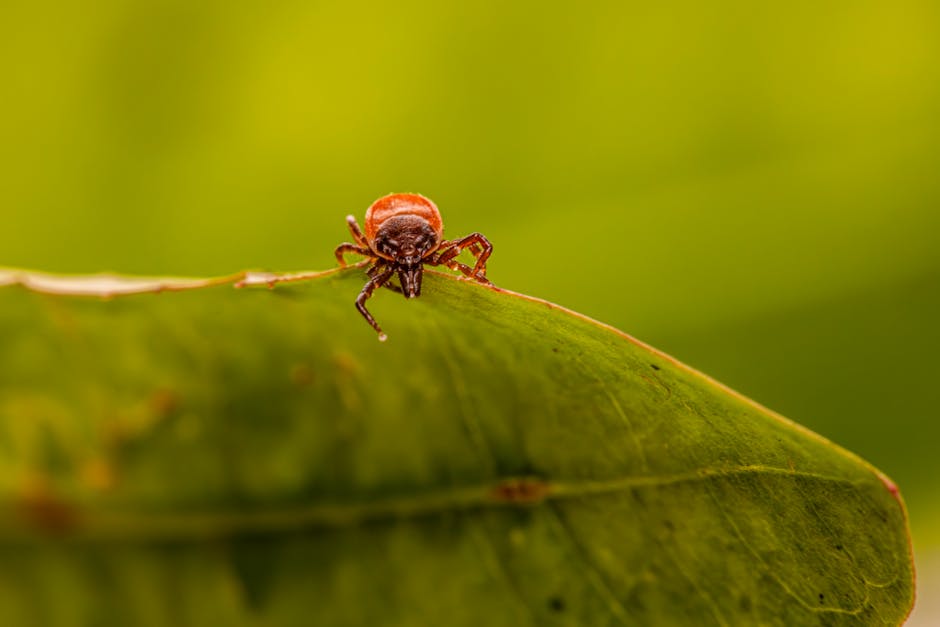

Why Year-Round Flea and Tick Prevention Actually Matters
I’ll be honest — I used to be one of those dog owners who only bothered with flea and tick prevention during “peak season.” Then my Lab mix, Cooper, came home from a hiking trip with a deer tick embedded behind his ear, and three weeks later we were dealing with Lyme disease symptoms. The vet bills, the antibiotics, the joint pain he experienced for months afterward… none of that was worth the $40 I’d “saved” by skipping his spring prevention.
Look, fleas don’t check the calendar. Ticks are active whenever temperatures climb above 35°F — which, depending on where you live, might be February. And with climate patterns shifting, the traditional “tick season” keeps stretching longer each year. If you want to see what’s actually circulating in your area, check the CAPC prevalence maps for your zip code — they update monthly and the numbers in some regions are genuinely alarming.
This guide breaks down every major type of flea and tick prevention on the market right now — oral chewables, topicals, collars, and combination products. I’ve tested several of these on my own dogs over the years, talked to my vet more times than I can count, and obsessively compared ingredients, kill times, and coverage specs until my wife told me to close the laptop and go to bed.
Understanding Flea and Tick Risks
Before we get into products, let’s talk about what these little parasites actually do. Because “they’re annoying” doesn’t quite cover it.
Tick-Borne Diseases Your Dog Can Catch
Lyme Disease — This one gets all the press, and for good reason. It’s spread by deer ticks, and it causes fever, lameness, swollen lymph nodes, and if left untreated, kidney damage. The scary part is that the deer tick’s geographic range keeps expanding northward and inland. Dogs in areas that were considered “safe” five years ago are now showing up positive. Cooper’s Lyme diagnosis is what turned me into a year-round prevention zealot, honestly.
Ehrlichiosis — Spread by lone star ticks — and yeah, that’s their actual name — this one goes after white blood cells. Lethargy, weight loss, bleeding disorders. My vet explained what chronic ehrlichiosis looks like and it genuinely scared me. If you don’t catch it early, it can become life-threatening.
Anaplasmosis — Similar to Lyme in a lot of ways, transmitted by the same deer tick. Joint pain, fever, vomiting. It gets misdiagnosed constantly because the symptoms overlap with so many other conditions, which makes it extra frustrating to deal with.
Flea-Related Health Problems
Flea Allergy Dermatitis (FAD) — This is the big one. Some dogs develop a hypersensitivity to proteins in flea saliva, and a single bite can trigger intense itching, hair loss, and hot spots. I’ve seen dogs scratch themselves raw from FAD. The treatment involves steroids, medicated baths, and strict flea control going forward.
Tapeworms — Dogs ingest fleas while grooming, and those fleas often carry tapeworm larvae. You’ll notice rice-grain-like segments in your dog’s stool or around their rear end. Not dangerous, but definitely gross and easily preventable.
Types of Flea and Tick Prevention Explained
Oral Chewables
How they work: Your dog eats a flavored tablet. Active ingredients enter the bloodstream and distribute throughout body tissues. When a flea or tick bites, it ingests the insecticide and dies — usually within hours.
The main active ingredients are isoxazolines (afoxolaner in NexGard, sarolaner in Simparica, fluralaner in Bravecto). These overstimulate parasites’ nervous systems, causing paralysis and death.
Pros:
- No messy application — you just hand it over like a treat
- Can’t wash off, which is huge if your dog swims or gets bathed often
- Most dogs eat them willingly (Cooper literally sits and waits for his)
- Nothing to avoid touching afterward like with wet topicals
- Fast-acting compared to most topicals
Cons:
- Parasites must bite to die — there’s no repellent effect, which bugs me (pun intended)
- Require a vet prescription, so you can’t just grab them off the shelf
Topical Treatments
How they work: You part the fur between your dog’s shoulder blades and apply liquid directly to the skin. The medication spreads across the body through the skin’s oil layer.
Pros:
- Some products repel AND kill — this is the big advantage over oral meds
- Over-the-counter options available (no vet visit required)
- Often cheaper than oral medications
- Work on contact for some formulations, meaning parasites don’t have to bite first
Cons:
- That greasy residue for 24-48 hours. I hate it. My couch hates it. Everyone hates it.
- Can wash off if your dog swims or gets a bath too soon after application
- K9 Advantix II specifically is highly toxic to cats — a serious concern for multi-pet households
- Children shouldn’t pet the treated area until it’s fully dry, which is tough to enforce with kids who just want to hug the dog
Flea and Tick Collars
How they work: Embedded insecticides release slowly over months, spreading through skin oils or creating a protective zone around the collar area.
I’ll be upfront: I’m not a huge fan of collars as a primary prevention method. They have their place, but I think they’re the weakest option for most dogs.
Pros:
- Long duration — 7-8 months typically, which is genuinely convenient
- No monthly doses to remember
Cons:
- Can be lost or chewed off (ask me how I know)
- Protection is noticeably weaker at the tail and rear end — which is exactly where ticks love to attach
- Some dogs develop skin irritation or lose fur under the collar
- Less effective for severe infestations
- The Seresto collar specifically has faced scrutiny over adverse event reports, which made me uncomfortable enough to switch away from it
Shampoos and Sprays
These are reactive, not preventive. They kill existing fleas and ticks but offer minimal residual protection. Use these if you’re dealing with an active infestation, then follow up with a preventive product.
Best Oral Flea and Tick Medications
NexGard Chewables
This is what Cooper’s been on for two years, so I have more to say about it than anything else on this list. The beef-flavored chew goes down like a treat — I don’t even have to hide it in peanut butter. On the first of every month, he hears me open the box and comes running. Not once in two years have I found a flea or pulled a tick off him, and we hike in wooded areas in the Northeast almost every weekend.
The thing that sold me originally: NexGard is the only oral flea and tick product FDA-approved to prevent infections that cause Lyme disease. That’s not just marketing — they actually had to prove it in clinical trials. Given what we went through with Cooper’s Lyme diagnosis before he was on NexGard, that approval mattered to me.
Active ingredient is afoxolaner. Kills fleas within 4 hours, ticks within 24. Monthly dosing, minimum age 8 weeks, minimum weight 4 lbs. Runs about $20-25 per month depending on your dog’s weight class.
One complaint: I wish it covered heartworm too. Paying for NexGard plus a separate heartworm preventive gets old. Which is exactly why NexGard PLUS exists.
NexGard PLUS
Same flea and tick protection as regular NexGard, plus heartworm prevention, plus roundworm and hookworm treatment. One chew handles four different parasite categories. Active ingredients are afoxolaner, moxidectin, and pyrantel. Same 30-day dosing, same 8-week minimum age, same 4 lb minimum weight. Costs $25-35 per month.
| Spec | Detail |
|---|---|
| Active Ingredients | Afoxolaner, moxidectin, pyrantel |
| Duration | 30 days |
| Coverage | Fleas, ticks, heartworm, roundworms, hookworms |
| Minimum Age | 8 weeks |
| Minimum Weight | 4 lbs |
| Price Range | $25-35 per month |
The convenience factor here is real. Instead of juggling separate flea/tick and heartworm medications with different dosing schedules, it’s one chew, once a month. I’m honestly considering switching Cooper over to this just to simplify things. If your dog is already on both a flea/tick product and a heartworm preventive, do the math — you might actually save money consolidating.
Simparica Trio
Direct competitor to NexGard PLUS. I haven’t used this one personally, but I’ve talked to my vet about it and read enough owner experiences to have an opinion.
The specs are nearly identical to NexGard PLUS — same heartworm and intestinal worm coverage, same monthly dosing. Where it edges ahead: Simparica Trio covers six types of ticks compared to NexGard’s five, and it starts killing fleas within 3 hours versus NexGard’s 4. Whether that one-hour difference matters in practice is debatable, but it’s there.
Active ingredients are sarolaner, moxidectin, and pyrantel. Price is comparable at $25-35 per month. One thing to note: Simparica requires dogs to be 8 weeks AND weigh at least 2.8 lbs, while NexGard requires 4 lbs minimum. For very small breed puppies, that lower weight threshold could matter.
I’d recommend Simparica Trio if your vet prefers it or if you’re in an area with Gulf Coast ticks (one of the species NexGard doesn’t cover). Otherwise, it’s close enough to NexGard PLUS that you’re splitting hairs.
Bravecto
Here’s the wildcard. Bravecto delivers 12 weeks of protection per dose — three months from a single chew. If you’re the type who constantly forgets monthly dosing (no judgment, I’ve been there), this solves that problem entirely. Active ingredient is fluralaner, runs $45-60 per dose, which works out to roughly $15-20 per month.
The catch? It only covers fleas and ticks. No heartworm, no intestinal worms. You’ll still need separate prevention for those. And the 6-month minimum age means it’s off the table for young puppies.
I’ve also heard from a few owners — and seen scattered reports online — that Bravecto’s effectiveness seems to drop off toward the end of that 12-week window. Worth paying extra attention during weeks 10-12. If you’re finding fleas during that tail end, talk to your vet about whether the dosing interval needs to shrink.
Skip this unless you specifically need that extended dosing schedule. For most people, a monthly all-in-one like NexGard PLUS or Simparica Trio is going to be more practical.
Oral Medication Price Comparison
| Product | Fleas | Ticks | Heartworm | Intestinal Worms | Duration | Approx. Monthly Cost |
|---|---|---|---|---|---|---|
| NexGard | ✓ | ✓ | ✗ | ✗ | 30 days | $20-25 |
| NexGard PLUS | ✓ | ✓ | ✓ | ✓ | 30 days | $25-35 |
| Simparica Trio | ✓ | ✓ | ✓ | ✓ | 30 days | $25-35 |
| Bravecto | ✓ | ✓ | ✗ | ✗ | 12 weeks | $15-20 |
Best Topical Flea and Tick Treatments
K9 Advantix II
This is the topical I reach for when I need something that repels AND kills. K9 Advantix II doesn’t just wait for parasites to bite — it creates a barrier that drives fleas, ticks, and mosquitoes away on contact.
Kills fleas within 12 hours. New fleas that jump on your dog from the environment die within 2 hours. That speed matters when you’re dealing with heavy flea pressure. Active ingredients are imidacloprid, permethrin, and pyriproxyfen. Thirty-day duration, waterproof after 24 hours, minimum age 7 weeks. A 6-pack runs $50-60.
Critical warning: K9 Advantix II contains permethrin, which is highly toxic to cats. If you have cats in your home, keep them completely separated from your treated dog for at least 24 hours. Better yet, choose a different product. I cannot stress this enough — permethrin exposure can kill cats. This is the one product on this list where I’d say it’s genuinely dangerous if used in the wrong household.
I’d point this toward owners with active dogs who spend a lot of time in heavy tick country — hunters, hikers, rural properties. The repellent action is the real selling point. But if you’ve got cats at home, don’t even consider it. Full stop.
Frontline Plus
Frontline Plus has been around forever. Two active ingredients — fipronil and (S)-methoprene — target adult fleas AND flea eggs and larvae, breaking the reproductive cycle. No prescription needed.
Here’s my honest take: Frontline was the go-to recommendation for years, but it’s starting to feel like yesterday’s technology. It takes 12+ hours to kill ticks versus 8 hours or less with most orals. And there’s growing anecdotal evidence — plus some vet discussions I’ve had — that flea populations in certain regions have developed reduced sensitivity to fipronil. It still works for plenty of dogs, but I’ve talked to enough people who switched away from Frontline because it “stopped working” that I think it’s worth mentioning.
| Spec | Detail |
|---|---|
| Active Ingredients | Fipronil, (S)-methoprene |
| Duration | 30 days |
| Coverage | Adult fleas, flea eggs, flea larvae, ticks, lice |
| Water Resistance | Yes (after drying) |
| Minimum Age | 8 weeks |
| Price Range | $70-100 per 6-pack |
It’s widely available, doesn’t require a prescription, and has a long safety track record. If it’s been working for your dog, there’s no reason to panic and switch. But if you’re choosing a product for the first time today, I’d probably steer you toward an oral chewable instead — or at least K9 Advantix II if you want to stay topical.