

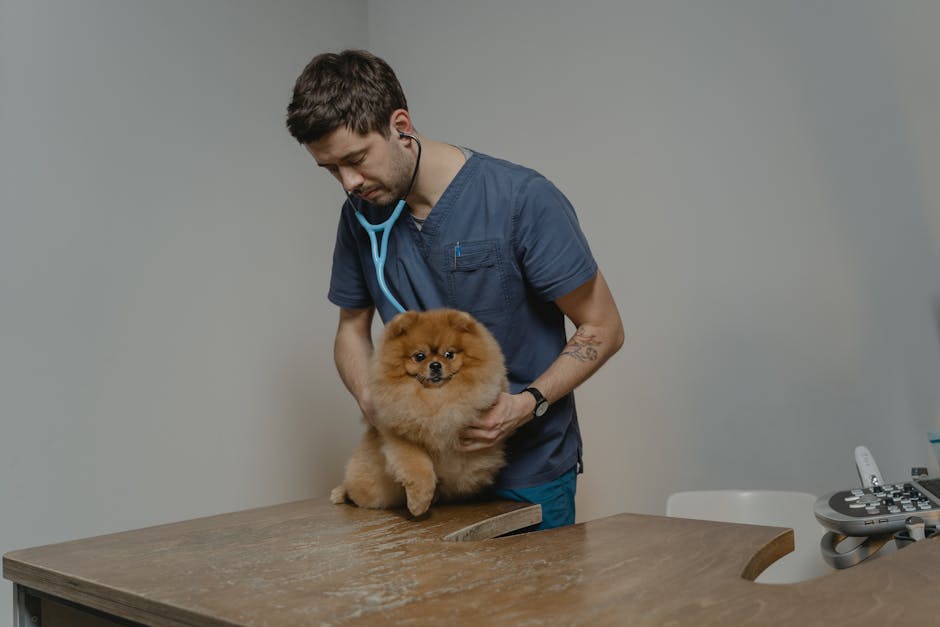

The first time I really understood pet insurance, I was sitting in a vet’s office in Watford, holding a quote for £8,200 to fix my Labrador’s torn cruciate ligament. Twelve weeks of recovery. Two surgeries because the other knee gave out six months later. And a slow-burning realisation that the cheap policy I’d bought from a supermarket comparison site was about to leave me hanging.
That was 2019. Since then I’ve had three more dogs, switched insurers twice, and read more policy schedules than any sensible person should. Most “compare the best pet insurance UK” articles you’ll find online miss the one thing that actually matters: how the policy behaves in year three, year five, year ten — not how cheap the premium looks today.
So here’s the version I wish I’d read before signing anything.
The four policy types (and why three of them are basically traps)
UK pet insurance breaks into four structures. The premium difference between them looks small. The behaviour over a dog’s lifetime does not.
Accident-only. Covers injuries from accidents. Doesn’t cover illness. Cheap, around £8-£15/month, and useful for nothing in particular. If your dog gets hit by a car, brilliant. If your dog develops anything that wasn’t caused by a car — eczema, IBD, cancer, lameness, ear infections, hip dysplasia — you’re paying out of pocket. Skip it.
Time-limited. Pays out for any one condition for twelve months from the first symptom, then closes the door on that condition forever. Around £15-£25/month for most breeds.
Maximum benefit. A pot of money per condition — typically £4,000 to £7,000 — with no time limit, but once you’ve drained the pot, that condition is uninsured forever.
Lifetime. The pot reinstates every year on renewal. The only one that genuinely covers a chronic condition for the dog’s life. Costs more upfront. Almost always cheaper across a 10-year dog’s lifetime, unless you get incredibly lucky on the claims side.
I’ll come back to each because the differences are where the £8,000 cruciate stories happen.
Lifetime cover, properly explained
Most articles describe lifetime as “best because the cover reinstates.” That’s true but useless. What you actually need to understand is the per-condition vs annual limit distinction.
A per-condition lifetime policy gives you, say, £7,000 per condition per year. Dog gets diagnosed with epilepsy on January 5th. You can claim up to £7,000 for epilepsy that policy year. Renewal hits — boom, £7,000 reinstates for epilepsy. Forever. Different condition pops up? Separate £7,000 pot for that too.
An annual-limit lifetime policy gives you, say, £12,000 total per year across all conditions combined. Easier to drain if your dog has multiple things going on at once (and senior dogs often do — arthritis plus dental issues plus thyroid plus a lump that turned out to be benign but cost £1,400 to confirm).
Petplan’s Covered For Life product is per-condition. Animal Friends does both flavours and the naming is confusing on purpose, I think. ManyPets (Bought By Many as was) leans annual-limit at the cheaper tiers and per-condition at the top tier.
If you remember nothing else: per-condition beats annual-limit for chronic disease management. An arthritic Lab on monthly Librela injections and rehab will burn through an annual limit by August. A per-condition pot covers it for the rest of the dog’s life without rationing.
What “reinstating” doesn’t mean
The pot reinstates. The exclusions don’t reset. Your renewal letter will quietly include a new exclusion list for anything that’s been claimed for — or even mentioned in vet notes — during the year. I’ve had a Cockapoo get flagged on her renewal for “interdigital dermatitis” — i.e. one infected paw, one course of antibiotics, £140 claim. Now permanently excluded as a “skin condition”, which is a category broad enough to drive a van through.
This is why you don’t switch providers casually. More on that below.
Time-limited: the twelve-month trap
The structure sounds reasonable until you trace it through. Your dog develops something at age 4. You claim. Twelve months from the date of first symptom, the cover for that condition stops. Permanently.
For acute, self-resolving stuff — a torn nail, a swallowed sock, an abscess — fine. Time-limited will pay for it and the condition won’t recur.
For anything chronic, you’ve just bought yourself a year of cover and a lifetime of uninsured bills. Atopic dermatitis, IBD, hip dysplasia, diabetes, hypothyroidism, epilepsy, allergies, recurring ear infections — none of these go away. The twelve-month timer starts, then ends, and you’re paying for life.
A friend’s Frenchie developed allergies at 18 months. Time-limited policy. Twelve months of cyclosporine and dermatologist visits covered (about £2,400 reimbursed). Then cover stopped. The dog is now seven. She’s spent roughly £900/year out of pocket since. That’s £4,500 the cheap policy “saved” her on premiums and lost her several times over on claims.
Time-limited is fine if you can afford to swallow a lifetime of out-of-pocket costs the moment something chronic appears. Most people can’t, which is why most people shouldn’t buy it.
Maximum benefit: the actual niche
This one gets unfairly trashed. Maximum benefit can work for certain dogs.
The structure: a pot per condition, typically £4,000-£7,000, no time limit. Use the pot however long it lasts, then the condition’s uninsured. The pot doesn’t reinstate, but it doesn’t expire either.
Where this fits: a young, healthy dog of a breed with a known one-off surgical risk profile. Bulldogs with BOAS. Labs with cruciate risk. Dachshunds with IVDD. Conditions where the bill comes as one big lump — surgery, rehab, done — rather than ongoing monthly meds.
The cruciate scenario I opened with would have been fully covered by a £7,000 max-benefit pot. Surgery, physio, recovery, all in. The pot doesn’t reinstate but it doesn’t need to — once a cruciate is repaired, you’re done.
Where max-benefit is a disaster: chronic disease. A diabetic spaniel will burn through £5,000 in 18 months on insulin, monitoring, prescription food, and the occasional crisis. Then you’re funding diabetes for the next eight years yourself.
I’d consider max-benefit for a puppy of a breed where I’m worried about one specific structural problem and reasonably confident about general health. Otherwise lifetime.
Typical monthly premiums (and why these numbers will be lies in three years)
I pulled fresh quotes for four hypothetical dogs in March 2026 — same Hertfordshire postcode, £200 excess, lifetime cover at the £7,000 per-condition tier. Numbers rounded.
| Dog | Age 1 (puppy) | Age 7 |
|---|---|---|
| Labrador (KC registered) | £32-£48/month | £58-£82/month |
| French Bulldog | £58-£95/month | £105-£160/month |
| Cockapoo (crossbreed) | £28-£42/month | £52-£75/month |
| Generic mixed breed (~20kg) | £22-£36/month | £42-£68/month |
A few honest caveats. These are lifetime quotes from mainstream providers — accident-only or time-limited would be roughly half. French Bulldog premiums are higher than Labs because Frenchies are statistically the most expensive breed to insure in Britain by some distance. Crossbreed pricing depends entirely on whether the insurer treats Cockapoos as a “designer crossbreed” (some price them like the more expensive parent — typically the Cocker) or as a generic mixed-breed (cheaper).
Premium inflation is brutal right now. Vet fee inflation has been running at around 10-12% annually since 2026. The CMA investigation into vet groups (Vets4Pets, IVC, CVS) is ongoing and may or may not change that. Assume your premium will roughly double between age 1 and age 8, even with no claims.
Excess structures and the renewal-age trap
Here’s the one most comparison sites bury at the bottom of the page.
UK pet insurers charge excess in two ways, and one of them is much worse than it looks.
Fixed excess. You pay £100 or £200 per condition per policy year. Straightforward. Predictable.
Fixed excess plus co-payment percentage (sometimes called “co-insurance”). You pay the fixed excess plus a percentage of every claim. Often triggered when the dog hits a certain age — typically 7, 8, or 9 depending on insurer.
The percentage looks small. 10%, 15%, 20%. It is not small.
Imagine your 9-year-old Labrador needs a £6,000 cancer treatment regimen. Lifetime policy, £7,000 per-condition limit, £200 fixed excess, 20% co-payment after age 8.
You pay: £200 + (20% of £5,800) = £200 + £1,160 = £1,360 out of pocket.
Now imagine ongoing treatment over two years totalling £14,000 across two policy years (within limit each year). You pay roughly £2,960 on top of premiums.
The co-payment kicks in exactly when your dog starts costing money. It’s the legitimised version of pricing seniors out of cover. Direct Line, Tesco, and a few others apply it. Petplan and ManyPets (on their top tiers) do not. Check this before you buy, because you can’t change it later without losing cover for any existing conditions.
Pre-existing conditions: the bilateral gotcha
Pre-existing exclusions are reasonable in principle. Insurers can’t cover the thing your dog already has. Fine.
Where it gets nasty is bilateral conditions. If your dog has injured his left cruciate, every UK insurer will exclude the right cruciate too. Same with hips, ears, eyes, elbows, anything that comes in a matched pair. The logic: a dog who’s blown one cruciate is statistically very likely to blow the other within 18 months.
This is well-known in the industry and almost never explained at point of sale. If you switch insurers after a left cruciate claim, the new insurer will exclude both. If you stay with your original insurer, the right cruciate is still covered. This alone is reason number one to never switch insurers on a dog over four years old without checking the bilateral exclusion treatment.
Skin and ear conditions get treated even more broadly. A claim for one infected ear can get you “otitis” excluded — meaning any future ear problem, in either ear, from any cause, isn’t covered.
What’s standard vs what you pay extra for
Most lifetime policies include illness, accident, and some level of behavioural cover. Some don’t. The patchy bits:
- Dental. Usually covered for trauma (broken tooth) but excluded for “disease” (rotten tooth) unless you’ve kept up with vet-recommended scaling. Some insurers require an annual dental check or they won’t honour dental claims at all.
- Behavioural. Typically a sub-limit (£500 or £1,000) for vet-referred behaviourist sessions. Won’t cover trainers.
- Complementary therapy. Hydrotherapy, physiotherapy, acupuncture. Sometimes included, sometimes a paid add-on. Worth checking if your breed has joint issues you’ll likely be treating.
- Boarding fees (if you’re hospitalised and can’t care for the dog). A surprising number of policies include this with a £500-£1,000 limit. Genuinely useful.
- Death from illness. Usually pays out the dog’s purchase price, often capped at £500. Mostly emotional cover, not financial.
Honestly, the boarding cover is the only “extra” feature I’ve ever actually claimed on. The rest are nice to have but I wouldn’t shop on them.
The UK providers, ranked by my actual opinions
I’ll keep this short because exhaustive provider lists are an SEO trick and you’ll forget half of them.
Petplan — The boring, expensive, reliable choice. Per-condition lifetime, no co-payment, claims paid quickly, vet-direct payment is straightforward. You’ll pay 20-30% more than the cheap options. You’ll thank yourself at age 9. My current dog is on Petplan. I switched after the Watford incident and haven’t looked back.
ManyPets (formerly Bought By Many) — The tech-forward one. App-based claims, fast payments, decent customer experience. Their MoneyBack policy is a gimmick (lower limits, refunds unused premium). Their top-tier Complete plan is genuinely competitive with Petplan. Avoid their cheaper tiers — annual-limit structure that runs out fast on chronic conditions.
Animal Friends — Decent middle-ground pricing, lifetime policies available, but their pre-authorisation process for surgery has historically been slow. Better than the supermarket brands, not as smooth as Petplan or ManyPets.
Agria — Specialists in pedigree and breeder-recommended policies. Strong on hereditary conditions, expensive on premiums. If you’ve bought a £3,000 puppy and want gold-standard hereditary cover from day one, look here.
Waggel — Newer entrant, slick app, lifetime cover. Limited claims history to judge by. The reviews look fine but I’d hesitate to recommend for an older dog where claims behaviour really matters.
Direct Line — Cheap, co-payment after age 8, time-limited and max-benefit options dominate their range. Fine for accident-only on a young healthy dog. I wouldn’t put a Frenchie or a Cavalier on a Direct Line policy.
Tesco — Same caveats as Direct Line. Comparison site fodder. If price is the only criterion, you’re probably not really buying insurance, you’re buying the feeling of insurance.
I’m aware Lemonade and Trupanion are big names if you’ve been reading American content. They don’t operate in the UK in any meaningful way. Ignore.
Which policy fits which owner
Quick decision framework, because there’s no universal right answer.
- Puppy of a healthy breed, you have £5k in savings → Maximum benefit on a £7,000 per-condition pot. Cheaper monthly, covers the big one-off catastrophes, you can self-insure for chronic stuff if it appears.
- Puppy of a breed with known chronic problems (Frenchie, Cavalier, Dachshund, Bulldog, Cocker) → Lifetime per-condition, top tier, no compromises. You will use it.
- Adult rescue, unknown history → Lifetime if affordable. Time-limited if not. Be honest with the insurer about anything the rescue disclosed — undisclosed pre-existing conditions are the number one reason claims get refused.
- Senior dog, currently insured, no claims → Stay put. Switching at 8+ years old loses you everything you’ve built up. Premium increases on renewal are still cheaper than starting fresh with new exclusions.
- Multi-dog household → Some insurers offer multi-pet discounts (5-10%). ManyPets, Animal Friends, and Petplan all do versions of this. Worth checking but it’s not a huge saving.
Why you can’t really switch providers
This is the bit nobody tells you when you’re shopping for your first policy.
Once your dog has any vet history at all — and that’s basically by age 2 — switching insurers means everything in the vet notes becomes a pre-existing exclusion at the new insurer. Not just things you claimed for. Anything mentioned. A “slight limp, resolved” entry from when he was 18 months becomes a permanent musculoskeletal exclusion.
So practically, you choose your insurer once, usually before your dog turns two, and you stay with them. Premium increases are the price of not losing cover. Shopping around year-on-year is a young-dog game.
The exception: if you’ve genuinely never claimed and your dog has a completely clean vet history (rare — most dogs have at least vaccination notes, lump checks, the odd lameness episode). Then you can move freely.
There’s a small movement toward “no pre-existing exclusion” policies from a handful of newer insurers, but they cost roughly 2-3x normal premiums and the small print usually re-introduces exclusions through the back door (waiting periods, condition definitions, etc). Treat them with suspicion until they’ve been operating long enough to prove their claims behaviour.
A short rant about comparison sites
Quick aside before the wrap-up. Comparison sites — MoneySuperMarket, GoCompare, Confused — are useful for spotting the cheap headline premium and absolutely useless for understanding what you’re buying. They rank on price and don’t distinguish between lifetime per-condition, lifetime annual-limit, max-benefit, and time-limited unless you dig three filters deep. The “best value” pet insurance from a comparison site is usually time-limited cover from a brand you’ve never heard of, underwritten by someone you’ve definitely never heard of, with a 20% co-payment after age 7.
If you take the comparison site route: filter to lifetime cover only, check the per-condition vs annual-limit structure manually on each shortlisted policy, and ignore the customer review scores (they’re dominated by people who joined in the last six months and haven’t claimed).
FAQ
Will my insurer pay the vet directly or do I claim back?
Most will pay direct if the vet is set up for it and the claim is above a threshold (usually £500). Below that, you typically pay and claim back. Petplan and ManyPets are reliable on direct payment. Smaller insurers vary.
What’s the most common reason claims get refused?
Pre-existing conditions, by a long margin. Followed by failure to maintain “reasonable preventative care” — lapsed vaccinations, or no recent dental checks when claiming for dental work. Genuine fraud is rare; it’s almost always disclosure issues.
Why did my premium jump 40% at renewal when I’ve never claimed?
Welcome to UK pet insurance in 2026-26. Vet fee inflation, the CMA investigation creating uncertainty, and post-Covid pet population pressures have all pushed renewal pricing up sharply. Industry-wide. Switching won’t help because everyone is doing it.
Bottom line
If I had to pick one policy for one dog and never change it: Petplan Covered For Life, top tier, £200 fixed excess, no co-payment. Most expensive option in this article. Cheapest option across a 12-year dog’s lifetime if anything serious happens. The only one I’d bet a cruciate on.
Looking at the broader cost of owning a dog? Insurance is one slice — read the [Dog Ownership Costs UK pillar] for the rest of the picture. And if you’re trying to understand specific health risks for your breed before picking a policy structure, the [Dog Health Reference pillar] is the place to start.
Featured Image Source: Pexels